Ueno Snoring Clinic offers insurance-covered sleep testing and CPAP management, as well as self-pay laser treatment for snoring, tailored to your specific condition. If you’d like to find out which treatment fits you, please start with an initial consultation.
Details of the tests and treatments offered at Ueno Snoring Clinic can be found here
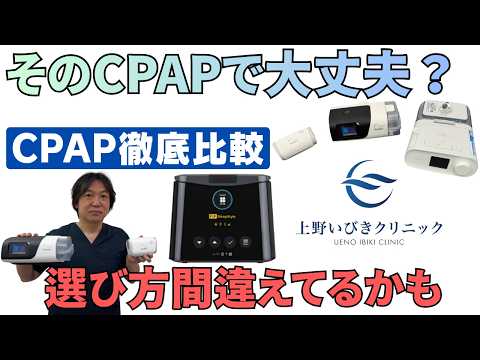
You’ll Want to Know This! A Complete Comparison of 5 CPAP Types — What Doctors Really Look For
Our doctor compares five different CPAP machines side by side and explains what actually matters when choosing one.
Watch the video
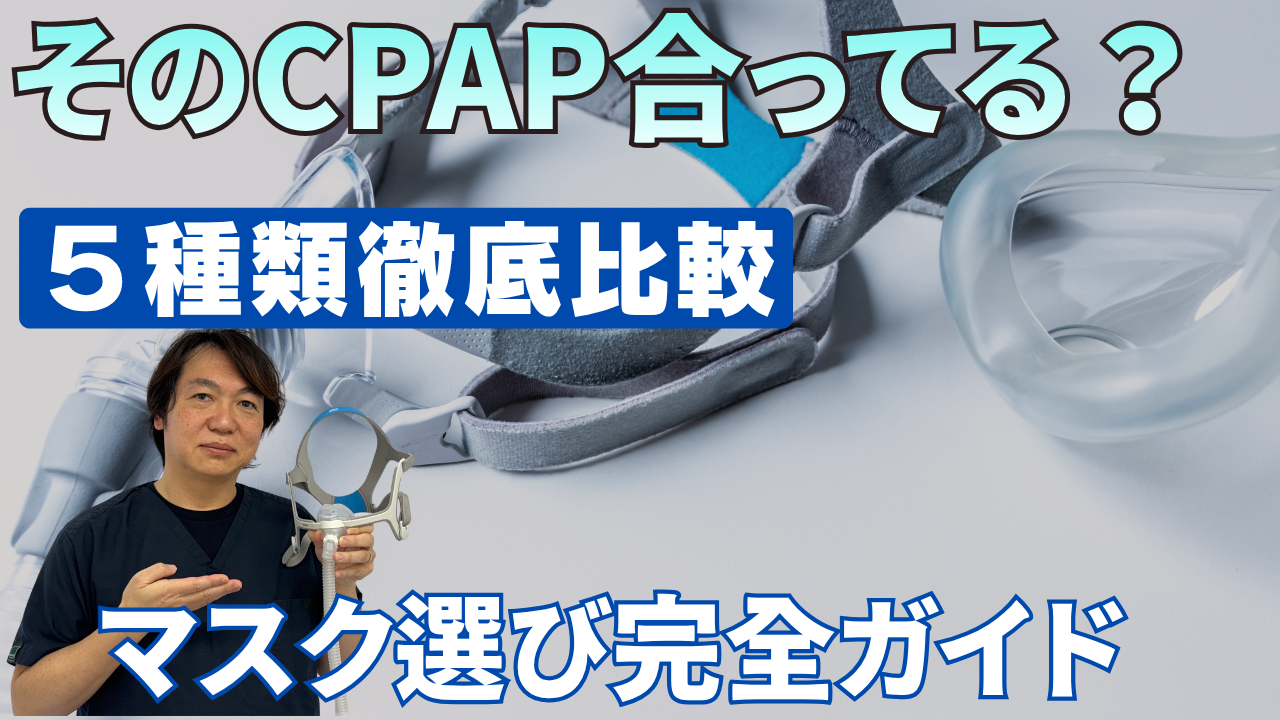
A Complete Comparison of CPAP Masks
We tried on and reviewed five different types of CPAP masks. 90% of CPAP comfort comes down to the mask.
Watch the video
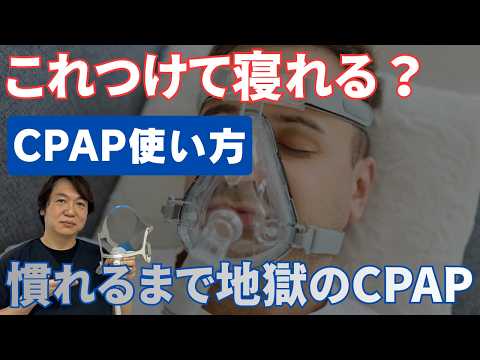
Do you have to use CPAP forever? A specialist explains how to use CPAP
A detailed explanation of how to use CPAP, with a real demonstration of what it feels like to wear the device.
Watch the video
Ueno Snoring Clinic was featured on Fuji TV’s “Live News It!” and on FNN Prime Online
Watch our clinic’s examination and explanation of sleep disorders, snoring, and sleep apnea.
Watch the video
Ueno Snoring Clinic was featured in an article on Nippon TV’s “news every.”
Please take a look as a starting point for thinking about getting evaluated for snoring, sleep apnea, or other sleep disorders.
Read the article
Reviewed by Our Director
Kazuyuki Sugaya
Director, Ueno Snoring Clinic / Anesthesiologist
Our director, with over 20,000 general anesthesia cases, focuses primarily on the diagnosis and treatment of snoring and sleep apnea, offering care tailored to each patient. [Insurance-Covered] Ueno Snoring Clinic
This article was reviewed by our Director, Kazuyuki Sugaya, and explains accurate medical information about the testing and treatment of snoring and sleep apnea syndrome (SAS) in clear, accessible terms.
🩺Comprehensive Snoring Treatment at Ueno Snoring Clinic
The causes of snoring range from the structure of the throat to body weight. Ueno Snoring Clinic doesn’t rely on a single treatment approach — we’re set up to recommend the best plan for each patient from a broad, evidence-based range of options.
Insurance-Covered: Thorough Testing and Ongoing Treatment
- Simplified and PSG testing: A precise analysis of your sleep condition
- CPAP treatment: The standard treatment for moderate-to-severe apnea
Self-Pay: Address the Root Cause, Short-Term Focus
- Snoring laser treatment: A non-surgical approach to the underlying cause
- Medically supervised weight loss: Improving airway space through weight reduction
*As a clinic specializing in snoring treatment, we work to resolve “snoring that won’t stop” through both insurance-covered and self-pay options.
New Book by Our Director
“Curing Snoring with the Latest Treatments”
A guide to the latest snoring treatments, written by an anesthesiologist who has overseen the sleep of more than 10,000 patients.
View on Amazon
Quick Answer
Snoring in older adults is often written off as “just a part of aging,” but weakening throat and tongue muscles, combined with sleep apnea syndrome, are frequently involved. Left unaddressed, repeated nighttime oxygen dips have been linked to high blood pressure, heart disease, and cognitive decline, so it’s worth getting evaluated rather than assuming nothing can be done. If CPAP isn’t a good fit — whether due to mask discomfort, dexterity issues, or cognitive changes — other options, such as laser treatment for the throat, may be available depending on your individual condition, and testing is the first step toward finding out what’s actually going on.
📋 What This Article Covers
- Why snoring becomes more common with age, beyond just weight gain
- Warning signs that call for prompt evaluation, and why sleep apnea is a serious concern for older adults
- What to do when CPAP doesn’t fit well, including other treatment options
- How family members can encourage a loved one to get tested
“My father’s snoring suddenly got much louder.” “My mother’s breathing looks like it stops while she sleeps.” “I assumed it was just her age, but she seems drowsy all day and I’m worried.” Does any of this sound familiar?
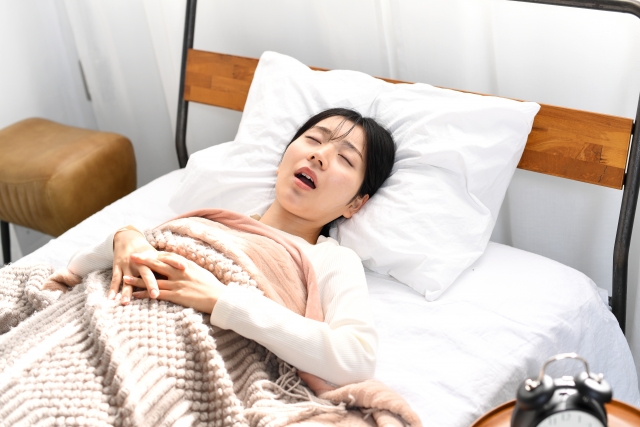
Snoring in older adults is often overlooked as “just a part of getting older,” but sleep apnea syndrome (SAS) can sometimes be hiding behind it. Left unaddressed, it may affect the heart, brain, and blood pressure, which is why early testing and consultation matter.
RELATED ARTICLES
Articles Worth Reading If You’re Concerned About Snoring or Sleep Apnea in an Older Family Member
| CPAP |
A Full Guide to CPAP: Cost, Daily Use, and Insurance Continuation Requirements
For anyone who needs CPAP, finds it hard to keep up with, or wants to know the cost and follow-up requirements. (English translation of this guide is in progress — please contact the clinic for details in the meantime.)
|
| Laser |
Our Latest Snoring Laser Treatment: What Is Dual Deep Thermia?
A treatment option for those who find CPAP difficult or want to reduce the sound of their snoring. (English translation of this guide is in progress — please contact the clinic for details in the meantime.)
|
| Blood Pressure |
The Link Between High Blood Pressure and Snoring
Especially relevant for older adults — the connection between blood pressure, the heart, and sleep apnea. (English translation of this guide is in progress — please contact the clinic for details in the meantime.)
|
1. Snoring in Older Adults Isn’t Just About Age
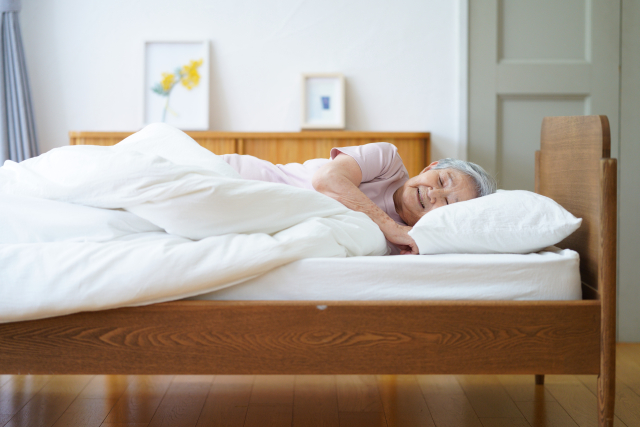
As we age, the muscles of the throat and tongue tend to loosen, making snoring more likely. That said, it’s worth being cautious about simply writing it off as “just old age.”
Japan’s clinical guidelines for sleep apnea syndrome note that moderate or more severe obstructive sleep apnea (OSA) is seen in roughly 20% of adult men and 10% of postmenopausal women, with even higher rates among those with conditions like high blood pressure or diabetes.
In other words, snoring in older adults often reflects more than just age-related muscle weakening — sleep apnea syndrome is frequently involved as well. In particular, if snoring has suddenly gotten louder, there’s significant daytime sleepiness, or waking up repeatedly at night, it’s worth getting tested.
2. Why Snoring Becomes More Common With Age
It’s Not Just About Weight — Weakening Throat Muscles Play a Major Role
There are many reasons snoring becomes more common in older adults. Since weight isn’t the only factor, it’s not unusual to see people who snore despite being slim.
- 🔹 Weakening of the throat, tongue, and soft palate muscles (age-related changes that make the airway more likely to collapse)
- 🔹 More frequent mouth breathing (reduced nasal function can make snoring worse)
- 🔹 Nasal congestion or a narrow nasal passage (such as allergic rhinitis or a deviated septum)
- 🔹 Dentures, misaligned teeth, or a receded lower jaw (oral changes that can narrow the airway)
- 🔹 Alcohol, sleeping pills, or muscle-relaxant medications (which further relax the throat muscles)
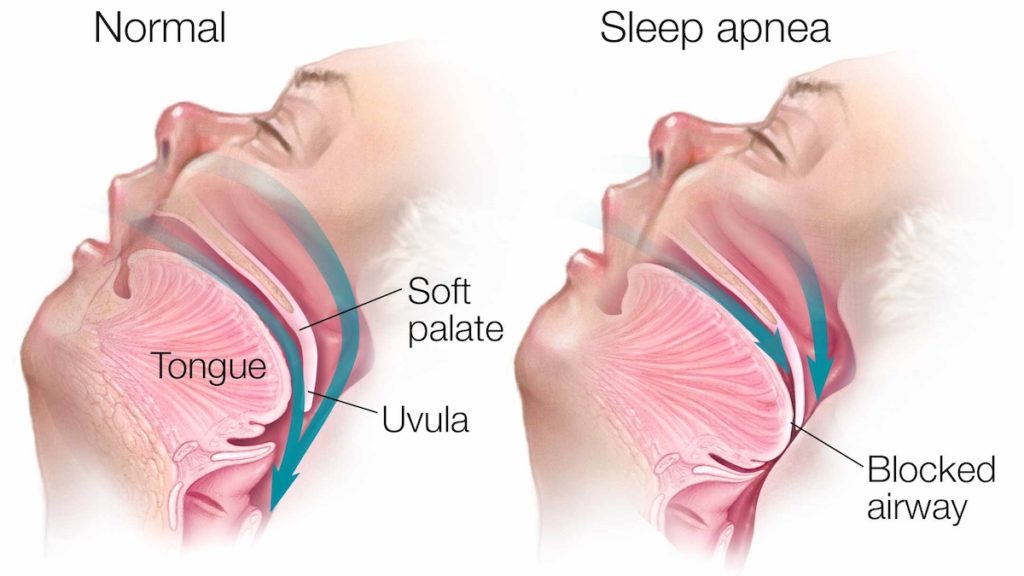
- 🔹 Sleeping on your back (the base of the tongue can fall backward and block the airway)
- 🔹 Age-related narrowing of the airway itself (which can occur even without obesity)
These causes can often be improved with the right countermeasures or treatment. Rather than thinking “it’s just old age, nothing can be done,” it helps to take the view that “once the cause is identified, it can be addressed.”
3. Warning Signs That Call for Prompt Evaluation
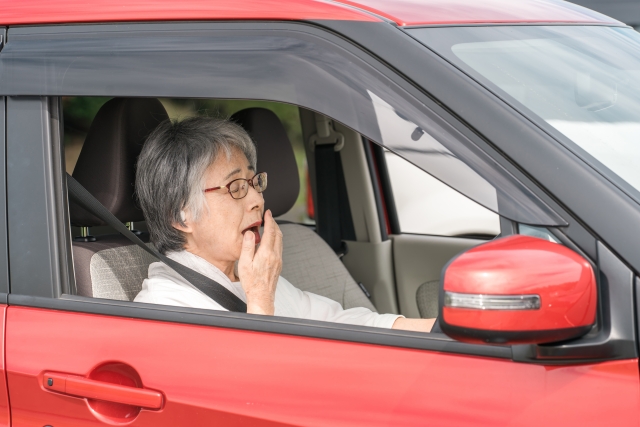
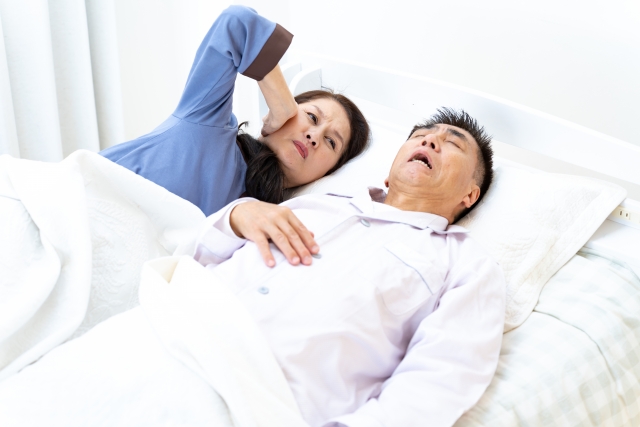
If any of the following signs are present, more than simple snoring may be involved — sleep apnea syndrome could be a factor. These are often noticed by family members rather than the person themselves, so it’s worth checking together.
🚨 If any of these apply, consider seeing a specialist soon
- ☑ Breathing appears to stop during sleep (often noticed by family)
- ☑ Snoring has suddenly gotten louder, or has become intermittent
- ☑ Waking up repeatedly during the night
- ☑ More frequent nighttime bathroom trips
- ☑ Not feeling rested or having a heavy head in the morning
- ☑ Significant daytime sleepiness or dozing off
- ☑ High blood pressure that’s difficult to control
- ☑ A history of atrial fibrillation, angina, heart failure, or stroke
- ☑ Noticeable forgetfulness or cognitive changes
- ☑ More frequent falls or unsteadiness
📌 A key point: Older adults sometimes aren’t aware of their own daytime sleepiness. Even if the person insists they’re “sleeping fine,” if family members notice breathing pauses or heavy snoring, that’s a sign worth acting on. Japan’s 2023 Sleep Guide, published by the Ministry of Health, Labour and Welfare, also notes that poor sleep quality is associated with a higher risk of high blood pressure, heart disease, cerebrovascular disease, and dementia.
If breathing pauses, high blood pressure, or daytime sleepiness are present, prompt testing is worth considering
Family members often notice something is off in an older relative even when the person themselves isn’t aware of it. Rather than assuming it’s “just their age,” checking for sleep apnea is an important first step.
Related article: Not Sure Whether Snoring Is Worth Seeing a Doctor For?
4. Why Sleep Apnea Is a Serious Concern for Older Adults
Sleep Apnea Isn’t Just a Sleep Problem — It Affects the Heart, Brain, and Blood Pressure
In sleep apnea syndrome, breathing repeatedly stops during sleep. Each time it does, blood oxygen levels drop, and the body reacts by activating the sympathetic nervous system, as if sensing danger. This cycle, repeated many times a night, places strain on multiple organ systems.
Effects on the Heart and Blood Vessels
- Increased likelihood of high blood pressure
- Blood pressure that doesn’t dip normally at night
- Repeated strain on the heart
- Associations with atrial fibrillation and heart failure
Effects on the Brain and Cognition
- Repeated reductions in oxygen supply to the brain
- Significant daytime sleepiness and reduced concentration
- Associations with cognitive decline
- Links to cerebrovascular disease risk
Effects on Sleep at Night
- Waking up repeatedly, poor sleep satisfaction
- More frequent nighttime urination
- Fragmented sleep that doesn’t feel restorative
- Morning headaches and fatigue
Effects on Daily Life
- Increased risk of falls and unsteadiness
- Higher risk of medication management errors
- Increased danger while driving
- An overall decline in quality of life
📋 For reference: Clinical guidelines in cardiology also recognize sleep-disordered breathing as an important risk factor that can accompany, and potentially worsen, a range of cardiovascular conditions.
Want to know more about the risks of leaving sleep apnea untreated?
Related topic: the health risks associated with snoring and sleep apnea syndrome, including their connection to high blood pressure and cardiovascular disease — please feel free to ask us about this during a consultation. (A dedicated English article on this topic is in progress.)
5. Options When CPAP Doesn’t Fit or Isn’t Sustainable
Even When CPAP Is the Right Treatment, Not Everyone Can Use It Comfortably
CPAP (continuous positive airway pressure therapy) is the leading treatment for sleep apnea syndrome. For older adults, though, a number of factors can make it difficult to keep up with.
Common Reasons CPAP Can Be Hard to Continue
- 😣 The mask feels tight or foreign, making it hard to sleep
- 😮💨 Dryness of the mouth or nose is uncomfortable
- 🌙 The mask gets removed unconsciously during the night
- 🧠 Cognitive changes make putting on and managing the device difficult
- ✋ Limited hand dexterity makes fitting the mask a burden
- 👃 Nasal congestion makes airflow difficult
- 🏠 Carrying the device while traveling or staying elsewhere is a hassle
- 👨👩👧 Needing a caregiver’s support can add to the burden
💡 The important thing to remember is that “CPAP not being a good fit” doesn’t mean giving up on treatment altogether.
Depending on your situation, other treatment options may be worth exploring.
If CPAP feels difficult, please consult us rather than stopping on your own
Mask fit, dryness of the mouth or nose, and the mask coming off during the night are common issues, and how well CPAP suits someone varies from person to person. For older adults, the burden of managing or being assisted with the device can also become an issue. Depending on your condition, alternatives such as mask adjustments, nasal treatment, or laser treatment may be worth considering.
Related topic: a full guide to CPAP cost, daily use, and insurance continuation requirements — please feel free to ask about this during a consultation. (A dedicated English article on this topic is in progress.)
6. Depending on Throat Condition, Laser Treatment May Be an Option
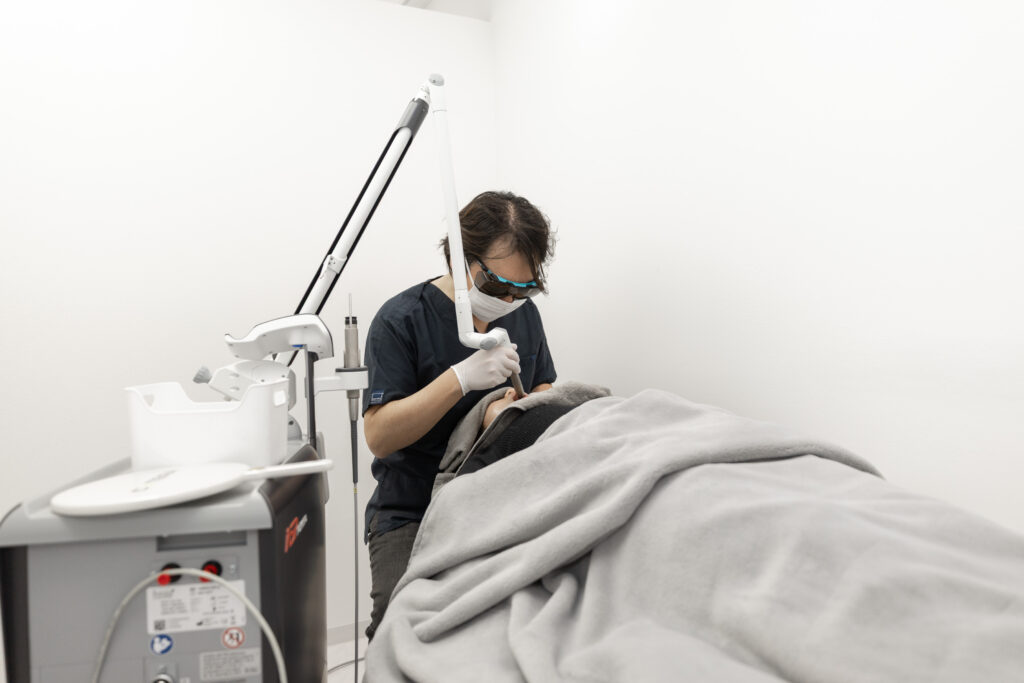
At Ueno Snoring Clinic, after evaluating the condition of the throat, soft palate, and base of the tongue, laser treatment can be considered as an option when snoring is related to looseness or narrowing of the upper airway.
Even for older patients, if the treatment is appropriate after reviewing overall health and the condition of the mouth and throat, laser treatment may help reduce snoring in some cases.
⚠️ Important facts about laser treatment
- It isn’t suitable for every older patient
- CPAP may be prioritized for severe sleep apnea
- Testing to confirm the severity of apnea comes first
- Laser treatment is primarily an option for the sound of snoring and airway narrowing itself
- Depending on severity, it may be combined with CPAP or lifestyle changes
If you find CPAP difficult, or simply want to know what treatment options exist, please come in for a consultation first. After reviewing the condition of your throat, we can recommend a treatment approach suited to you.
Even for older adults, improvement may be possible depending on throat condition
Laser treatment isn’t a cure-all for every case of sleep apnea. However, when snoring is primarily caused by looseness or vibration of the soft palate or upper airway, it can be an option for reducing the sound and frequency of snoring. The key first step is testing and a consultation to determine whether CPAP is needed or laser treatment may be worth considering.
Related topic: our latest snoring laser treatment, Dual Deep Thermia — please ask us about this during a consultation. (A dedicated English article on this topic is in progress.)
7. For Older Adults Especially, Testing Comes First
Whether It’s Just Snoring or Sleep Apnea Can Only Be Determined Through Testing
“The snoring is bad, but I don’t know if there’s actual apnea involved” — even in cases like this, testing can give you an accurate picture of what’s happening.
🏠 Simplified Test (Done at Home)
- Wear the device for just one night at home
- Records blood oxygen saturation, airflow, and snoring
- Covered by insurance
- No hospitalization needed, so the burden is low
🏥 PSG (Detailed Sleep Study)
- Overnight polysomnography
- Records breathing pauses, sleep stages, and oxygen dips in detail
- Provides an accurate assessment of severity
- Serves as the basis for a treatment plan
📌 A key point for older adults: Even if someone feels they’re “sleeping fine,” apnea events may still be occurring. It’s very common for a family member’s observation to be what leads to testing in older patients.
Start by checking for sleep apnea through insurance-covered testing
Whether it’s simple snoring or sleep apnea is something you can’t determine by appearance or sound alone. The at-home simplified test, followed by PSG if needed, can reveal the extent of oxygen dips and breathing pauses.
Related article: Simplified Sleep Test vs. PSG: A Clear Explanation of Sleep Apnea Testing
8. General Guidance by Condition
How to approach treatment for snoring or sleep apnea in an older adult depends on the specific condition. Testing to understand where things stand is the first step toward the right treatment.
| Condition |
General Direction |
| Mostly mild snoring |
Lifestyle changes, adjusting sleep position, nasal treatment, or discussing laser treatment |
| Sleep apnea suspected |
Start with a simplified test, followed by PSG to determine severity |
| Moderate-to-severe sleep apnea |
CPAP is generally considered the primary treatment (discussed with your specialist) |
| CPAP isn’t a good fit |
Mask adjustment, nasal treatment, or a discussion of laser treatment depending on throat condition |
| History of heart disease or stroke |
Prompt testing and consultation with a specialist is strongly recommended |
Related topic: whether snoring treatment is covered by insurance, and the difference between insurance-covered and self-pay care based on the simplified test and PSG — please feel free to ask us about this. (A dedicated English article on this topic is in progress.)
9. How Family Members Can Encourage a Loved One to Get Checked
Older adults often say things like “I’m fine” or “it’s just my age.” In these situations, how you phrase the suggestion can make a real difference in getting them to agree to be evaluated.
❌ Phrasing to avoid
“Your snoring is too loud, go see a doctor.”
“Your breathing stopped again last night.”
(These don’t tend to motivate the person to get checked.)
✅ Phrasing that tends to work
“It looked like your breathing stopped while you were sleeping, and I’m worried about your heart and blood pressure — let’s just get it checked, to be safe.”
(Framing it as a health concern.)
Phrases like “just to get checked” or “just to be safe” tend to lower the barrier to seeing a doctor. It also helps to mention that the test itself is covered by insurance.
10. Conclusion: Snoring in Older Adults May Be Treatable
- ✅ Snoring in older adults isn’t simply an age-related phenomenon — it can be a sign of sleep apnea syndrome
- ✅ Repeated nighttime oxygen dips may be linked to high blood pressure, heart disease, and cognitive decline
- ✅ Extra caution is warranted for those with high blood pressure, heart disease, or cerebrovascular disease, or who experience frequent nighttime urination or daytime sleepiness
- ✅ For those who don’t do well with CPAP, other options such as laser treatment may be worth exploring depending on throat condition
- ✅ Getting tested through insurance-covered care is the first step toward the right treatment
Before assuming “it’s just their age, nothing can be done,” we encourage you to come in for a consultation. Ueno Snoring Clinic is a specialized sleep clinic offering insurance-covered testing and evaluation.
YOU MAY ALSO LIKE
If You’re Still Unsure About Snoring or Sleep Apnea in an Older Family Member
If you’d like to know more about the risks of leaving sleep apnea untreated:
-
The Link Between High Blood Pressure and Snoring — Why Sleep Apnea Shouldn’t Be Overlooked
Recommended for older adults with high blood pressure, or anyone taking blood pressure medication. (English translation in progress — please ask the clinic.)
-
Is Snoring Treatment Covered by Insurance? Understanding Coverage Through Simplified and PSG Testing
For those who want to start with insurance-covered testing or are concerned about cost. (English translation in progress — please ask the clinic.)
- Snoring Treatment at Ueno Snoring Clinic
An overview of our full range of treatment, including testing, CPAP, and laser treatment.
UENO SNORING CLINIC
Concerned About Snoring or Sleep Apnea in an Older Family Member? We’re Here to Help
Specialized sleep clinic / Insurance-covered care / At-home simplified testing available
We’re also happy to discuss cases where CPAP hasn’t been a good fit
See clinic details →
Frequently Asked Questions
Q. Can someone in their 80s still get tested and treated?
A. Yes, testing and treatment remain available. Age alone doesn’t rule someone out. After reviewing overall health and the condition of the mouth and throat, we recommend an approach suited to the individual. Please feel free to come in for a consultation.
Q. My family member insists they’re fine and refuses to be tested. What should I do?
A. Framing it as a health concern — “let’s just get it checked because I’m worried about your heart and blood pressure” — tends to work better than focusing on the snoring itself. Family members are also welcome to come in for a consultation on their own first, so please feel free to reach out.
Q. I stopped using CPAP because it didn’t suit me. Are there other treatments?
A. Depending on throat condition, options such as laser treatment may be worth considering. The first step is a consultation and testing to assess your current condition, so that we can recommend a treatment approach suited to you.
Q. Is testing covered by insurance?
A. Yes, our clinic offers insurance-covered testing and consultations, from the at-home simplified test through to PSG (a more detailed sleep study) when needed.
Q. What kind of specialty clinic is Ueno Snoring Clinic?
A. Ueno Snoring Clinic is a specialized, insurance-covered sleep clinic focused on snoring and sleep apnea. Our physician is a board-certified anesthesiologist with more than 20,000 general anesthesia cases, bringing an airway-management perspective to the evaluation of snoring and sleep apnea. We are not an ENT (ear, nose, and throat) clinic.







いびきを最新治療で治す-表紙-1.png)