

Why Is My Snoring Suddenly Worse? Causes & Treatment | Ueno Snoring Clinic
Quick summary (TL;DR)
Snoring rarely appears out of nowhere — it builds up gradually as several factors stack on top of each other. The most common causes of sudden or worsening snoring are: aging (loss of throat-muscle tone and mucosal elasticity), weight gain (fat compressing the airway from the outside), sarcopenia (age- or inactivity-related loss of the muscles that hold the airway open), lifestyle changes (more alcohol, sedatives, sleep debt, or smoking), and, in women, menopause (falling estrogen removes a natural airway-protective effect). Snoring that suddenly stops and restarts, is paired with daytime sleepiness, morning headaches, or witnessed breathing pauses may indicate obstructive sleep apnea (SAS), which carries real cardiovascular risk and should be evaluated with a sleep study. Ueno Snoring Clinic (Tokyo, Ueno) offers insurance-covered sleep testing and CPAP management as well as self-pay laser treatment and medical weight-loss (GLP-1) options.
“I never used to snore at all, but recently people tell me I’m loud.” “It seems to have gotten worse compared to before.” — We hear concerns like these very often at our clinic.
Snoring doesn’t increase suddenly on its own; it’s the cumulative result of changes building up in the body. That’s why so many people find themselves asking, “why now?” — but once you understand the underlying cause, the right countermeasures become clear.
In this article, we take a detailed look — from the perspective of a sleep specialty clinic — at the main factors behind sudden or worsening snoring.
At Ueno Snoring Clinic, we offer a range of options tailored to each patient’s condition, including insurance-covered sleep testing and CPAP management, and self-pay snoring laser treatment. If you’d like to find out which treatment suits you, please start with an initial consultation.
You can view Ueno Snoring Clinic’s full range of tests and treatments here (Japanese).


This topic is also covered in detail in the clinic director’s book, “Curing Snoring with the Latest Treatments” (Amazon Japan Best Sellers: #1 in General Medicine, #1 in Clinical Internal Medicine, #2 in Home Medicine & Health — Japanese-language edition).
いびきを最新治療で治す-表紙-1.png)
New Release — Director’s Book
“Curing Snoring with the Latest Treatments” (Japanese-language)
Written by an anesthesiologist who has overseen the sleep of more than 10,000 patients — the definitive, up-to-date guide to modern snoring treatment.
Physician-Supervised Article
Kazuyuki Sugaya, MD
Director, Ueno Snoring Clinic / Anesthesiologist
Drawing on experience managing general anesthesia in more than 20,000 cases, our director provides treatment for snoring and sleep apnea tailored to each patient. Ueno Snoring Clinic (insurance-covered care available)
This article has been medically supervised by Dr. Kazuyuki Sugaya, Director, and explains accurate medical information on the testing and treatment of snoring and obstructive sleep apnea syndrome (SAS) in plain language.
🩺Comprehensive Snoring Treatment at Ueno Snoring Clinic
The causes of snoring range from throat structure to obesity. Ueno Snoring Clinic is not tied to any single treatment method — we offer a wide, evidence-based range of options so we can propose the plan best suited to each patient.
Insurance-covered: thorough testing and ongoing treatment
- Home sleep test / PSG (polysomnography): a precise analysis of your sleep
- CPAP therapy: the standard treatment for moderate-to-severe sleep apnea
Self-pay: root-cause treatment, short and focused
- Latest snoring laser treatment: a root-cause treatment with no incision
- Medical weight-loss support: physically opening the airway through weight reduction
※ As a clinic specializing exclusively in snoring treatment, we draw on both insurance-covered and self-pay options to do everything we can to resolve “snoring that won’t stop.”
Why Does Snoring Happen in the First Place?
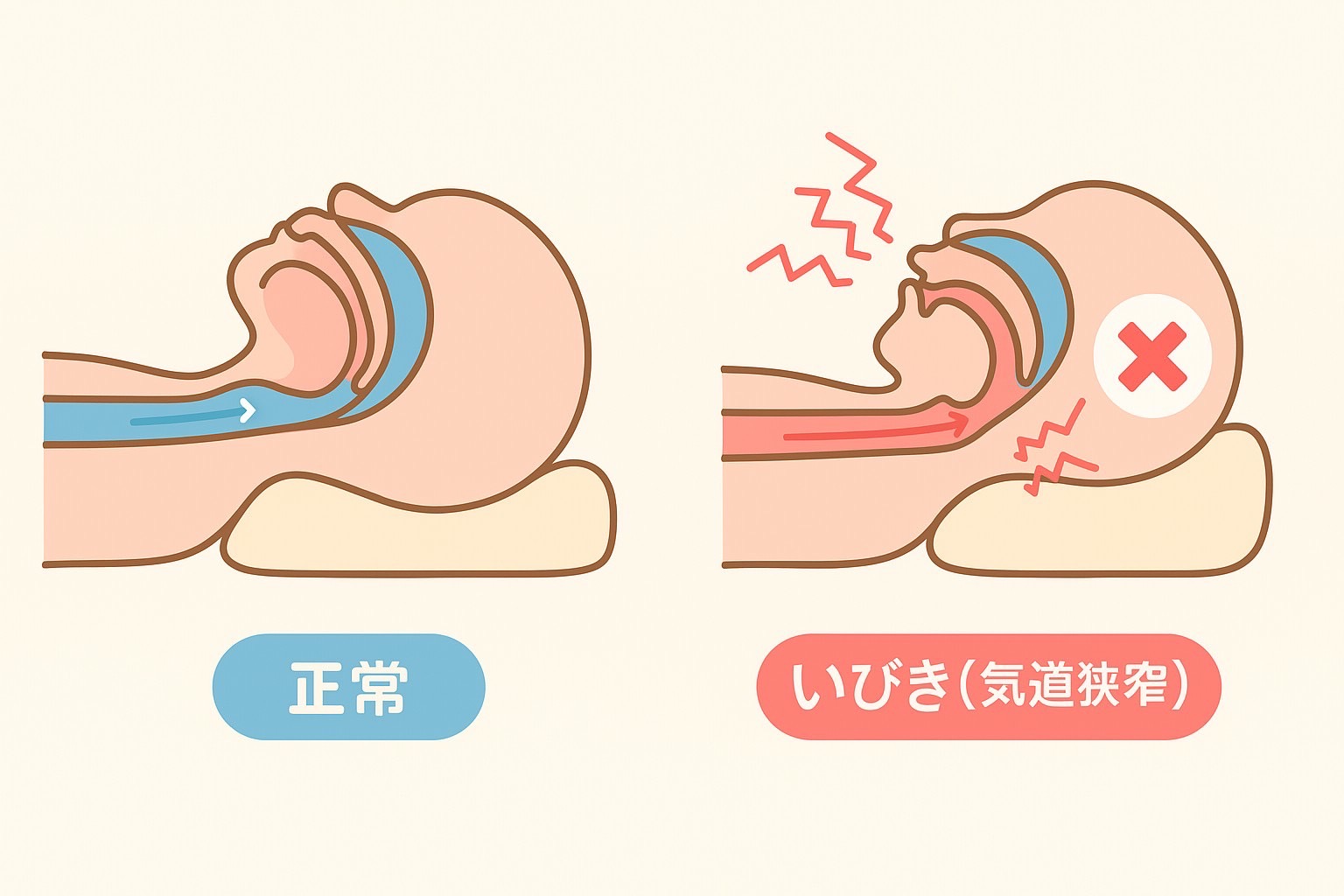
Understanding the mechanism behind snoring makes it much easier to see why it has suddenly gotten worse.
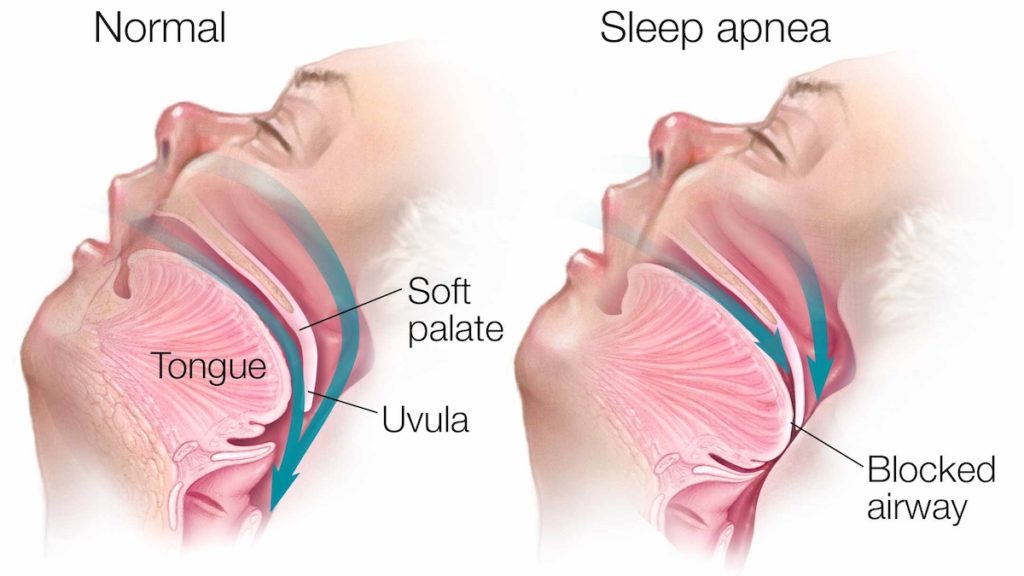
When we fall asleep, the muscles throughout the body relax — including the muscles that support the upper airway (the passage from the nose and mouth down to the windpipe). When those muscles relax, the airway narrows, and air passing through the narrowed space causes the surrounding mucosal tissue to vibrate, producing the sound we hear as snoring.
- Airway narrowing: during sleep, the muscles around the pharynx relax and the cross-sectional area of the airway decreases.
- Increased airflow speed: air moving through a narrower passage speeds up, making the mucosal tissue more prone to vibration.
- Mucosal vibration = snoring sound: the soft palate, uvula, tongue base, and surrounding tissue vibrate, producing the characteristic sound of snoring.
In other words, snoring worsens whenever any factor that narrows the airway increases — even one such factor is enough. Aging, weight gain, and muscle weakness are all common, representative factors that strengthen this “airway-narrowing” force.
Aging: Relaxation of the Pharyngeal Muscles and Changes in the Airway
Aging is one of the most universal reasons snoring increases.
Muscle “tonus” (baseline tension) declines
A cluster of small muscles surrounds the pharynx — the muscle groups that support the tongue, and the tensor veli palatini and levator veli palatini muscles that hold the soft palate in place, among others. With age, both the mass and baseline tone of these muscles decline, allowing them to obstruct the airway more during sleep.
Muscle strength that was more than sufficient to keep the airway open in your 20s and 30s can no longer be maintained by the time you reach your 40s and 50s — which is exactly what makes people feel their snoring has “suddenly” gotten worse.
The mucosa loses elasticity
Just like skin, the mucosal lining of the throat loses elasticity (“firmness”) with age. Slackened mucosa vibrates more easily, so even a smaller airflow is enough to produce a louder sound.
📌 Approximate prevalence of snoring by age (adult men)
20s: roughly 15–20%
40s: roughly 40–45%
60s: roughly 60% (estimated)
Various studies indicate that the prevalence of snoring rises substantially with age.
Tongue-base collapse becomes more likely
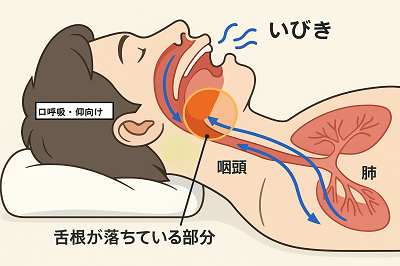
Age-related weakening of the tongue muscles makes “tongue-base collapse” more likely. When you sleep on your back, gravity pulls the base of the tongue down into the airway, directly blocking the passage. This is also closely linked to obstructive sleep apnea syndrome (SAS).
Weight gain and fat accumulation around the neck

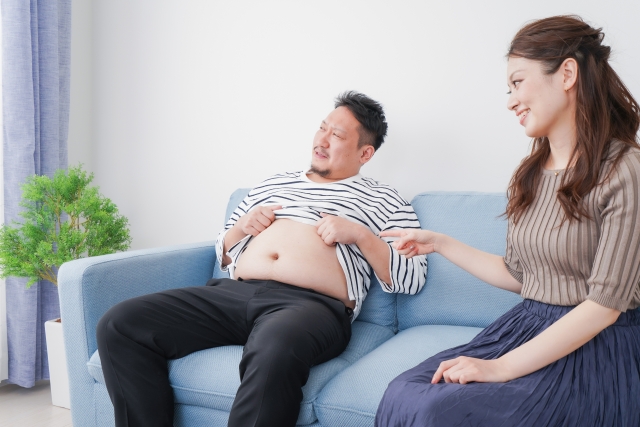
If you’ve noticed recently that you’ve “put on some weight,” that may well be the direct trigger for your worsening snoring.
Fat around the neck compresses the airway from the outside
As weight increases, fat accumulates around the face, neck, and jaw as well. This fat acts as an external force compressing the airway, narrowing it further during sleep. In general, risk rises once neck circumference exceeds roughly 40 cm in men or 35 cm in women.
Abdominal fat pushes the diaphragm upward
In visceral obesity, abdominal fat presses the diaphragm upward. This reduces lung capacity and increases negative pressure within the airway, making the airway even more prone to collapse.
Even “a little” weight gain matters
A body-weight increase of just 5–10% has been shown to significantly raise the risk of airway obstruction during sleep. It’s tempting to think “I’ve only gained a little,” but the impact on the airway can appear even with a change of just a few kilograms.
Snoring can improve dramatically with weight loss
The flip side is that appropriate weight management can directly improve snoring. For chronic snoring and SAS linked to obesity, our clinic also offers medical weight-loss treatment using GLP-1 receptor agonists (self-pay). Approaching snoring and SAS from the angle of weight management can be a highly effective option.
The Link to Whole-Body Muscle Loss (Sarcopenia)
In recent years, the relationship between “sarcopenia” (age-related loss of muscle mass) and snoring has drawn increasing attention. Sarcopenia refers to a decline in whole-body muscle mass and strength due to aging, inactivity, and related factors.
The upper-airway muscles are affected by sarcopenia too
Just as the quadriceps and core muscles weaken with sarcopenia, the upper-airway muscles — the tongue muscles, pharyngeal constrictor muscles, geniohyoid muscle, and others — also lose muscle mass. These muscles act as “airway-protective muscles,” keeping the airway open during sleep; when they weaken, the airway becomes more prone to collapsing while you sleep.
| Muscle | Role in the airway | Effect of weakening |
|---|---|---|
| Tongue muscles (intrinsic/extrinsic) | Hold the tongue forward, preventing it from falling backward | Tongue-base collapse → airway obstruction |
| Geniohyoid muscle | Pulls the hyoid bone forward, widening the airway | Reduction in the airway’s front-to-back diameter |
| Tensor veli palatini | Tenses the soft palate, suppressing vibration | Soft palate slackens → louder snoring |
| Pharyngeal constrictor muscles | Maintain the shape of the pharyngeal cavity | Pharyngeal collapse and narrowing |
Lack of Exercise Fuels a Vicious Cycle
Since the COVID-19 pandemic, more people have found that “sarcopenia crept up on them without their noticing,” driven by more time at home and less walking. As overall muscle mass declines, the upper-airway muscles are affected as a matter of course. This muscle weakening is also thought to be one reason we’re seeing more reports of snoring worsening “since I started working from home.”
Lifestyle Changes That Worsen Snoring
- Increased alcohol intake: alcohol suppresses the central nervous system and further relaxes the upper-airway muscles. Drinking before bed can substantially worsen snoring and SAS.
- Sleeping pills and anti-anxiety medication: some drugs, such as benzodiazepines, have a muscle-relaxant effect that loosens the upper-airway muscles and worsens snoring.
- Accumulated sleep debt: chronic sleep deprivation increases the proportion of deep (non-REM) sleep, which brings stronger muscle relaxation and makes snoring more likely.
- Smoking: tobacco smoke keeps the airway mucosa in a state of chronic inflammation and swelling, keeping the airway narrowed at all times.
These are the kinds of changes that creep in even when you feel like you’re “living the same way as before.” Changes in drinking habits in particular tend to have a large impact on snoring — a common pattern is snoring worsening after a job change or retirement, when opportunities to drink increase.
A Change Specific to Women: Menopause and Falling Estrogen
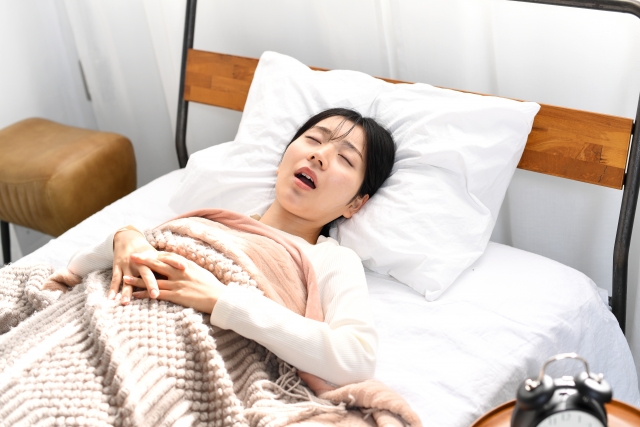
Snoring is often thought of as more of a “male” issue, but snoring and SAS increase sharply in women after menopause — an important point that’s easy to overlook.
Estrogen had been protecting the upper airway
The female hormone estrogen helps maintain tone in the upper-airway muscles and suppresses fat deposition around the airway. When estrogen drops sharply at menopause, this protective effect disappears, and a woman’s snoring risk moves closer to that of a man.
Changes commonly seen in women after menopause
- Being told, for the first time, that they snore loudly after menopause
- Sleeping more lightly than before and feeling that fatigue doesn’t lift
- Menopausal symptoms (hot flashes, insomnia) overlapping with SAS
- No change in overall body weight, yet fat has started accumulating around the neck
What was assumed to be “just menopause keeping me from sleeping” is, in some cases, actually SAS. Because symptoms can be harder to notice in women, anyone concerned is encouraged to consult a specialty clinic.
Don’t Overlook the Signs: Obstructive Sleep Apnea Syndrome (SAS)
Behind worsening snoring, obstructive sleep apnea syndrome (SAS: Sleep Apnea Syndrome) can sometimes be hiding. SAS is a condition in which the airway repeatedly becomes blocked during sleep, causing breathing to stop temporarily; left untreated, it’s known to raise the risk of high blood pressure, heart disease, stroke, and diabetes.
Watch for these warning signs
- Snoring suddenly stops, then starts again (repeated episodes of apnea)
- Waking up repeatedly during the night, or waking up gasping for breath
- Strong daytime sleepiness despite what felt like enough sleep
- Headache or dry mouth on waking
- Reduced concentration or memory
- High blood pressure that’s difficult to control despite treatment
Diagnosing SAS requires a sleep study (a home sleep test or a full overnight polysomnogram). Our clinic offers insurance-covered testing, diagnosis, and CPAP therapy. We’re also happy to see patients who simply want to start with testing.
A Note from Our Sleep Specialty Physicians
Our clinic’s care is led by a board-certified anesthesiologist, whose experience managing more than 20,000 cases of general anesthesia has brought deep insight into airway anatomy and the dynamics of the upper-airway muscles. We place great importance on carefully examining what lies behind a complaint of “my snoring has gotten worse.” We also provide insurance-covered testing, so please feel free to consult us if any of these symptoms concern you.
A Self-Check You Can Do Right Now
Use the checklist below to gauge your risk of worsening snoring and whether it’s time to see a doctor.
Snoring-worsening risk checklist
- My weight has increased by 3 kg (about 6.6 lb) or more over the past 1–2 years
- My neck circumference has increased (over roughly 40 cm / 15.7 in for men, 35 cm / 13.8 in for women)
- I don’t exercise regularly, and I walk less than I used to
- I drink alcohol before bed 3 or more days a week
- I take sleeping pills or anti-anxiety medication
- (Women) I have menopausal symptoms or am post-menopausal
- I experience strong daytime sleepiness or fatigue
- Someone I live with has told me my snoring stops and then restarts
If three or more of these apply to you, we recommend visiting a sleep specialty clinic sooner rather than later.
Frequently Asked Questions
Why did my snoring suddenly get worse even though nothing else in my life changed?
Snoring almost never has a single, sudden cause — it’s usually the cumulative effect of several small changes: age-related loss of throat-muscle tone, gradual weight gain, declining overall muscle mass (sarcopenia), more alcohol or medication use, or, in women, menopause. Because each factor alone can be subtle, the combined effect often only becomes noticeable once it crosses a threshold, which can feel sudden even though the underlying change was gradual.
Does aging actually cause snoring to get worse?
Yes. Aging reduces the muscle tone of the throat and tongue, lowers the elasticity of the airway’s mucosal lining, and makes the tongue base more likely to fall backward during sleep (tongue-base collapse). All three changes narrow the airway and make it vibrate more easily, which is why snoring prevalence rises steadily with age — from roughly 15–20% in a person’s 20s to around 60% by their 60s.
Can losing weight actually stop or reduce snoring?
In many cases, yes. Excess fat around the neck and abdomen compresses the airway from the outside and reduces lung volume, both of which make the airway more prone to narrowing during sleep. Studies show that even a 5–10% reduction in body weight can meaningfully lower the risk of airway obstruction, so weight management is often an effective way to reduce snoring. Ueno Snoring Clinic also offers medical (GLP-1-based) weight-loss support as a self-pay option for patients whose snoring or SAS is linked to obesity.
Is it normal for women to start snoring after menopause?
It’s common, and there’s a clear physiological reason for it. Estrogen helps keep the upper-airway muscles toned and limits fat deposition around the airway. When estrogen drops sharply at menopause, that protective effect is lost, and a woman’s risk of snoring and sleep apnea rises toward levels seen in men. Because symptoms in women can be mistaken for general menopausal fatigue or insomnia, it’s worth getting evaluated if snoring appears or worsens around this time.
How can I tell if my snoring is actually sleep apnea (SAS)?
Warning signs include snoring that repeatedly stops and restarts (indicating pauses in breathing), waking up gasping or short of breath, strong daytime sleepiness despite adequate time in bed, morning headaches or a dry mouth, reduced concentration or memory, and high blood pressure that’s hard to control. If several of these apply, a sleep study — a home test or an overnight polysomnogram (PSG) — is the only way to confirm a diagnosis.
What snoring and sleep apnea treatments does Ueno Snoring Clinic offer?
The clinic offers both insurance-covered and self-pay options. Insurance-covered care includes home sleep testing, full polysomnography (PSG), and CPAP (continuous positive airway pressure) management, including online follow-up visits. Self-pay options include laser treatment of the soft palate and uvula for a root-cause reduction in snoring, and GLP-1-based medical weight-loss treatment. The clinic also offers second-opinion consultations for patients already on CPAP or diagnosed elsewhere.
Can I get an appointment the same day, and is testing available on a first visit?
The clinic operates on a complete appointment system, and same-day appointments are available. Patients who simply want to start with a sleep test, without committing to a full treatment plan, are welcome.
Summary: What Ueno Snoring Clinic Offers
Ueno Snoring Clinic is a sleep specialty clinic dedicated entirely to snoring and sleep apnea. Since opening, we have focused consistently on this field to meet the needs of patients who want expert, specialized care for their snoring.
| Service | Overview | Coverage |
|---|---|---|
| Sleep testing (home PSG) | A simplified sleep study performed at home, used to diagnose SAS | Covered by insurance |
| CPAP therapy | CPAP (continuous positive airway pressure) management for moderate-to-severe SAS; online visits available | Covered by insurance |
| Snoring laser treatment | Laser applied to the soft palate and uvula to reduce snoring | Self-pay |
| Weight-loss treatment (GLP-1) | Weight management aimed at a root-cause improvement in snoring and SAS | Self-pay |
| Second opinion | Consultations on CPAP management or diagnoses made at other clinics | Insurance / self-pay |
If you’ve been told your snoring is bad but aren’t sure where to go, or you’re wondering whether you can just get tested first, please feel free to reach out to us.
Insurance-covered care for snoring and sleep apnea — a fully appointment-based clinic for peace of mind.
Please feel free to contact Ueno Snoring Clinic — same-day appointments available.
📞0120-899-930 (Japan)
5F Ueno Silk Building, 4-8-8 Ueno, Taito-ku, Tokyo 110-0005, Japan

Please feel free to contact Ueno Snoring Clinic — same-day appointments available.
📞0120-899-930 (Japan)
5F Ueno Silk Building, 4-8-8 Ueno, Taito-ku, Tokyo 110-0005, Japan
You can also reach us easily via LINE ↓↓↓ (Japanese)


English Support Available
We welcome international patients and provide support for English-speaking visitors during your consultation. Please visit our English-language homepage below for details on how to book a visit and what to expect at the clinic.
Supervising Physician

Kazuyuki Sugaya, Director of Ueno Snoring Clinic
After graduating from Fujita Health University School of Medicine in 2004, Dr. Sugaya began his career as an anesthesiologist at Toho University Omori Medical Center. He has since gained extensive clinical experience at municipal hospitals and private clinics nationwide, administering general anesthesia in over 20,000 cases. In 2020, he founded the "Tokyo Spine Clinic," and has served as the Director of Ueno Snoring Clinic since 2025.
Related Columns
By Appointment Only
Specialized Snoring Treatment in Ueno
Ueno Snoring Clinic
Insurance-covered home testing available.
Following a physician’s consultation and result explanation,
we support the improvement of snoring and sleep apnea with "Dual Deep Thermia"—a non-surgical laser treatment, if necessary.
3-min walk from Ueno Station. Please feel free to consult us.