Before any snoring laser treatment, Ueno Snoring Clinic checks for hidden sleep apnea with a simplified test and insurance-covered PSG, which can be done at home with no hospital stay. Laser treatment, using two wavelengths (Nd:YAG and Er:YAG), is offered to people whose testing confirms simple snoring.
Details of the tests and treatments offered at Ueno Snoring Clinic can be found here
Important: Snoring and Sleep Apnea Treatment Requires a Sleep Test
Some clinics that offer only self-pay care, and some cosmetic clinics, may not perform sleep testing. Before starting treatment, check whether the clinic performs a sleep test, or has a system for referring you to a medical institution where you can receive the necessary tests.
If sleep apnea is hidden behind your snoring and treatment begins without testing, it may be missed.
▶ Learn more about snoring and sleep apnea testing
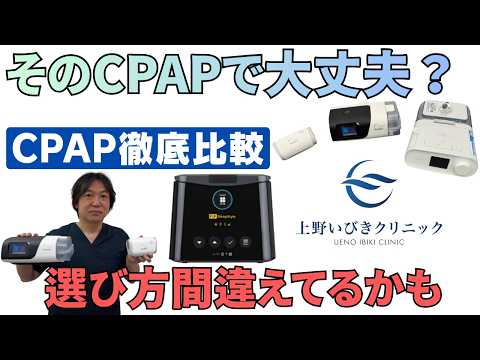
You’ll Want to Know This! A Complete Comparison of 5 CPAP Types — What Doctors Really Look For
Our doctor compares five different CPAP machines side by side and explains what actually matters when choosing one.
Watch the video
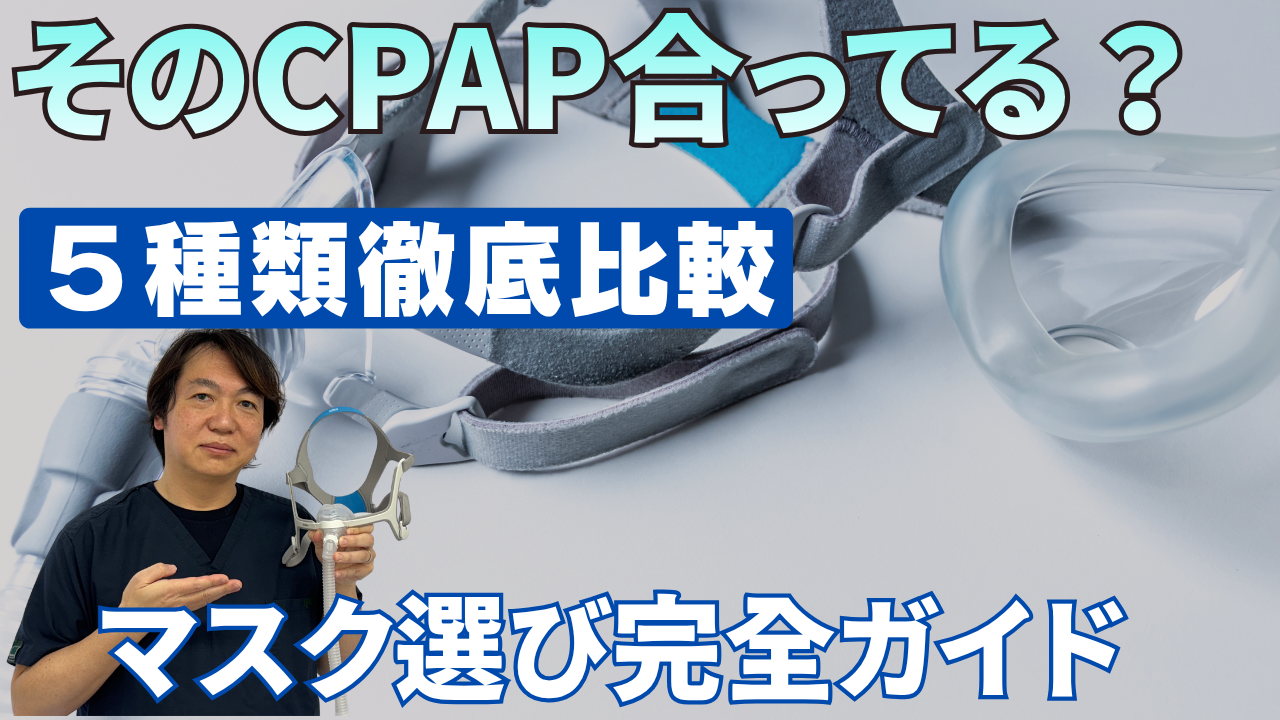
A Complete Comparison of CPAP Masks
We tried on and reviewed five different types of CPAP masks. 90% of CPAP comfort comes down to the mask.
Watch the video
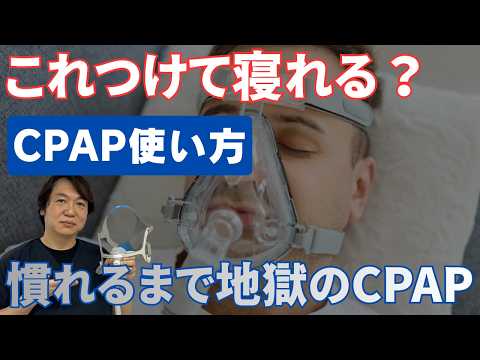
Do you have to use CPAP forever? A specialist explains how to use CPAP
A detailed explanation of how to use CPAP, with a real demonstration of what it feels like to wear the device.
Watch the video
Ueno Snoring Clinic was featured on Fuji TV’s “Live News It!” and on FNN Prime Online
Watch our clinic’s examination and explanation of sleep disorders, snoring, and sleep apnea.
Watch the video
Ueno Snoring Clinic was featured in an article on Nippon TV’s “news every.”
Please take a look as a starting point for thinking about getting evaluated for snoring, sleep apnea, or other sleep disorders.
Read the article
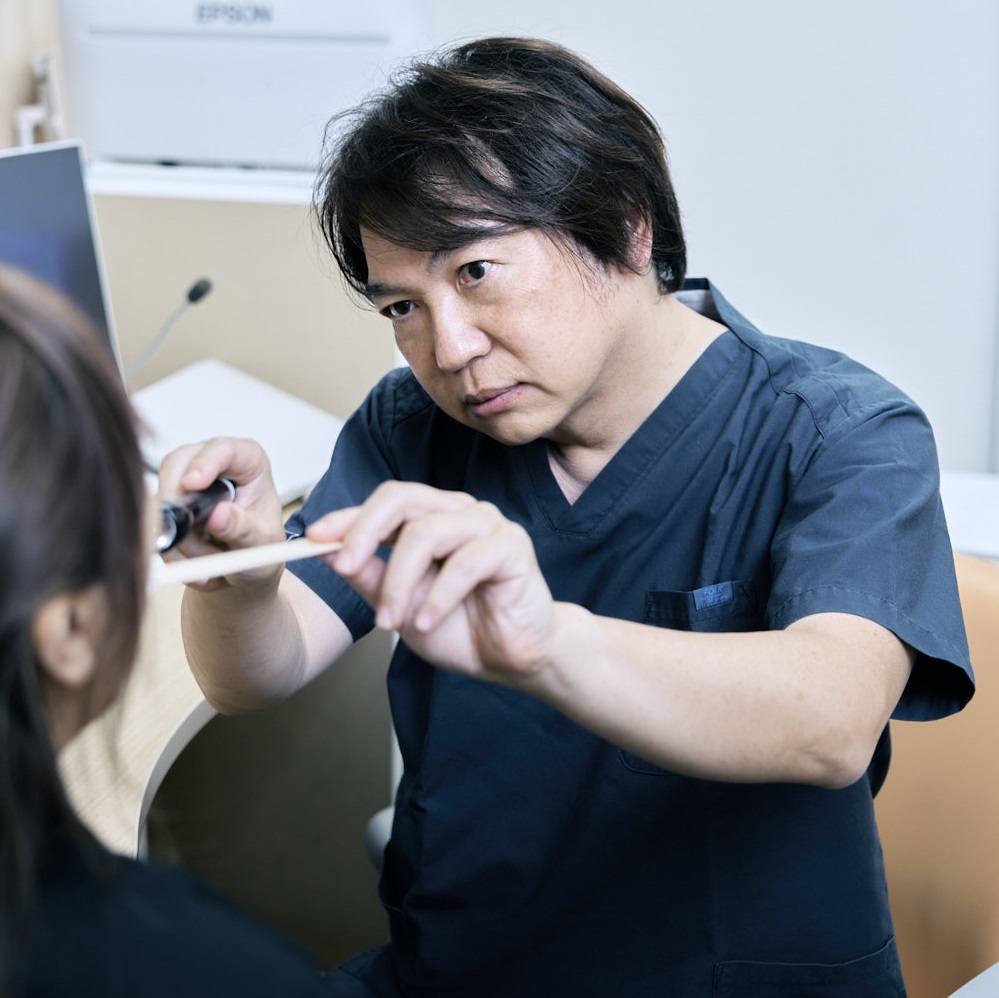
Reviewed by Our Director
Kazuyuki Sugaya
Director, Ueno Snoring Clinic / Anesthesiologist
Our director, with over 20,000 general anesthesia cases, focuses primarily on the diagnosis and treatment of snoring and sleep apnea, offering care tailored to each patient. [Insurance-Covered] Ueno Snoring Clinic
In this article, our Director, Kazuyuki Sugaya, who has had dual-wavelength laser treatment himself, explains the difference between single- and dual-wavelength snoring lasers, what research shows about how long results last, and what to check when choosing a clinic. Medically reviewed November 2026.
🩺Comprehensive Snoring Treatment at Ueno Snoring Clinic
At Ueno Snoring Clinic, we first test for what lies behind your snoring. People with simple snoring are offered dual-wavelength laser treatment, and people with sleep apnea are offered insurance-covered CPAP as the core of a plan tailored to them. Whether laser treatment suits you is decided by the doctor from your test results, symptoms, and throat examination.
Insurance-Covered: Thorough Testing and Ongoing Treatment
- Simplified testing: Home screening for sleep apnea
- PSG testing: A detailed sleep study including brain waves, done at home
- CPAP treatment: The standard treatment for apnea that meets insurance criteria
Self-Pay: Address the Root Cause, Short-Term Focus
- Snoring laser treatment: For people whose testing confirms simple snoring
- Medically supervised weight loss: An option when weight gain is a contributing factor
*Whether a treatment is appropriate, and what it can achieve, differs from one person to the next, so an examination comes first.
Our Director’s book, “Curing Snoring with the Latest Treatments” (an Amazon Japan bestseller — #1 in General Medicine, #1 in Clinical Internal Medicine, #2 in Family Health & Wellness), explains laser treatment for snoring in more depth.
New Book by Our Director
“Curing Snoring with the Latest Treatments”
A guide to the latest snoring treatments, written by an anesthesiologist who has overseen the sleep of more than 10,000 patients.
View on Amazon
Quick Answer
A snoring laser’s wavelength determines how deep into the throat tissue the heat reaches. A dual-wavelength laser (Nd:YAG 1064 nm + Er:YAG 2940 nm) is designed to heat both the shallow layer of the lining and deeper tissue, and our clinic uses it because we believe this helps results last longer. Single-wavelength lasers have also been shown to reduce snoring: in a 2-year study of the Er:YAG 2940 nm laser (Kassab et al., 2023), snoring returned in about 35% of those who had improved. No study has yet compared single- and dual-wavelength lasers directly, and neither is permanent. Whichever you choose, a sleep test to rule out sleep apnea must come first.
📋 What This Article Covers
- What is the difference between single- and dual-wavelength snoring lasers?
- Do dual-wavelength lasers last longer? What research shows
- Five things to check when choosing a snoring laser clinic
- Why do you need a sleep test before laser treatment?
- How our dual-wavelength laser, Dual Deep Thermia, works
- What Ueno Snoring Clinic can do for you
What Is the Difference Between Single- and Dual-Wavelength Snoring Lasers?
Short answer: The main difference is how deep the heat reaches. A single-wavelength laser concentrates heat at the depth that wavelength suits; a dual-wavelength laser heats both the shallow lining and deeper tissue.
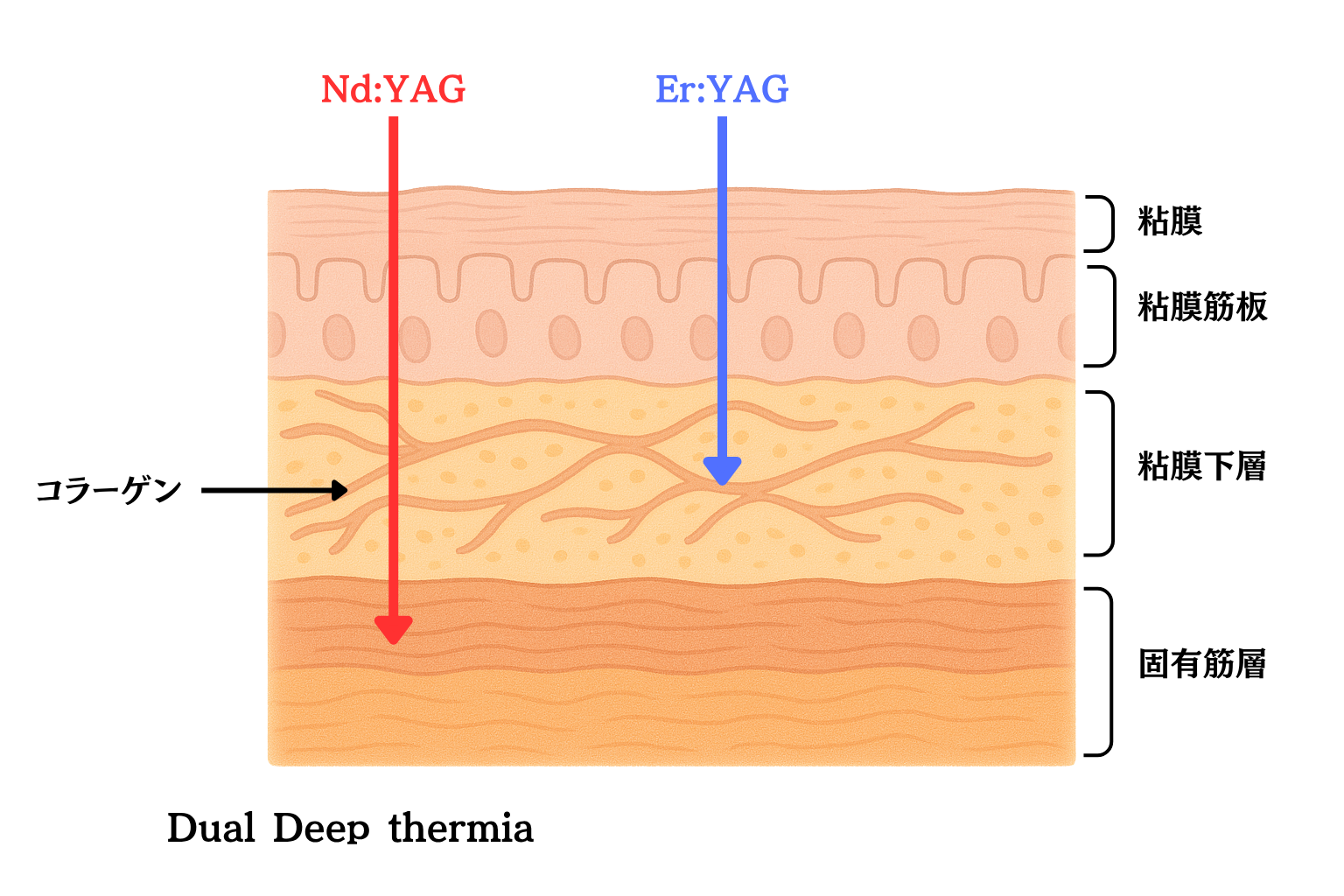
Snoring laser treatment applies heat to the soft palate and nearby tissue at the back of the throat to tighten it and reduce the vibration that causes snoring. Laser light has a wavelength (measured in nanometers, nm), and the wavelength determines how deep into the tissue the heat reaches.
|
Single-wavelength laser |
Dual-wavelength laser |
| Wavelengths used |
One (for example, Er:YAG 2940 nm only) |
Two (Nd:YAG 1064 nm + Er:YAG 2940 nm) |
| Where the heat goes |
Concentrated at the depth that wavelength suits |
Both the shallow layer (Er:YAG) and deeper tissue (Nd:YAG) |
| Design idea |
Simpler device, easier to keep equipment costs down |
Warms the throat tissue in layers, from the surface to deeper down |
| Points to note |
Heat reaches deeper tissue less easily |
More equipment and steps, so a clear explanation of the procedure matters |
The Er:YAG laser (2940 nm) is strongly absorbed by water, so it generates heat near the surface of the lining. The Nd:YAG laser (1064 nm) is absorbed much less by water and penetrates deeper. Combining the two is the idea behind “dual-wavelength.”
Key point
It is not as simple as “single-wavelength is bad” or “dual-wavelength is always better.” The number of wavelengths is a clue to how the treatment is designed. Judge it together with whether testing is done first, treatment time, number of sessions, and follow-up.
Do Dual-Wavelength Lasers Last Longer? What Research Shows
Short answer: No study has directly proven it. Single-wavelength lasers reduce snoring, but in one 2-year study snoring returned in about a third of those who improved. We use dual-wavelength because reaching deeper tissue makes sense for longer-lasting results.
No study has yet directly proven that dual-wavelength treatment lasts longer. However, because the heat reaches deeper tissue, our clinic believes dual-wavelength treatment is more likely to keep results going for longer.
If only the surface is heated while deeper layers stay slack, the effect may fade over time. Tightening the throat tissue from both the shallow and the deeper layers is expected to make results last longer. That is why we chose a dual-wavelength approach.
So how far does the research go? Here is what we were able to confirm:
| Study |
Design |
Findings |
| Single-wavelength (Er:YAG 2940 nm), 2-year follow-up: Kassab et al., Int Arch Otorhinolaryngol, 2023 (76 patients) |
Patients with snoring but no obstructive sleep apnea were treated with a non-ablative Er:YAG laser and assessed at 6 weeks and 2 years; no control group |
Snoring improved in many patients at 6 weeks, but recurred in 34.8% of those who had improved by the 2-year follow-up |
| Dual-wavelength (Nd:YAG then Er:YAG): Mendes, master’s thesis, IPEN São Paulo, 2022 (30 volunteers) |
People ranging from primary snoring to moderate sleep apnea received three non-ablative sessions 14 days apart, in a study described as a randomized, double-blind controlled trial |
Reported widening of the upper airway and improvement in sleep-disordered breathing; not a direct comparison with a single-wavelength laser |
Three points follow from this:
- Single-wavelength lasers have also been shown to improve snoring.
- With a single-wavelength laser, snoring came back within 2 years in about a third of those who had improved. The effect is not permanent.
- No study has yet compared single- and dual-wavelength lasers under the same conditions. In our own practice, our impression is that dual-wavelength results tend to last longer.
We cannot say dual-wavelength “always lasts longer,” but our patients tend to be satisfied
At present, the case for longer-lasting dual-wavelength results rests mainly on how deep the heat reaches, not on a direct comparison with single-wavelength lasers. Results vary from person to person, and the treatment is not permanent. We explain that results typically last about 1 to 2 years and recommend a dual-wavelength maintenance session every 6 to 12 months. Patients who keep up maintenance sessions tend to report high satisfaction.
We choose dual-wavelength treatment because being able to work on both the shallow and deeper layers makes sense for the goal of keeping results for longer. As research progresses, this view may change.
Five Things to Check When Choosing a Snoring Laser Clinic
Short answer: Do not choose on wavelength count alone. Check that the clinic tests for sleep apnea first and explains treatment time, how long results last, how many sessions are needed, and costs, with reasons.
| What to check |
What to look for |
| 1. How many wavelengths |
Single or dual? If dual, can they explain what each wavelength does? |
| 2. Time per session |
Not just how many minutes, but which areas are treated and for how long. At our clinic, a session takes about 15 to 20 minutes |
| 3. Testing beforehand |
Do they confirm with a sleep test that no sleep apnea is hidden before treating? |
| 4. Duration and number of sessions |
Can they explain how long results last, how many sessions are needed, and whether top-ups are required, with reasons? |
| 5. Price |
Are per-session prices, course prices, and the cost of top-up sessions clear in advance? |
In particular, if you are pressed to sign up for a single-wavelength treatment with short sessions and no clear explanation of how long results last, how many sessions you need, or what extra costs there may be, it is worth pausing and hearing another clinic’s explanation. In self-pay care, factors such as equipment costs and how many patients can be treated per day can shape how treatment is designed.
Three questions worth asking at a consultation
“Why this wavelength?” “How long will the effect last?” “What happens if the snoring comes back?” Whether a clinic can answer these with clear reasons is an important clue to how trustworthy it is.
For more, see How to Choose a Snoring Clinic in Japan.
Why Do You Need a Sleep Test Before Laser Treatment?
Short answer: Because sleep apnea can hide behind snoring, and laser treatment alone does not treat it. This matters more than the number of wavelengths.
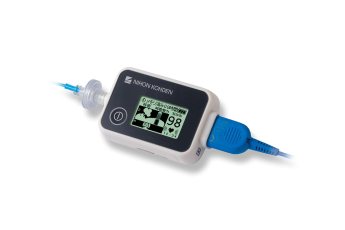
Some loud snorers have obstructive sleep apnea, in which breathing stops during sleep, and laser treatment alone does not cure apnea. This is the most important point to check, before the number of wavelengths. Even the 2-year study above treated only patients without obstructive sleep apnea.
Clinics that recommend laser treatment without any testing are taking a risk
If you have laser treatment while sleep apnea goes undetected, the snoring may get quieter while the apnea itself remains untreated and unnoticed. In severe sleep apnea (AHI 30 or more), laser treatment alone is unlikely to be enough, and standard treatment such as CPAP comes first.
At Ueno Snoring Clinic, we check your condition with a simplified test or insurance-covered PSG, which can be done at home with no hospital stay. People confirmed to have simple snoring are then offered laser treatment, and people with sleep apnea are offered insurance-covered CPAP. See Snoring Laser Treatment: Why a Sleep Test Comes First, Simple Snoring, CPAP, Insurance, and Laser Treatment, and AHI Explained: Severity Levels and CPAP.
How Our Dual-Wavelength Laser, Dual Deep Thermia, Works
Short answer: Dual Deep Thermia applies Nd:YAG and then Er:YAG laser to the throat in a 15- to 20-minute outpatient session with no anesthesia. Results usually build over a few sessions and last about 1 to 2 years.
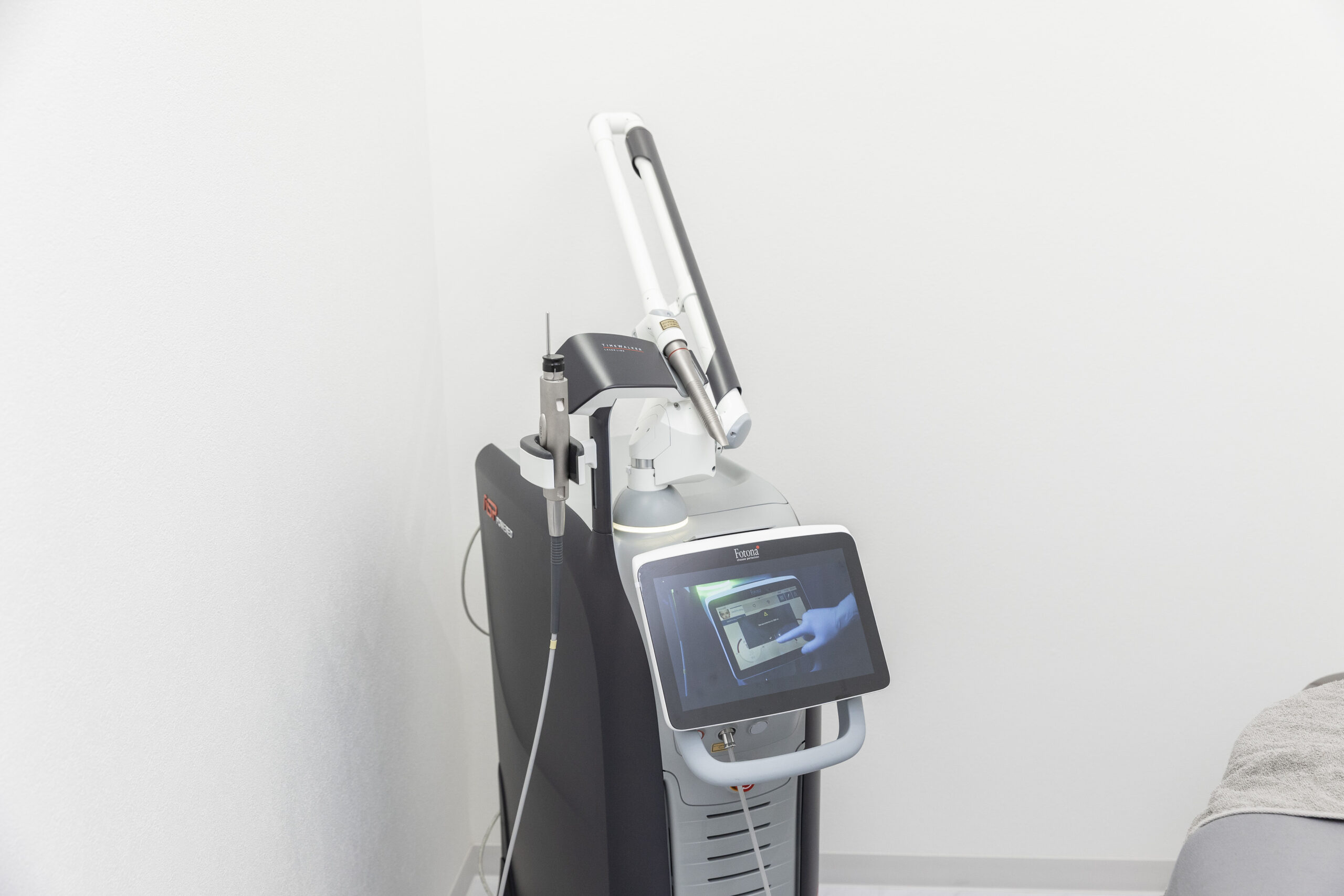
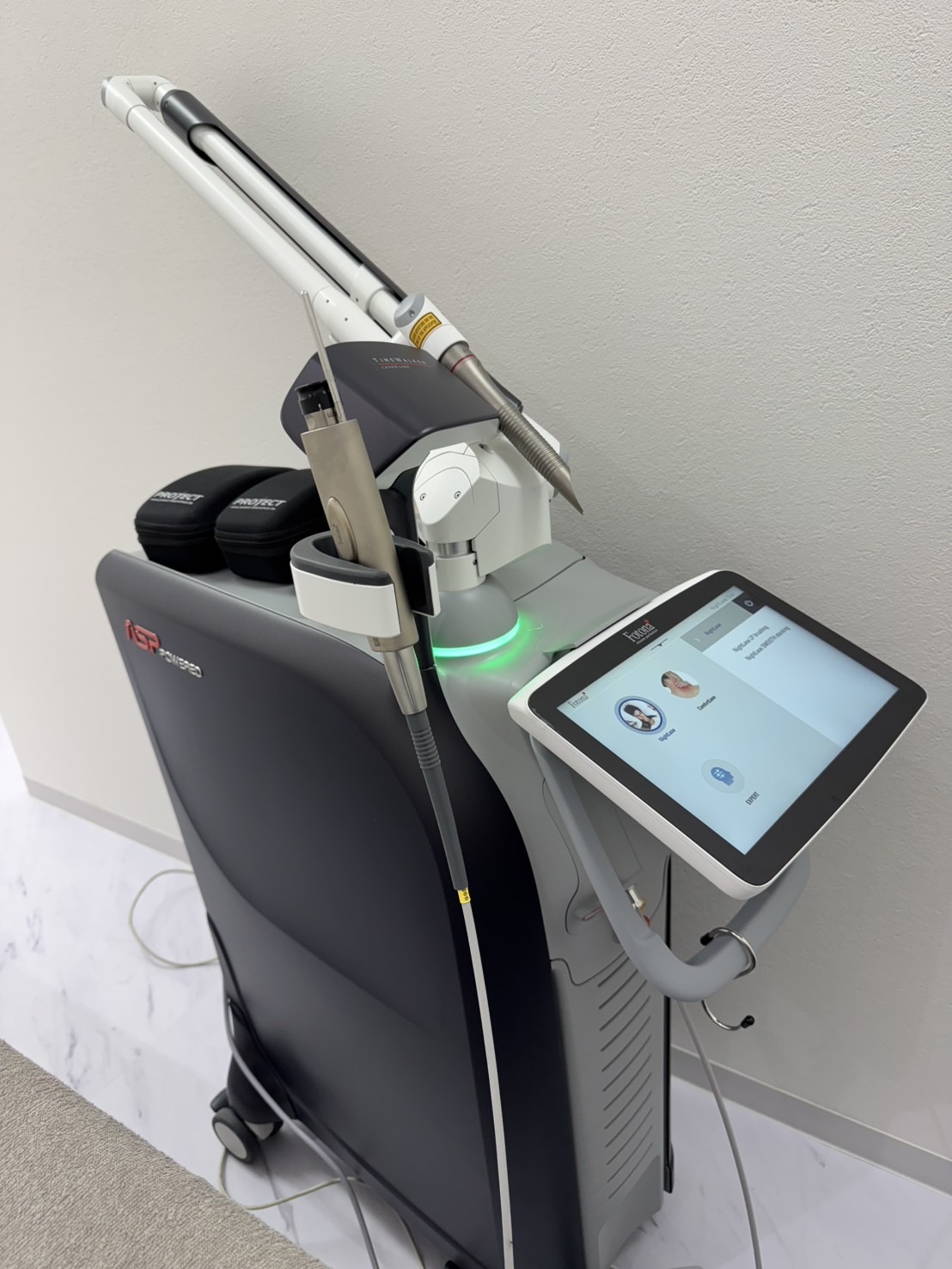
Dual Deep Thermia is Ueno Snoring Clinic’s snoring laser treatment, applying two wavelengths, Nd:YAG and Er:YAG, in sequence. Each session takes about 15 to 20 minutes, with no hospital stay or anesthesia.
| Item |
Details |
| Wavelengths |
Nd:YAG (1064 nm) + Er:YAG (2940 nm) |
| Order |
First, Nd:YAG at low power across the whole throat; then Er:YAG area by area, including the soft palate, around the uvula, and both sides of the tongue |
| Time per session |
About 15 to 20 minutes |
| During treatment |
Most people feel only warmth or slight prickling, with little or no pain |
| Afterward |
A stinging or odd feeling in the throat may last 1 to 2 days, and usually settles on its own |
| When results appear |
Not a dramatic overnight change; most people notice improvement a few weeks to 1 to 2 months after several sessions |
| How long it lasts |
About 1 to 2 years as a guide; not permanent. We recommend maintenance sessions every 6 to 12 months |
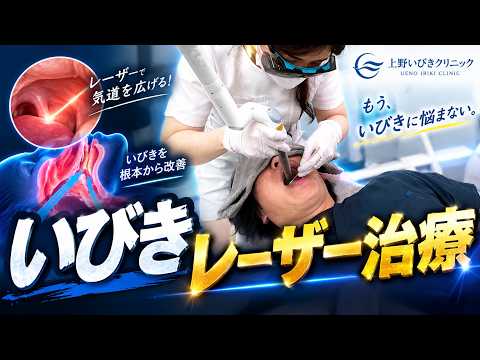
You can see the procedure and what it looks like during treatment in the featured video at the top of this page, in which our Director has the treatment himself.
Some people need extra assessment first, such as those with AHI 30 or more, very large tonsils or adenoids, a high BMI, a bleeding disorder, strong throat inflammation, or pregnancy. The number and spacing of sessions depend on your condition and are decided by the doctor. For more, see Dual Deep Thermia, How Many Snoring Laser Sessions Do You Need?, and Snoring Laser Treatment: Pain and Downtime.
What Ueno Snoring Clinic Can Do for You
Ueno Snoring Clinic (Ueno, Taito City, Tokyo) is a sleep medicine clinic focused on snoring and obstructive sleep apnea. We check your condition with an at-home simplified test and insurance-covered PSG, then offer insurance-covered CPAP to people with sleep apnea and dual-wavelength laser treatment to people with simple snoring.
If another clinic has recommended laser treatment and you feel unsure, or you cannot decide between single- and dual-wavelength treatment, please talk to us.
Summary: Choose by Testing and Explanation, Not Wavelength Count
- The wavelength of a snoring laser determines how deep the heat reaches.
- A dual-wavelength laser (Nd:YAG + Er:YAG) is designed to reach both the shallow and deeper layers of the throat, and our clinic considers it advantageous for longer-lasting results.
- Single-wavelength lasers also improve snoring, but in one study snoring returned within 2 years in about a third of those who improved; neither type is permanent, and no study has compared them directly.
- Whichever you choose, a sleep test to check for sleep apnea must come first.
When choosing a clinic, look beyond the number of wavelengths: check that it tests before treating and explains treatment time, number of sessions, how long results last, and costs with clear reasons. At our clinic, we recommend treatment tailored to each person based on test results.
Is Laser Right for You? Find Out With a Test First
Even if you want laser treatment, we first check for sleep apnea and then recommend the treatment that fits. Appointments only; same-day visits are often possible.
Frequently Asked Questions
Q. Is it OK to have snoring treatment at a self-pay-only clinic or a cosmetic clinic?
A. Some clinics that offer only self-pay care, and some cosmetic clinics, may not perform sleep testing. Before starting treatment, check whether the clinic performs a sleep test, or has a system for referring you to a medical institution where you can receive the necessary tests. If sleep apnea is hidden behind your snoring and treatment begins without testing, it may be missed. We recommend first checking your condition at a medical institution that offers sleep testing (simplified testing or PSG). For details, see
Simplified Sleep Test vs. PSG.
Q. What is a dual-wavelength snoring laser?
A. It combines two lasers that heat tissue to different depths: Nd:YAG (1064 nm) reaches deeper tissue and Er:YAG (2940 nm) heats the shallow lining. At Ueno Snoring Clinic, we offer it as Dual Deep Thermia.
Q. Which is more effective, single- or dual-wavelength?
A. No study has compared them directly yet. We consider dual-wavelength treatment advantageous for longer-lasting results because it works on both shallow and deeper layers, but either way, testing must first confirm simple snoring.
Q. How long do snoring laser results last?
A. They are not permanent; we use about 1 to 2 years as a guide. In a single-wavelength study, snoring returned within 2 years in about a third of those who had improved, so we recommend maintenance sessions every 6 to 12 months.
Q. Is snoring laser treatment covered by Japanese health insurance?
A. No, laser treatment for snoring is self-pay. The simplified test or PSG done beforehand, and CPAP if sleep apnea is diagnosed, are covered by insurance.
Q. Should I avoid clinics that use a single-wavelength laser?
A. Not on that basis alone. What matters is whether they test for sleep apnea first and explain treatment time, sessions, how long results last, and extra costs with clear reasons; if you are pressed to sign up without that, get a second opinion.
Q. Does the laser hurt? Are there side effects?
A. Most people feel only warmth or slight prickling during treatment. A stinging or odd feeling in the throat may last 1 to 2 days and usually settles on its own; you can watch our Director having the treatment in the video on this page.
Q. A clinic recommended laser treatment without a sleep test. Is that OK?
A. We do not recommend it. Sleep apnea can hide behind loud snoring, so get tested first and consider laser treatment only once simple snoring is confirmed.
Q. How many sessions will I need?
A. It depends on your throat and how you respond. Typically, results are reviewed after several sessions and the doctor decides whether more are needed.
*This article is a general explanation, written for a broad audience and based on the sources above together with our clinic’s own clinical experience. It is not a substitute for medical advice. Costs shown are rough guides and vary with the care provided and your insurance. If you are concerned about snoring or sleep apnea, please consult a medical institution for a proper evaluation.