


Snoring Treatment in Japan: A Complete Guide From Sleep Testing to CPAP and Laser Treatment
Do You Need a Sleep Study Before Laser Snoring Treatment? A Doctor Explains Why Testing Comes First

“I want to get laser treatment for my snoring, but I’m not sure if it’s really right for me…”
“I visited a sleep specialty clinic or snoring clinic, and they recommended laser treatment right away.”
We hear concerns like these frequently from patients at our clinic. On this page, a physician from Ueno Snoring Clinic explains in detail why testing should come first — something we believe everyone considering laser snoring treatment should understand. Laser treatment can be an effective option for the right candidate. But starting it without testing carries the risk of missing an underlying case of sleep apnea syndrome.
Before laser treatment, don’t miss the apnea.
Before considering laser snoring treatment, the most important step is confirming whether your snoring is actually the type laser treatment is designed to address.
Ueno Snoring Clinic offers a range of options tailored to each patient’s condition, including insurance-covered sleep testing and CPAP management, as well as self-pay laser treatment for snoring. If you’d like to find out which treatment is right for you, please book an initial consultation.
Details of the tests and treatments offered at Ueno Snoring Clinic can be found here
Reviewed by Our Director
Reviewed by Our Director
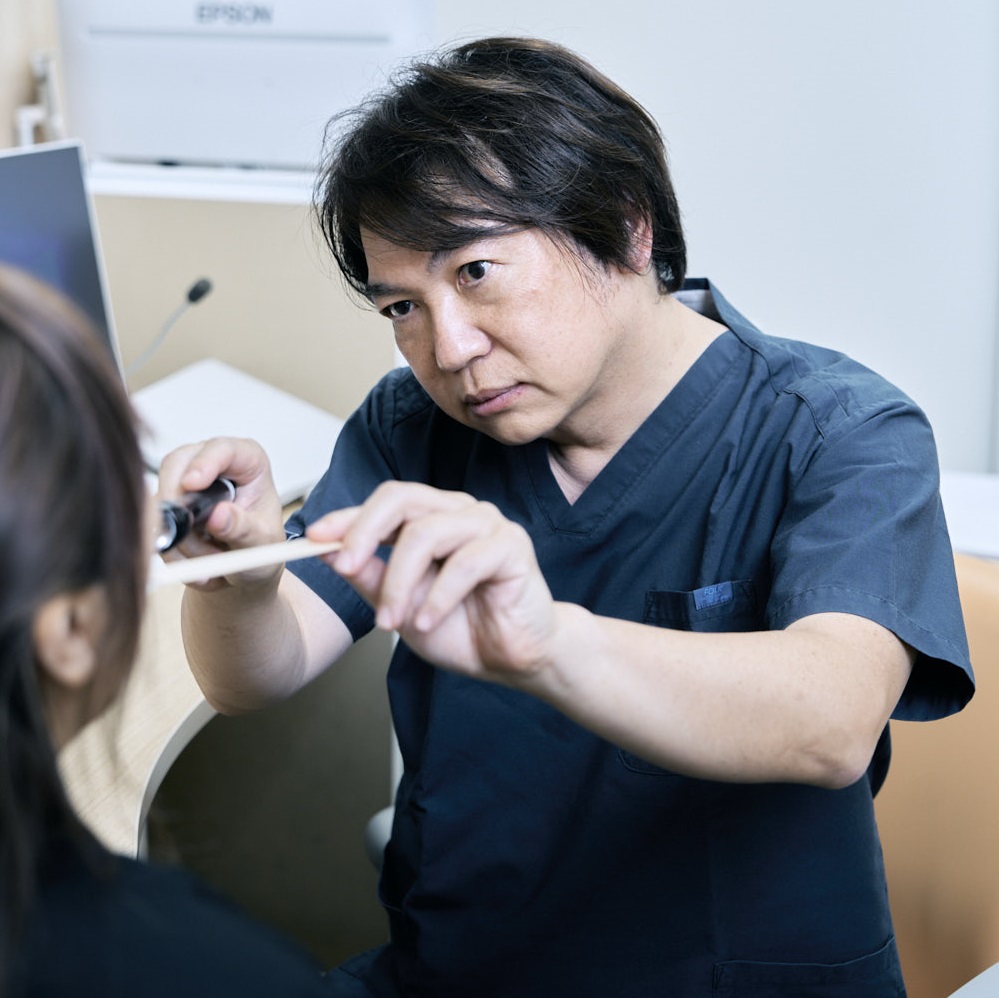
Kazuyuki Sugaya
Director / Anesthesiologist, Ueno Snoring Clinic
With more than 20,000 general anesthesia cases, our director provides care centered on the diagnosis and treatment of snoring and sleep apnea, tailored to each patient. [Insurance-Covered] Ueno Snoring Clinic
This article has been medically reviewed by Director Kazuyuki Sugaya and explains accurate medical information about testing and treatment for snoring and sleep apnea syndrome (SAS) in plain language.
🩺Comprehensive Snoring Treatment at Ueno Snoring Clinic
The causes of snoring range from throat structure to obesity. Ueno Snoring Clinic is not limited to a single treatment method — we offer a wide range of evidence-based options so we can propose the plan best suited to each patient.
Thorough Testing & Ongoing Treatment (Insurance-Covered)
- Home sleep test / PSG (polysomnography): Precise analysis of your sleep condition
- CPAP therapy: The standard treatment for moderate-to-severe apnea
Self-Pay Treatment for Root-Cause, Short-Term Results
- Latest laser snoring treatment: Incision-free, root-cause treatment
- Medical weight-loss support: Physically opening the airway through weight reduction
*As a clinic specializing in snoring treatment, we are committed to resolving “snoring that won’t stop” through both insurance-covered and self-pay options.
The Conclusion of This Article
Before undergoing laser snoring treatment, it’s important to use a sleep test to confirm whether sleep apnea syndrome (SAS) is present. Starting treatment without first confirming whether your snoring is the type laser can actually address — and without checking for oxygen drops or apnea during sleep — can mean the treatment falls short of your expectations, or a real health risk goes unnoticed.
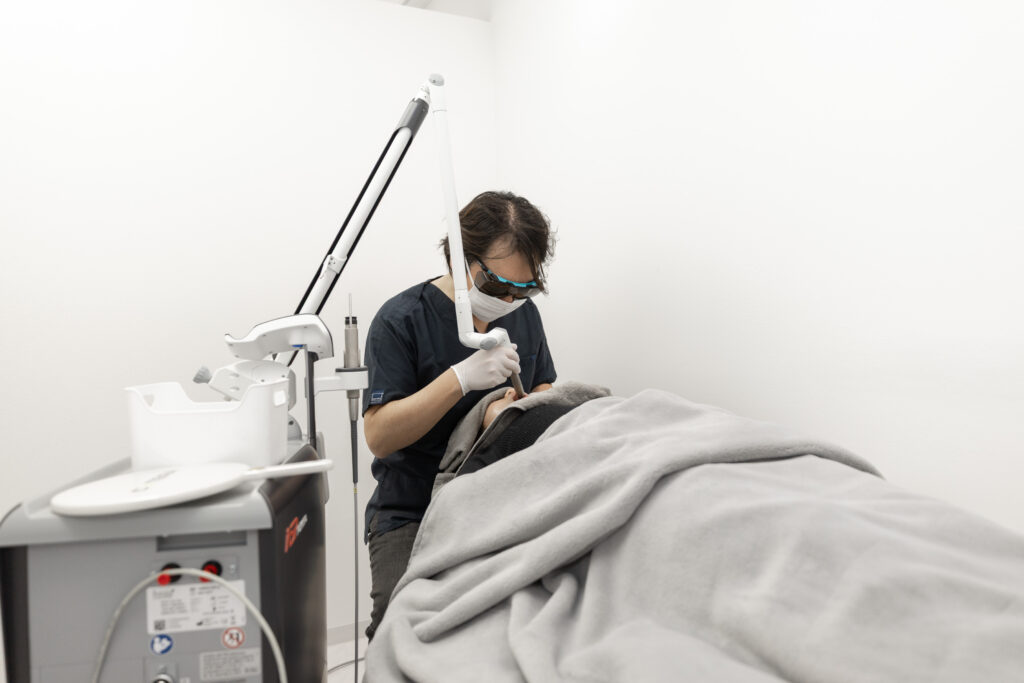
Laser snoring treatment has drawn attention in recent years for being incision-free with minimal downtime. It works by targeting the mucosal tissue of the throat and soft palate, aiming to reduce the vibration that causes snoring.
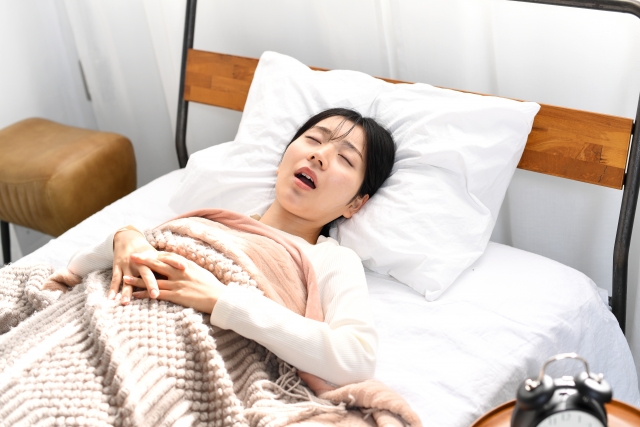
But snoring isn’t simply a “noise problem.” It’s a sign that your airway is narrowing during sleep — and sleep apnea syndrome (SAS) can be hiding behind it.
Even among patients who come to us wanting laser treatment for their snoring, some are, in fact, experiencing breathing pauses or drops in blood oxygen during sleep without realizing it. In those cases, reducing only the sound of snoring with a laser can leave the underlying strain on the body unaddressed.
How you choose a medical facility also matters a great deal — checking in advance, via the clinic’s website and elsewhere, exactly which physician will be seeing you is one of the most important steps. Please see our related article for more detail.

5 Points for Choosing the Right Clinic Without Regret
How to find a medical facility you can trust, without being swayed by online reviews or rankings.
What Causes Snoring, and When Laser Treatment Actually Works
Why Does Snoring Happen?
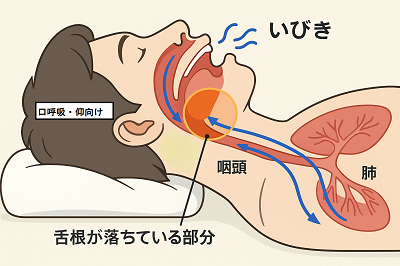
Snoring occurs when the airway narrows during sleep, and passing air causes the mucous membrane and soft tissue of the throat to vibrate. This “narrowing of the airway” is rarely caused by a single factor — it’s almost always the result of several overlapping causes.
The main contributing factors include:
- Soft palate / uvula vibration: Lying on your back causes the soft palate to sag and vibrate more easily with airflow
- Tongue-base collapse: The tongue falls backward during sleep, narrowing the airway
- Nasal congestion / mouth breathing: Breathing through the nose becomes difficult, increasing mouth breathing
- Jaw / skeletal structure: A small or receded lower jaw makes the airway more prone to narrowing
- Obesity: Fat around the neck and throat compresses the airway
- Aging / reduced muscle tone: Muscles around the throat become more prone to relaxing
- Alcohol / sleep medication: Reduces muscle tension, making the airway more prone to narrowing
As this shows, snoring has many possible causes. Starting laser treatment without first identifying the actual cause can mean the results fall short of expectations.
Which Types of Snoring Respond Well to Laser Treatment — and Which Don’t
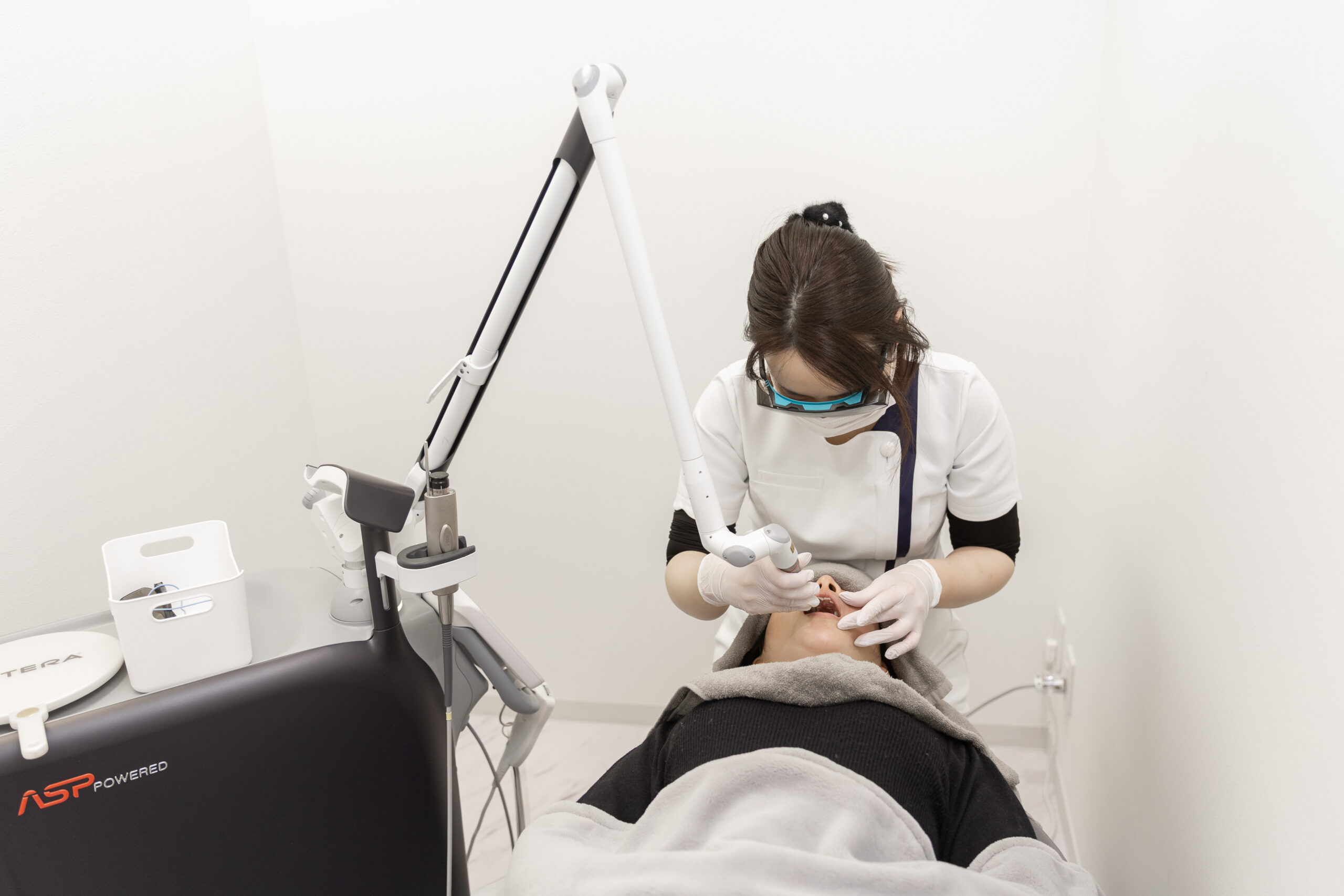
Laser snoring treatment is generally an option for relatively mild snoring where the primary cause is vibration in the mucosal or soft tissue of the throat — the soft palate and uvula in particular. By tightening the mucosal tissue, the laser can reduce vibration and, with it, the volume of snoring.
On the other hand, laser treatment alone may not provide sufficient improvement in the following situations:
Cases Where Laser Treatment Alone May Not Be Enough
Snoring primarily caused by tongue-base collapse / moderate-to-severe sleep apnea syndrome / snoring primarily caused by obesity / cases where nasal congestion or mouth breathing is the primary driver / cases involving jaw or skeletal structural issues
Snoring primarily caused by tongue-base collapse / moderate-to-severe sleep apnea syndrome / snoring primarily caused by obesity / cases where nasal congestion or mouth breathing is the primary driver / cases involving jaw or skeletal structural issues
In other words, laser treatment can be an effective option — but it doesn’t work equally well for every type of snoring. The first step is understanding which type your own snoring actually is.
If You Have Any of These Symptoms, Get Tested for Sleep Apnea First
Before deciding “I want to fix this with laser treatment,” please check the list below. If even one item applies to you, sleep apnea syndrome (SAS) may be present without your knowledge.
- A family member or someone you live with has told you your breathing stopped during sleep
- You wake up still tired, or don’t feel like you actually slept
- You feel strong sleepiness during the day
- You sometimes get sleepy while driving or in meetings
- You have high blood pressure, or take blood pressure medication
- Your BMI is 25 or higher, or you have a larger neck circumference
- You wake up repeatedly during the night, or urinate frequently at night
- You experience headaches in the morning
- You’ve noticed reduced concentration or memory
- Your snoring is loud and irregular, with pauses in between
- Your snoring gets dramatically worse on nights you drink alcohol
SAS is a condition in which breathing repeatedly stops or becomes shallow during sleep, causing blood oxygen levels to drop. Left untreated, it’s known to be associated with risks including high blood pressure, atrial fibrillation, stroke, heart attack, and diabetes.
If laser treatment only reduces the sound of snoring, while the underlying apnea and oxygen drops caused by SAS continue, the health risk remains. In fact, quieter snoring can make it harder for family members to notice something is wrong, potentially delaying discovery of the apnea even further.
Comparing Types of Sleep Tests and Treatments: What Each One Reveals, and What Changes as a Result
Types of Sleep Tests
| Type of Test | Location | What It Reveals | Insurance-Covered |
|---|---|---|---|
| Home Sleep Test Home polygraphy |
Home | Apnea-Hypopnea Index (AHI), fluctuations in blood oxygen (SpO2), presence of snoring, breathing irregularities | Yes |
| PSG Overnight polysomnography |
Medical facility or at home |
Detailed evaluation of sleep stages, brain waves, breathing, oxygen, ECG, body position, and type of apnea | Yes |
A home sleep test allows you to check your breathing and oxygen levels during sleep from home. It’s typically used as an initial screening step to determine whether sleep apnea syndrome is likely present.
PSG provides a more detailed evaluation of sleep and breathing. It offers a comprehensive assessment covering brain waves, sleep stages, changes in breathing, oxygen drops, and how these relate to sleep position.
How Treatment Approach Differs Based on Test Results
| Test Result / Condition | Likely Treatment Approach |
|---|---|
| Mild apnea or mainly snoring |
Lifestyle changes, positional therapy, mouth-breathing countermeasures, laser treatment may be considered |
| Mild sleep apnea |
Lifestyle changes, positional therapy, treatment tailored to symptoms, laser treatment considered if suitable |
| Moderate-to-severe sleep apnea |
CPAP and other treatments to address apnea and oxygen drops are prioritized |
| Significant nasal congestion / mouth breathing |
Addressing nasal symptoms, reviewing sleep environment, specialist referral as needed |
| Significant obesity or alcohol-related factors |
Weight management, reviewing drinking habits, additional treatment as needed |
As this table shows, even the same complaint of “snoring” can call for completely different treatment approaches depending on test results. Rather than deciding on a treatment approach first, confirming your condition through testing before choosing treatment is the best way to avoid regret after the fact.
Before laser treatment, don’t miss the apnea.
If you’re unsure whether laser treatment is right for you, or want to explore options beyond CPAP, the first step is checking whether sleep apnea is present.
Who Should Consider Laser Treatment, and Who Should Get Tested First
| Symptom / Situation | Laser Treatment Candidate | Prioritize Testing First |
|---|---|---|
| Snoring only, with no reported apnea | ○ | △ |
| Told your breathing stopped | ✕ | ◎ |
| Strong daytime sleepiness | ✕ | ◎ |
| High blood pressure or cardiovascular issues | ✕ | ◎ |
| BMI 25+ / tendency toward obesity | ✕ | ◎ |
| Morning headaches / frequent nighttime urination | ✕ | ◎ |
| Mild snoring, mainly throat-vibration driven | ○ | △ |
The table above is meant as a general guide only. In practice, the decision is made based on a combination of your history, examination, and test results. In particular, if a family member has told you your breathing stopped, if you never feel rested despite sleeping, or if you have high blood pressure, we recommend getting tested for sleep apnea syndrome before considering laser treatment.
What an Anesthesiologist-Led Sleep Specialty Clinic Can Offer
Why Does an Anesthesiologist Treat Snoring and Sleep?
Ueno Snoring Clinic is a sleep specialty outpatient clinic run by a board-certified anesthesiologist. Anesthesiologists are specialists in managing the airway and breathing of patients who are asleep. During surgery or sedation, we continuously assess a patient’s breathing status to make sure their airway remains safely open.
Viewed through that lens, snoring isn’t just “a noisy problem” — it can be evaluated as a question of airway and breathing safety during sleep.
Where exactly is the airway narrowing? Is the tongue collapsing backward? Is the mucosal lining of the throat vibrating? Is nasal congestion a factor? Is oxygen dropping during sleep? Evaluating snoring through this lens is what leads to choosing the right treatment.
Testing & Treatment Available at Ueno Snoring Clinic
■ Insurance-Covered Testing
- Home polygraphy: Evaluates breathing and oxygen drops during sleep from home
- PSG: Detailed evaluation of sleep, breathing, oxygen, and body position
- Airway evaluation through history-taking and physical examination
■ Treatment Recommendations Based on Test Results
- CPAP therapy: Covered under national health insurance
- Guidance on lifestyle and sleep position changes
- Consultation on weight management
- Laser treatment: Offered as a self-pay option once suitability has been confirmed
*The specifics of care and suitability vary based on symptoms, test results, and physician judgment.
For Those Considering Laser Treatment Because “I Don’t Want to Use CPAP”
We often hear patients say, “I don’t want to sleep with a CPAP machine, so I’d rather try laser treatment.” That’s a completely understandable feeling.
However, for cases of sleep apnea syndrome severe enough to require CPAP, laser treatment alone may not resolve the underlying issue.
CPAP works by applying a steady air pressure to the airway, preventing it from collapsing during sleep. For moderate-to-severe sleep apnea syndrome, it’s an important treatment option for improving apnea and oxygen drops.
Laser treatment, by contrast, primarily targets the mucosal and soft tissue of the throat. As a result, in cases significantly driven by severe apnea, tongue-base collapse, obesity, or skeletal airway narrowing, laser treatment alone may not be sufficient.
What matters isn’t deciding on a treatment method first. It’s confirming your condition through testing, and then choosing the treatment that’s actually right for you.
The Process of Care at Ueno Snoring Clinic
1. Initial Consultation & History-Taking
We ask about how often you snore, whether family members have noticed anything, daytime sleepiness, morning fatigue, medical history, drinking habits, and weight changes. It’s also important to know when your snoring started, whether it worsened suddenly, and whether anyone has noticed your breathing stopping during sleep.
2. Insurance-Covered Testing, As Needed
If your symptoms and history suggest sleep apnea syndrome may be present, we’ll recommend a home sleep test or PSG, both covered under national health insurance. These check your breathing during sleep, oxygen drops, and the number of apnea/hypopnea events.
3. Treatment Recommendation Based on Test Results
Based on your test results, we consider options such as CPAP, lifestyle changes, positional therapy, and laser treatment. It’s important to decide on a treatment approach based not just on the sound of snoring, but on whether apnea and oxygen drops are present.
4. Laser Treatment, If Suitable
If your consultation and test results suggest that vibration in the throat’s mucosal or soft tissue is the primary cause, and laser treatment is deemed suitable, we’ll offer it as a self-pay option.
Start With a Consultation or Test Booking
Before laser treatment, don’t miss the apnea.
If you’re concerned about your snoring, if a family member has pointed out signs of apnea,
or if you never feel rested no matter how much you sleep, please feel free to reach out.
We’ll recommend the right path for you — from insurance-covered testing to self-pay laser treatment.
Frequently Asked Questions
Conclusion: Confirm Through Testing Before Laser Treatment
- Laser snoring treatment can be an effective option for mild snoring primarily caused by throat vibration
- When tongue-base collapse, obesity, skeletal factors, or severe SAS are the cause, laser treatment alone may not be enough
- If you experience apnea, daytime sleepiness, high blood pressure, or morning fatigue, prioritize sleep apnea testing first
- A home sleep test or PSG can confirm your breathing status and oxygen drops during sleep
- Confirming your condition through testing before choosing a treatment — rather than deciding on treatment first — is the path to a treatment you won’t regret
- Evaluating “airway and breathing safety” from an anesthesiologist’s perspective is essential
Before laser treatment, don’t miss the apnea.
This is the single most important first step to avoiding regret in snoring treatment.
If you’re unsure whether laser treatment is right for you, if a family member has pointed out snoring or apnea, or if you never feel rested no matter how much you sleep, please reach out to us first.
Ueno Snoring Clinic | Sleep Specialty Outpatient Clinic | Airway & Breathing Evaluation by a Board-Certified Anesthesiologist
https://mdf.or.jp/ibiki-clinic/en/
[Insurance-Covered] If you’re concerned about snoring or sleep apnea, we offer a fully appointment-based system for reassuring, unhurried care.
Please feel free to contact Ueno Snoring Clinic [same-day appointments available]
📞0120-899-930
5F Ueno Silk Building, 4-8-8 Ueno, Taito-ku, Tokyo 110-0005, Japan

Please feel free to contact Ueno Snoring Clinic [same-day appointments available]
📞0120-899-930
5F Ueno Silk Building, 4-8-8 Ueno, Taito-ku, Tokyo 110-0005, Japan
Feel free to reach out to us on LINE ↓↓↓

English Support Available
We provide medical services for international patients. Please check our English website for details on how to visit our clinic.
Supervising Physician

Kazuyuki Sugaya, Director of Ueno Snoring Clinic
After graduating from Fujita Health University School of Medicine in 2004, Dr. Sugaya began his career as an anesthesiologist at Toho University Omori Medical Center. He has since gained extensive clinical experience at municipal hospitals and private clinics nationwide, administering general anesthesia in over 20,000 cases. In 2020, he founded the "Tokyo Spine Clinic," and has served as the Director of Ueno Snoring Clinic since 2025.
Related Columns



By Appointment Only
Specialized Snoring Treatment in Ueno
Ueno Snoring Clinic
Insurance-covered home testing available.
Following a physician’s consultation and result explanation,
we support the improvement of snoring and sleep apnea with "Dual Deep Thermia"—a non-surgical laser treatment, if necessary.
3-min walk from Ueno Station. Please feel free to consult us.