At Ueno Snoring Clinic, we check whether sleep apnea lies behind snoring or daytime sleepiness, using a simplified sleep test you can do at home and insurance-covered PSG (a detailed sleep study). No hospital stay is needed. We also offer insurance-covered CPAP treatment and self-pay snoring laser treatment.
Details of the tests and treatments offered at Ueno Snoring Clinic can be found here
Important: Snoring and Sleep Apnea Treatment Requires a Sleep Test
Some clinics that offer only self-pay care, and some cosmetic clinics, may not perform sleep testing. Before starting treatment, check whether the clinic performs a sleep test, or has a system for referring you to a medical institution where you can receive the necessary tests.
If sleep apnea is hidden behind your snoring and treatment begins without testing, it may be missed.
▶ Learn more about snoring and sleep apnea testing
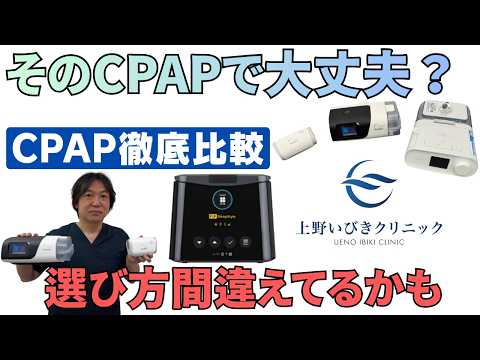
You’ll Want to Know This! A Complete Comparison of 5 CPAP Types — What Doctors Really Look For
Our doctor compares five different CPAP machines side by side and explains what actually matters when choosing one.
Watch the video
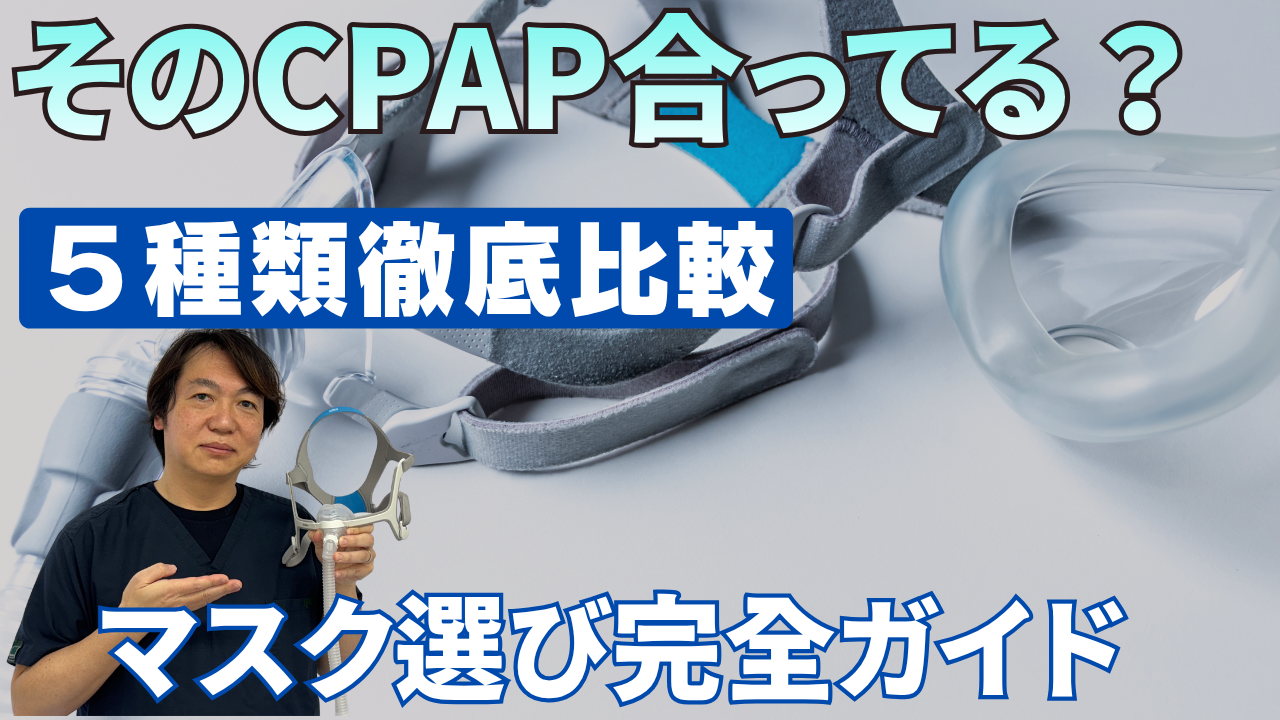
A Complete Comparison of CPAP Masks
We tried on and reviewed five different types of CPAP masks. 90% of CPAP comfort comes down to the mask.
Watch the video
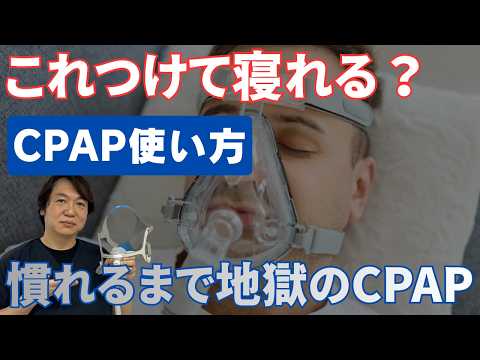
Do you have to use CPAP forever? A specialist explains how to use CPAP
A detailed explanation of how to use CPAP, with a real demonstration of what it feels like to wear the device.
Watch the video
Ueno Snoring Clinic was featured on Fuji TV’s “Live News It!” and on FNN Prime Online
Watch our clinic’s examination and explanation of sleep disorders, snoring, and sleep apnea.
Watch the video
Ueno Snoring Clinic was featured in an article on Nippon TV’s “news every.”
Please take a look as a starting point for thinking about getting evaluated for snoring, sleep apnea, or other sleep disorders.
Read the article
Reviewed by Our Director
Kazuyuki Sugaya
Director, Ueno Snoring Clinic / Anesthesiologist
Our director, with over 20,000 general anesthesia cases, focuses primarily on the diagnosis and treatment of snoring and sleep apnea, offering care tailored to each patient. [Insurance-Covered] Ueno Snoring Clinic
In this article, our Director, Kazuyuki Sugaya, uses research findings to explain how poor sleep from snoring and sleep apnea can affect friendships, emotional control, and relationships with others.
🩺Comprehensive Snoring Treatment at Ueno Snoring Clinic
At Ueno Snoring Clinic, simplified testing and PSG show whether sleep apnea lies behind your snoring or daytime sleepiness, and we propose a treatment plan based on the results.
Insurance-Covered: Thorough Testing and Ongoing Treatment
- Simplified testing: Home screening for sleep apnea
- PSG testing: A detailed sleep study including brain waves, done at home
- CPAP treatment: The standard treatment for apnea that meets insurance criteria
Self-Pay: Address the Root Cause, Short-Term Focus
- Snoring laser treatment: For people whose testing confirms simple snoring
- Medically supervised weight loss: An option when weight gain is a contributing factor
*Difficulties with other people can have causes besides sleep. Whether your sleep needs checking is decided by the doctor based on your symptoms and test results.
Our Director’s book, “Curing Snoring with the Latest Treatments” (an Amazon Japan bestseller — #1 in General Medicine, #1 in Clinical Internal Medicine, #2 in Family Health & Wellness), also explains how snoring affects daily life.
New Book by Our Director
“Curing Snoring with the Latest Treatments”
A guide to the latest snoring treatments, written by an anesthesiologist who has overseen the sleep of more than 10,000 patients.
View on Amazon
Quick Answer
When sleep apnea lies behind snoring, breathing is disrupted during sleep, oxygen drops and brief awakenings repeat, and sleep becomes fragmented. The result can be daytime sleepiness, poor concentration, and irritability, which may affect relationships: avoiding people, reacting emotionally, or having no spare attention to notice how others are feeling. In a study of healthy adults, a night without sleep made the brain’s emotional center (the amygdala) react over 60% more strongly. But that was a sleep-deprivation study; it doesn’t mean everyone with sleep apnea will be affected the same way. Relationship difficulties can also stem from depression, medication, stress, and more. If you’ve been told you snore or stop breathing, and you also have daytime sleepiness or irritability, the first step is to check your sleep with a test rather than guess.
📋 What This Article Covers
- Snoring is more than a noise problem
- Why snoring can shrink your social circle
- Why emotions get harder to manage: what research shows
- Struggling to read the room may be a tired brain
- What sleep can’t explain: telling other causes apart
- Daytime signs linked to snoring and sleep apnea
- The louder the snoring, the harder it is to notice yourself
- Protect your friendships and family life: start with a test
Snoring Is More Than a Noise Problem

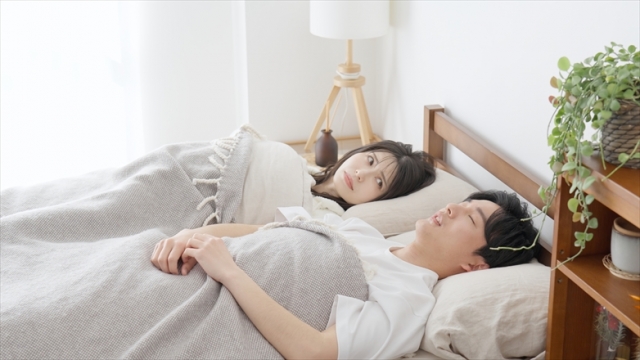
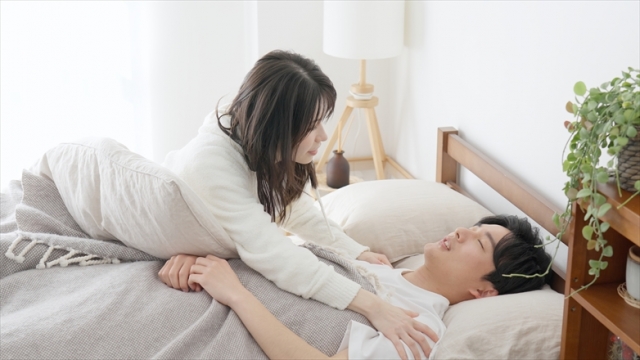
Most people think of snoring as a noise issue: it’s loud, it disturbs the family, it’s embarrassing on trips. That really is a big worry. Plenty of people start avoiding company because of it, whether on trips with friends, work retreats, sharing a room with a partner, or sharing a bedroom at home.
But the truly important point is that sleep apnea may be hiding behind the snoring. In sleep apnea, the airway narrows during sleep and breathing stops or becomes shallow. Each time, oxygen drops, the brain briefly wakes, and sleep is broken into fragments.
| Aspect |
Simple snoring |
With hidden sleep apnea |
| At night |
There’s snoring noise, but breathing continues |
Breathing stops or becomes shallow; oxygen drops and the brain tends to wake each time |
| Sleep |
Usually stays intact |
Fragmented; you may feel you slept, yet your brain and body haven’t rested |
| During the day |
Often little effect |
Sleepiness, weaker concentration and judgment, irritability, and more |
| Telling them apart |
Loudness alone can’t tell you |
Simplified testing or PSG measures apneas, hypopneas, and oxygen levels |
In other words, you may believe you slept seven hours while your brain and body were actually roused again and again. If that continues, it can affect not only daytime alertness and focus but also your emotions and relationships. For how snoring relates to sleep apnea, see Snoring Treatment in Japan: A Complete Guide.
Why Snoring Can Shrink Your Social Circle
There are two broad reasons snoring affects friendships.
1. Worry About the Noise Makes Overnight Stays Hard
People who snore loudly may start avoiding trips, business travel, staying over with friends, or sharing a room with a partner. Worries like these often lie behind it:
- “I’ll be a nuisance again.”
- “People will laugh at me while I’m asleep.”
- “I dread a friend pointing it out.”
- “I’d feel awful keeping someone awake.”
Anxiety like this leads to turning down more invitations, and the circle of friends naturally narrows. Because snoring is hard to stop by willpower, it’s also a symptom that tends to come with private embarrassment and guilt.
2. Poor Sleep Leaves Less Room for Conversation and Company
The other key reason is the loss of mental slack that comes with poor sleep. When sleep quality stays low, simply meeting people becomes a burden. Even at a dinner or chat you’d normally enjoy, heavy fatigue can leave you unable to really listen, slow to pick up on a joke, stiff in your expression, or struggling to keep up with the conversation.
To those around you, it can look as if you’ve become unsociable, grumpy, inattentive, or unable to read the room. Yet behind it may lie not your personality but a brain worn out by poor-quality sleep.
Why Emotions Get Harder to Manage: What Research Shows
Sleep is thought to help regulate emotion in the brain, not just to rest the body. When you’re well rested, the front of the brain (the prefrontal cortex) is thought to help keep anger or anxiety in check. When sleep is short for a while, that regulation works less well, and you may overreact to a remark you’d normally let pass, or answer family and friends sharply.
Here are the main studies on emotion, sleep, and sleep apnea that we were able to check:
| Study |
Participants and design |
Findings |
Caveats |
| Yoo et al. (Curr Biol, 2007) |
26 healthy young adults; a sleep-deprived group compared with a group that slept normally |
The amygdala, involved in emotion, reacted over 60% more in the sleep-deprived group. Its link with the prefrontal cortex, which dampens such reactions, also tended to weaken |
A study of one night without sleep, not of people with sleep apnea |
| Killgore et al. (Sleep, 2013) |
Examined how self-reported sleep relates to functional brain connectivity and emotional functioning |
Reported links between sleep, prefrontal–amygdala functional connectivity, and emotional functioning |
Shows an association, not cause and effect |
| Goldstein & Walker (2014), review |
A review of research on sleep and emotional brain function |
Concludes that sleep plays a part in emotional regulation and mood |
A review; may not apply to every individual |
| Povitz et al. (PLoS Med, 2014) |
Meta-analysis of 19 clinical trials (1,355 participants) on CPAP and depressive symptoms |
CPAP produced a modest improvement in depressive symptoms, with larger effects in groups that were depressed at the start |
The depression scales used have not been validated specifically in people with sleep apnea, and CPAP was not compared with antidepressants or psychotherapy |
These reports suggest that short sleep and sleep apnea can be linked to emotional instability and depressive symptoms. They do not show that sleep apnea will inevitably make your emotions unstable. Problems with emotion and mood arise from many overlapping factors beyond sleep.
Sleep apnea also differs from ordinary sleep loss: breathing is disrupted many times a night, with repeated drops in oxygen and brief awakenings. So even if you think you’re sleeping long hours, your brain may not be recovering fully. If you notice changes like these, it’s worth checking your sleep as well as your mental health:
- “I’ve become short-tempered recently.”
- “I’ve started speaking harshly to my family.”
- “I have no slack in conversations with friends.”
- “I react before I’ve taken in the other person’s expression.”
Struggling to Read the Room May Be a Tired Brain
“Reading the room” is actually a demanding job for the brain. You have to judge, in an instant, the other person’s expression, their tone of voice, the mood in the room, what lies behind their words, and how you should act right now. It draws on attention, memory, judgment, emotional regulation, and social cognition.
One study of people with sleep apnea looked at how faces are processed. Lv et al. (Nat Sci Sleep, 2020) compared 22 patients with obstructive sleep apnea with 21 healthy controls and found that the brain’s automatic response to happy and sad faces was smaller in the patients. The size of the response was related to measures such as the AHI (the number of apneas and hypopneas per hour) and daytime sleepiness scores. However, the study was small, used simplified drawn faces rather than photographs, and did not analyze results by severity. It doesn’t show that “people with sleep apnea can’t read the room”; it’s best seen as a preliminary report that facial-expression processing may differ.
Put simply, when the brain is tired from short or poor sleep, there can be less capacity to pick up on the subtle signals around you. For example:
- Talking on even though the other person is tired
- A joke coming out sounding harsh
- Being slow to notice how someone is reacting
- Losing focus partway through a conversation
- Saying something that doesn’t fit the moment
These aren’t necessarily character flaws. Poor sleep may be lowering the brain’s processing capacity and its emotional brakes. That doesn’t mean everyone who snores loses the ability to read a room. But it’s worth knowing that chronically poor sleep from snoring or sleep apnea can be one of the things that wears down your capacity in relationships.
Many reports have also pointed to effects of sleep apnea on cognitive functions such as attention, memory, and judgment. We explain how this relates to the brain’s recovery during sleep in a separate article.
What Sleep Can’t Explain: Telling Other Causes Apart
Sleep apnea isn’t the only reason people find socializing draining or get irritable. Factors like the ones below may be involved, and they can also coexist with sleep apnea.
| Possible factor |
Typical features |
Where to seek help |
| Sleep apnea |
Loud snoring, being told you stop breathing, morning headaches, unrefreshing sleep, daytime sleepiness |
A snoring and sleep apnea clinic (simplified testing, PSG) |
| Depression or anxiety disorders |
Ongoing low mood or loss of interest, insomnia, strong anxiety; may coexist with sleep apnea |
Psychiatry or psychosomatic medicine |
| Short sleep or an irregular routine |
Short sleep time, irregular bed and wake times, catching up on sleep at weekends |
Your regular doctor or a sleep clinic |
| Medication effects |
Sleepiness or irritability that began around when you started a medication |
The prescribing doctor or a pharmacist |
| Thyroid or other conditions |
Tiring easily, weight changes, palpitations |
Internal medicine |
| Heavy stress or a change in circumstances |
Timing overlaps with changes at work or at home |
An occupational physician, your regular doctor, or counseling |
If you’ve been told you snore or stop breathing, or you have strong daytime sleepiness, including a sleep apnea test among your options makes it easier to sort out the cause. If low mood persists or daily life is affected, please also consider seeing a psychiatrist or psychosomatic medicine specialist alongside a sleep test.
Daytime Signs Linked to Snoring and Sleep Apnea
If you have symptoms like these, a sleep disorder, including sleep apnea, may be involved:
| When |
Signs to look for |
| At night (often noticed by family) |
Family or a partner mentions your snoring / you’ve been told you stop breathing in your sleep / snoring gets worse after drinking / snoring is mild on your side but loud on your back |
| On waking |
You’re still tired in the morning / you wake with a headache or a dry mouth |
| During the day |
Strong daytime sleepiness / drowsiness in meetings or while driving / concentration or memory has slipped |
| Mood and relationships |
You’ve become more short-tempered / meeting people feels like a chore / you have no slack in conversations with friends or family |
If three or more of these 12 signs apply, don’t write it off as tiredness or personality; we recommend having your sleep checked. This isn’t a diagnostic rule, just a guide for when to consider a visit. If you feel strong sleepiness while driving, please see a doctor soon, as it can lead to accidents.
The Louder the Snoring, the Harder It Is to Notice Yourself
What makes snoring and sleep apnea tricky is that they happen while you’re asleep, so you rarely notice them. You may think “I sleep fine,” “I’m not that sleepy,” “I’m tired because of my age,” or “maybe my personality has just changed,” while in reality your breathing is disrupted at night and your brain and body are under strain.
It’s an especially important sign if a partner or family member says “your snoring is loud,” “you stop breathing,” or “you’ve been short-tempered lately.” Snoring is a symptom that others notice before you do. That’s why it matters to treat their comments as a health signal rather than brushing them off as nagging.
Protect Your Friendships and Family Life: Start With a Test
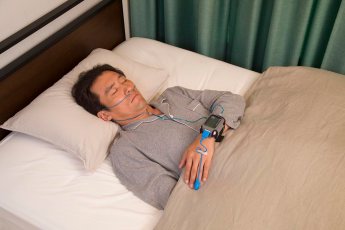
Snoring treatment isn’t only about making the noise quieter. It’s medical care that improves sleep quality and, with it, can help protect your daytime performance and your relationships with family and friends.
Whether you have sleep apnea can’t be judged from appearance or how loud you snore. Some people snore loudly but have mild apnea; others snore more quietly yet show large drops in oxygen. That’s why the key is not to guess, but to confirm with a test.
| Item |
Simplified test |
PSG (detailed study) |
| Where |
At home |
Can be done at home (no hospital stay at Ueno Snoring Clinic) |
| What it checks |
Breathing during sleep, oxygen levels, the number of apneas and hypopneas, and more |
Sleep quality in detail, including brain waves |
| Best suited to |
Finding out first whether apnea is present and roughly how severe |
Cases needing closer assessment, such as when the simplified test is inconclusive |
| Health insurance |
Covered (when the doctor judges it necessary) |
Covered (when the doctor judges it necessary) |
For the types of test and what a simplified test can and can’t tell you, see Simplified Sleep Test vs. PSG.
Confirm sleep testing before any snoring or apnea treatment
Before you begin any treatment, ask whether the clinic tests your sleep itself or will refer you to one that does. Self-pay-only and cosmetic clinics in particular may not offer this.
Testing and Treatment at Ueno Snoring Clinic
Ueno Snoring Clinic is a sleep-disorder clinic specializing in snoring and sleep apnea, offering both insurance-covered and self-pay care. Because the causes of snoring differ from person to person, we don’t take a one-size-fits-all approach; our proposals reflect your test results, the state of your upper airway, your lifestyle, and the kind of treatment you prefer.
1. Insurance-Covered Sleep Testing
A simplified sleep test done at home checks your breathing during sleep, your oxygen levels, and whether apneas or hypopneas occur. Where needed, we may also consider PSG, a more detailed study that can likewise be done at home.
2. CPAP Treatment
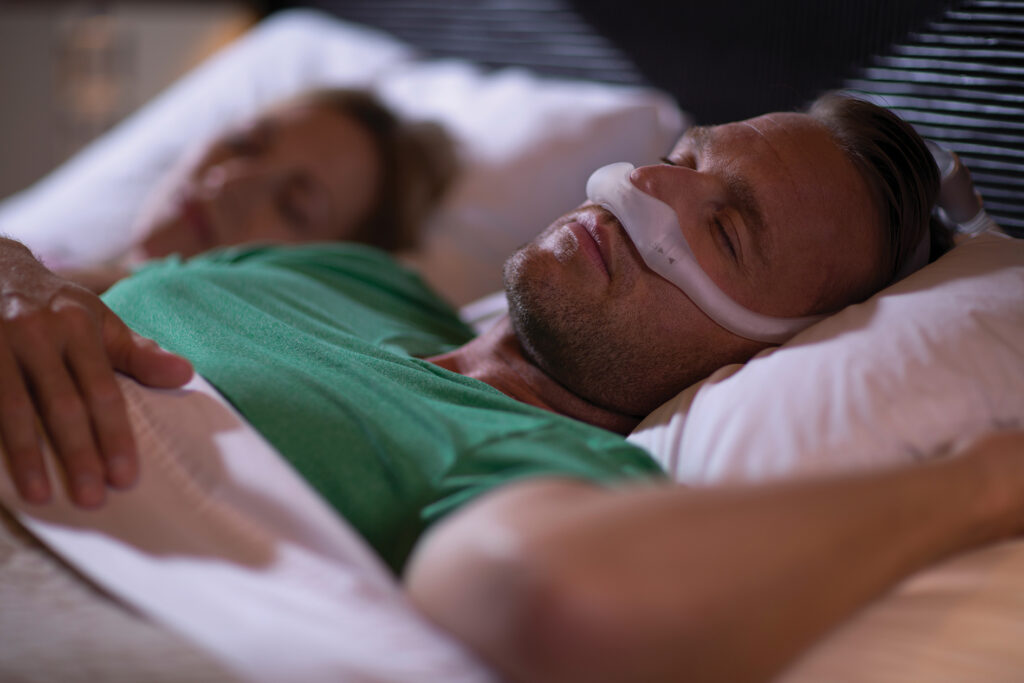
CPAP is an insurance-covered treatment for sleep apnea. It delivers air during sleep to keep the airway from closing, reducing apneas and hypopneas. Whether you can start CPAP under insurance depends on criteria such as your test results (AHI) and symptoms; these were revised in June 2026 (see A Guide to Insurance-Covered Sleep Apnea Testing in Japan). Because criteria can change, please confirm the latest details with a medical institution.
3. Self-Pay Snoring Laser Treatment
Depending on the severity of any sleep apnea, the structure of your throat, the condition of your soft palate and uvula, and your preferences, we may consider non-surgical snoring laser treatment. Please talk to us if the snoring noise itself is weighing on your life or relationships, if you’re troubled by snoring but don’t meet the CPAP insurance criteria, or if CPAP doesn’t suit you. Results and recovery vary between individuals, and we explain costs and precautions at your consultation. If testing finds apnea that calls for insurance-covered CPAP, that treatment takes priority.
If socializing has started to feel like hard work, or you find yourself speaking harshly to your family, please feel free to talk to us.
Summary: Snoring Is a Sleep Signal That Can Affect Relationships Too
Snoring isn’t just about noise. When sleep apnea lies behind it, breathing is disrupted during sleep, the brain and body don’t rest properly, and the result can be daytime sleepiness, poorer concentration and judgment, irritability, and weaker emotional control. That in turn can affect friendships and family life: meeting people feels like a chore, you avoid trips and overnight stays, you snap at family or friends, or you lose the capacity to read the room.
Of course, not every relationship difficulty can be explained by sleep. The research shows links between sleep and emotion or mood; it doesn’t establish the cause. But if you’ve been told you snore or stop breathing, and you also have daytime sleepiness, fatigue, irritability, or poor concentration, your sleep is worth checking.
Socializing feels draining, you speak harshly to family, conversations with friends leave you with no slack, or you’ve been told you snore or stop breathing: if this sounds like you, start with a sleep apnea test. Taking care of your sleep is a first step not only for your health, but for protecting your relationships.
Why Not Start by Checking Your Sleep?
If socializing feels draining, or irritability and daytime sleepiness won’t go away, please talk to us. By appointment only; same-day appointments are often available.
Frequently Asked Questions
Q. Is it OK to have snoring treatment at a self-pay-only clinic or a cosmetic clinic?
A. Some clinics that offer only self-pay care, and some cosmetic clinics, may not perform sleep testing. Before starting treatment, check whether the clinic performs a sleep test, or has a system for referring you to a medical institution where you can receive the necessary tests. If sleep apnea is hidden behind your snoring and treatment begins without testing, it may be missed. We recommend first checking your condition at a medical institution that offers sleep testing (simplified testing or PSG). For details, see
Simplified Sleep Test vs. PSG.
Q. Can snoring or sleep apnea change your personality?
A. Your personality itself doesn’t change, but when sleep quality drops, you may seem unlike yourself: more irritable, with bigger emotional swings, or without the energy to see people. Depressive symptoms and reduced cognitive function have been reported in people with sleep apnea, though not everyone is affected.
Q. Is getting irritated easily a sign of sleep apnea?
A. It may be one sign, but it can’t be judged on its own. If it comes together with snoring or pauses in breathing that others have noticed, daytime sleepiness, morning headaches, or unrefreshing sleep, a test is worthwhile. Other causes, such as depression or medication, can also be involved.
Q. Is struggling to read the room caused by lack of sleep or sleep apnea?
A. When the brain is tired from lack of sleep, attention, judgment, and emotional regulation have less spare capacity, and it can be harder to notice what’s going on around you. One small study also found differences in how people with sleep apnea process facial expressions. But difficulty reading the room can’t be explained by sleep alone, and there’s no firm conclusion yet.
Q. What does the research on sleep loss and emotion actually show?
A. A 2007 study by Yoo and colleagues in 26 healthy adults reported that the amygdala, a brain area involved in emotion, reacted over 60% more strongly in the sleep-deprived group. It studied one night without sleep, not people with sleep apnea.
Q. Will CPAP treatment improve my mood or emotions?
A. A 2014 meta-analysis of 19 clinical trials reported a modest improvement in depressive symptoms with CPAP. The size of the effect varies from person to person, and if low mood is severe, it’s important to see a psychiatrist or psychosomatic medicine specialist as well as treating your sleep.
Q. If three or more of the 12 signs apply, do I have sleep apnea?
A. No, it isn’t a diagnosis. Treat three or more as a prompt to have your sleep checked. A diagnosis requires testing, such as a simplified sleep test or PSG.
Q. I snore. Do I still need a test?
A. Yes. Snoring volume alone can’t tell you whether sleep apnea is present. Some people snore loudly with only mild apnea, while others snore quietly but have large drops in oxygen. That’s why confirming with a test matters.
Q. Are testing and CPAP covered by health insurance?
A. Sleep apnea testing (simplified testing and PSG) is done under insurance when the doctor judges it necessary. CPAP is covered when criteria such as your test results (AHI) and symptoms are met. Because criteria can be revised, please confirm at your visit.
Q. What tests are available at Ueno Snoring Clinic?
A. We offer simplified testing and insurance-covered PSG (a detailed study), both of which can be done at home with no hospital stay. Depending on the results, we guide you to insurance-covered CPAP, self-pay snoring laser treatment, or other options.
*This article is a general explanation, written for a broad audience and based on the sources above together with our clinic’s own clinical experience. It is not a substitute for medical advice. If you are concerned about snoring, sleep apnea, or your mood, please consult a medical institution for a proper evaluation.