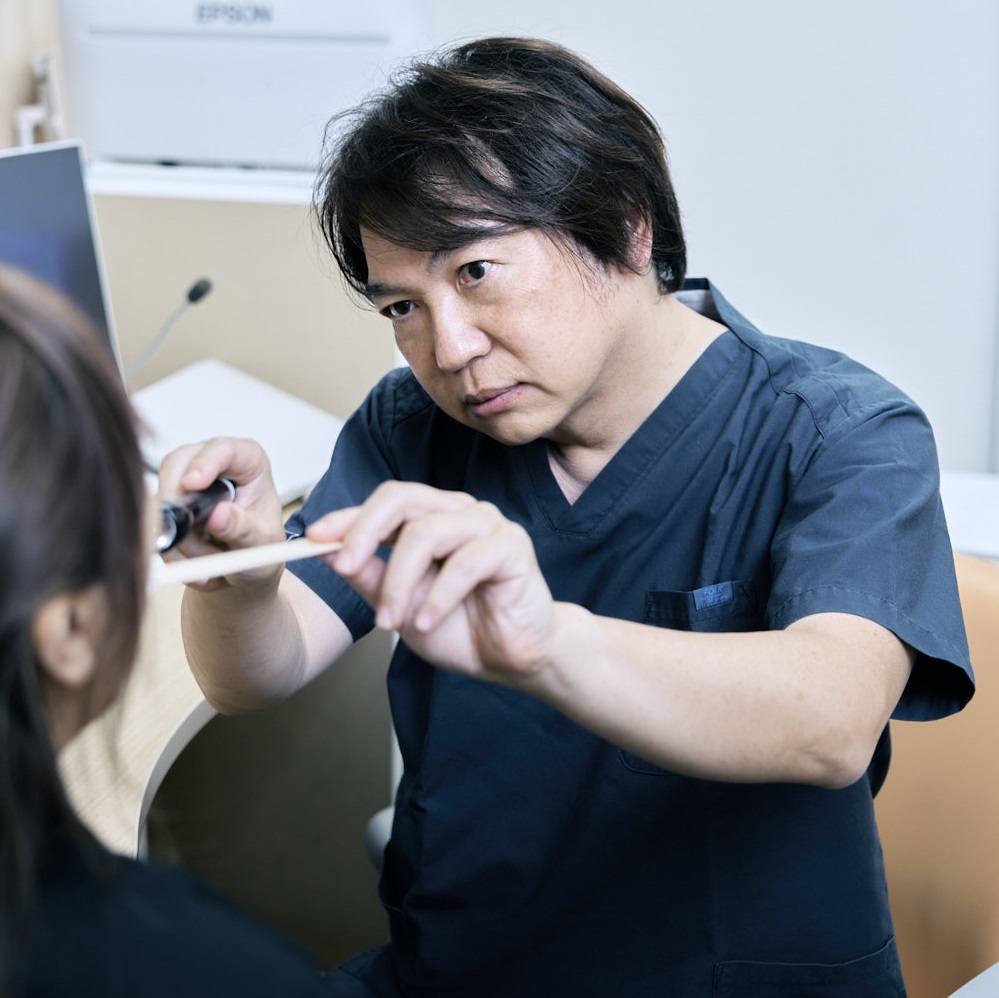
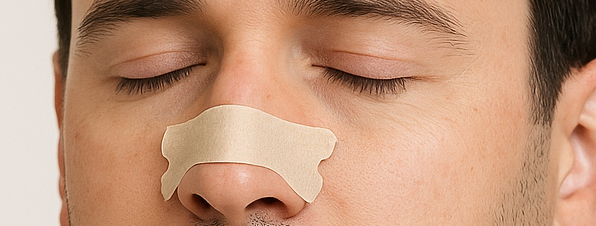
Our Director personally checks the size, shape, and position of every patient’s tongue as part of each examination. If you’re concerned about your tongue or oral health, and not just snoring or sleep apnea, please feel free to consult us.
Details of the tests and treatments offered at Ueno Snoring Clinic can be found here
You’ll Want to Know This! A Complete Comparison of 5 CPAP Types — What Doctors Really Look For
Our doctor compares five different CPAP machines side by side and explains what actually matters when choosing one.
Watch the video
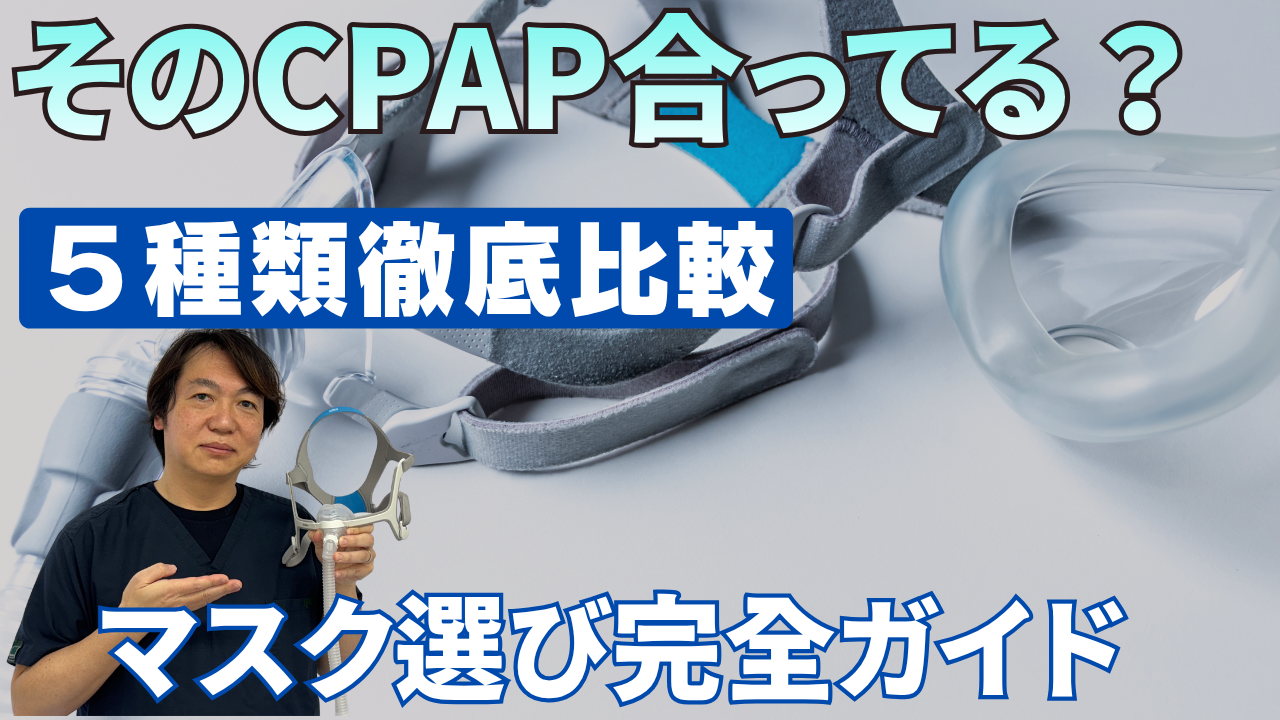
A Complete Comparison of CPAP Masks
We tried on and reviewed five different types of CPAP masks. 90% of CPAP comfort comes down to the mask.
Watch the video
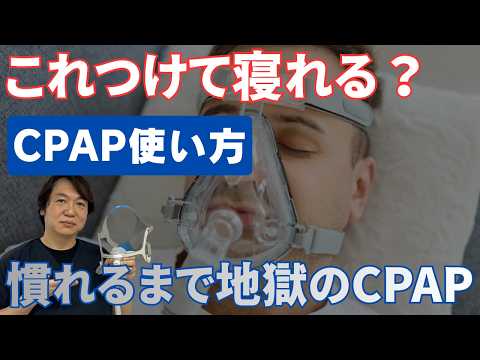
Do you have to use CPAP forever? A specialist explains how to use CPAP
A detailed explanation of how to use CPAP, with a real demonstration of what it feels like to wear the device.
Watch the video
Ueno Snoring Clinic was featured on Fuji TV’s “Live News It!” and on FNN Prime Online
Watch our clinic’s examination and explanation of sleep disorders, snoring, and sleep apnea.
Watch the video
Ueno Snoring Clinic was featured in an article on Nippon TV’s “news every.”
Please take a look as a starting point for thinking about getting evaluated for snoring, sleep apnea, or other sleep disorders.
Read the article
Reviewed by Our Director
Kazuyuki Sugaya
Director, Ueno Snoring Clinic / Anesthesiologist
Our director, with over 20,000 general anesthesia cases, focuses primarily on the diagnosis and treatment of snoring and sleep apnea, offering care tailored to each patient. [Insurance-Covered] Ueno Snoring Clinic
This article was reviewed by our Director, Kazuyuki Sugaya, and explains why the size, muscle tone, and position of the tongue matter for snoring and sleep apnea.
🩺Comprehensive Snoring Treatment at Ueno Snoring Clinic
The causes of snoring range from the structure of the throat to body weight and the shape of the tongue and jaw. Ueno Snoring Clinic doesn’t lean on any single treatment method — we’re set up to offer each patient the option that best fits their situation, based on sound medical evidence.
Insurance-Covered: Thorough Testing and Ongoing Treatment
- Simplified and PSG testing: A precise assessment of your sleep
- CPAP treatment: The standard treatment for moderate-to-severe apnea
Self-Pay: Address the Root Cause, Short-Term Focus
- The latest snoring laser treatment: A non-surgical, root-cause treatment, including a tongue-targeted option
- Medically supervised weight loss: Physically opening the airway through weight reduction
*As a clinic specializing in snoring treatment, we’re committed to resolving “snoring that won’t stop” from both the insurance-covered and self-pay sides. The diagnosis of oral lesions such as tongue cancer is a specialty of oral and maxillofacial surgery or otolaryngology; if we notice anything of concern during a tongue examination, we’ll recommend a referral to an appropriate specialist.
Our Director’s book, “Curing Snoring with the Latest Treatments” (an Amazon Japan bestseller — #1 in General Medicine, #1 in Clinical Internal Medicine, #2 in Family Health & Wellness), also covers this topic in more detail.
New Book by Our Director
“Curing Snoring with the Latest Treatments”
A guide to the latest snoring treatments, written by an anesthesiologist who has overseen the sleep of more than 10,000 patients.
View on Amazon
Quick Answer
The size and position of your tongue play a major role in snoring and sleep apnea. During sleep, the muscles supporting the tongue relax, and if the tongue is large relative to the jaw and dental arch (macroglossia), weakened by age-related muscle loss, or simply has nowhere to go because the jaw is small or set back, the base of the tongue is more likely to collapse backward and narrow the airway — the mechanism behind both snoring and apnea. A recent news report has also highlighted that a narrow, crowded dental arch — the same structural feature that leaves the tongue “with nowhere to go” — may also be linked to chronic tongue irritation and a rise in tongue cancer among younger people. If you notice clear tooth-mark indentations along the sides of your tongue, it’s worth having both your snoring and your oral health checked, and any mouth sore or lesion that hasn’t healed within 2–3 weeks should be evaluated by a specialist without delay.
📋 What This Article Covers
- Why the base of the tongue matters for snoring and sleep apnea
- What makes tongue base collapse worse: an enlarged tongue, muscle loss, and jaw shape
- Why “narrow dental arches” are in the news for both snoring and a rise in tongue cancer
- A self-check you can do today, and when to see a doctor
- How tongue-targeted laser treatment can also help with snoring
Why the Base of Your Tongue Matters for Snoring
Snoring and obstructive sleep apnea (OSA) are often assumed to be simply “about being overweight,” but in reality, they’re just as often about the shape of your upper airway — and specifically, the balance between your tongue, jaw, and dental arch.
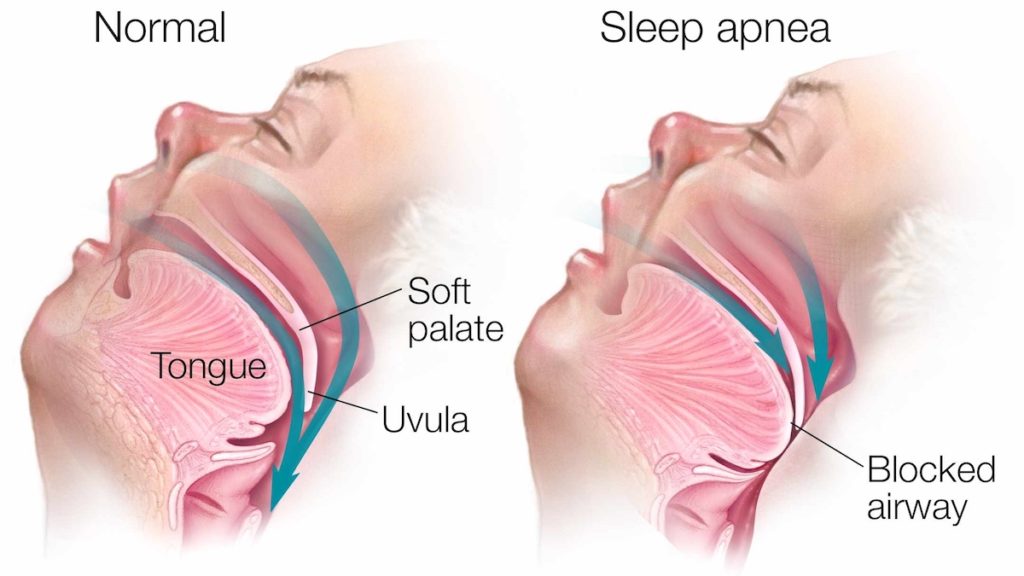
The base of the tongue sits at the very back of the tongue, right where it can easily fall into the throat. Normally, the muscles around the lower jaw and the tongue itself (the tongue muscles) hold it in place and keep the airway open. But during sleep — especially deep sleep, and especially lying on your back — muscle tone drops, and gravity pulls the base of the tongue backward toward the throat. This is called tongue base collapse.
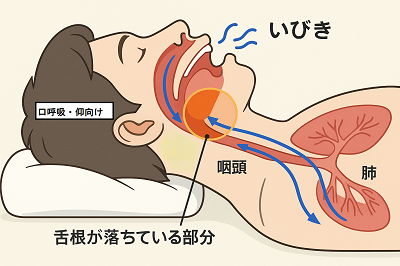
When tongue base collapse occurs, the airway physically narrows, and the surrounding soft tissue vibrates as air passes through it — that’s what produces the sound of snoring. If the airway closes completely, it results in an apnea event. The key point is this: snoring is a sound, but it should be treated as a sign that your airway is narrowing.
What Makes Tongue Base Collapse Worse
An Enlarged Tongue (Macroglossia)

When the tongue is relatively large — meaning its volume is greater than what the jaw and dental arch can comfortably accommodate — the base of the tongue tends to collapse backward more easily when lying on your back, narrowing the airway. A simple self-check is to look at the sides of your tongue for tooth-mark indentations (a scalloped edge). If you see clear, well-defined tooth marks when you look in the mirror, it may indicate that your tongue is relatively large, that your dental arch is narrow (leaving the tongue less room), or that clenching or teeth grinding is pressing the tongue against your teeth — often some combination of these.
Age-Related Muscle Loss: Sarcopenia Affects the Tongue Too
Sarcopenia — the age-related loss of muscle mass seen throughout the body — can also affect the tongue. As muscle fibers thin and nerve signaling declines, the tongue’s ability to hold itself forward and upward weakens, and the base of the tongue becomes more prone to sinking backward without you noticing. Over time, this can mean the tongue no longer springs back into position as easily during sleep, making airway obstruction and snoring more likely.
Jaw and Facial Structure: A Small or Receded Jaw Leaves the Tongue Nowhere to Go

A receded lower jaw (a small jaw set further back than average) tends to push the base of the tongue backward as well, narrowing the space in the throat. In other words, some people are, by skeletal structure alone, built with a narrower airway from the start — even at a healthy body weight. Imaging studies have pointed to a small or shallow lower jaw, along with the size and position of the tongue, as risk factors for OSA, and comparative research has also suggested that differences in craniofacial structure among East Asian populations may contribute to the background of sleep apnea.
Why “Narrow Dental Arches” Are Also in the News for Tongue Cancer
A recent news report drew our attention to this topic. According to reporting on tongue cancer in Japan, cases among younger people have roughly doubled over the past 20 years, and one contributing factor discussed is a narrow, crowded modern dental arch that leaves teeth — particularly the sharper edges of molars — pressing repeatedly against the side of the tongue. That same report also outlined some rough guidance for telling a canker sore apart from something more concerning: an ordinary canker sore often heals within 2–3 weeks, while a tongue cancer lesion may persist for a month or two without improving, and clues such as a poorly defined border, a firm lump, or a distinctive pattern of pain can also be a useful signal.
Here’s the connection to snoring: a narrow dental arch, a relatively large tongue, and a habit of clenching or grinding your teeth are the same structural conditions that make it more likely for teeth to repeatedly rub against the tongue while awake, and for the base of the tongue to sink backward while asleep. Having tooth-mark indentations along the edge of your tongue doesn’t mean you have — or will develop — tongue cancer. But if your tongue’s structure makes it prone to rubbing against your teeth, it’s a reasonable moment to think about both your sleep and your oral health at the same time.
Snoring/tongue base collapse and chronic tongue irritation don’t share a single cause, but they can share the same underlying structural conditions.
A narrow dental arch, a relatively large tongue, and jaw clenching can all make both issues more likely — which is exactly why checking the tongue is part of a thorough snoring evaluation.
A Self-Check You Can Do Today
Look in the mirror and check yourself against the two lists below.
| Category |
What to Check |
| Snoring / OSA signs |
Snoring worsens on your back and improves on your side; dry mouth or a groggy head on waking; noticeable daytime sleepiness; you’ve been told you stop breathing at night |
| Tongue / oral signs |
Clear tooth-mark indentations along the sides of the tongue; the same spot keeps developing a canker sore; a sore, unclear-bordered patch, or lump that hasn’t healed in 2–3 weeks or more |
If anything in the second row applies to you, the news report we mentioned above recommends not waiting it out, and instead having it evaluated at an oral and maxillofacial surgery clinic or similar specialist.
Tongue-Targeted Laser Treatment Can Also Help Prevent Snoring
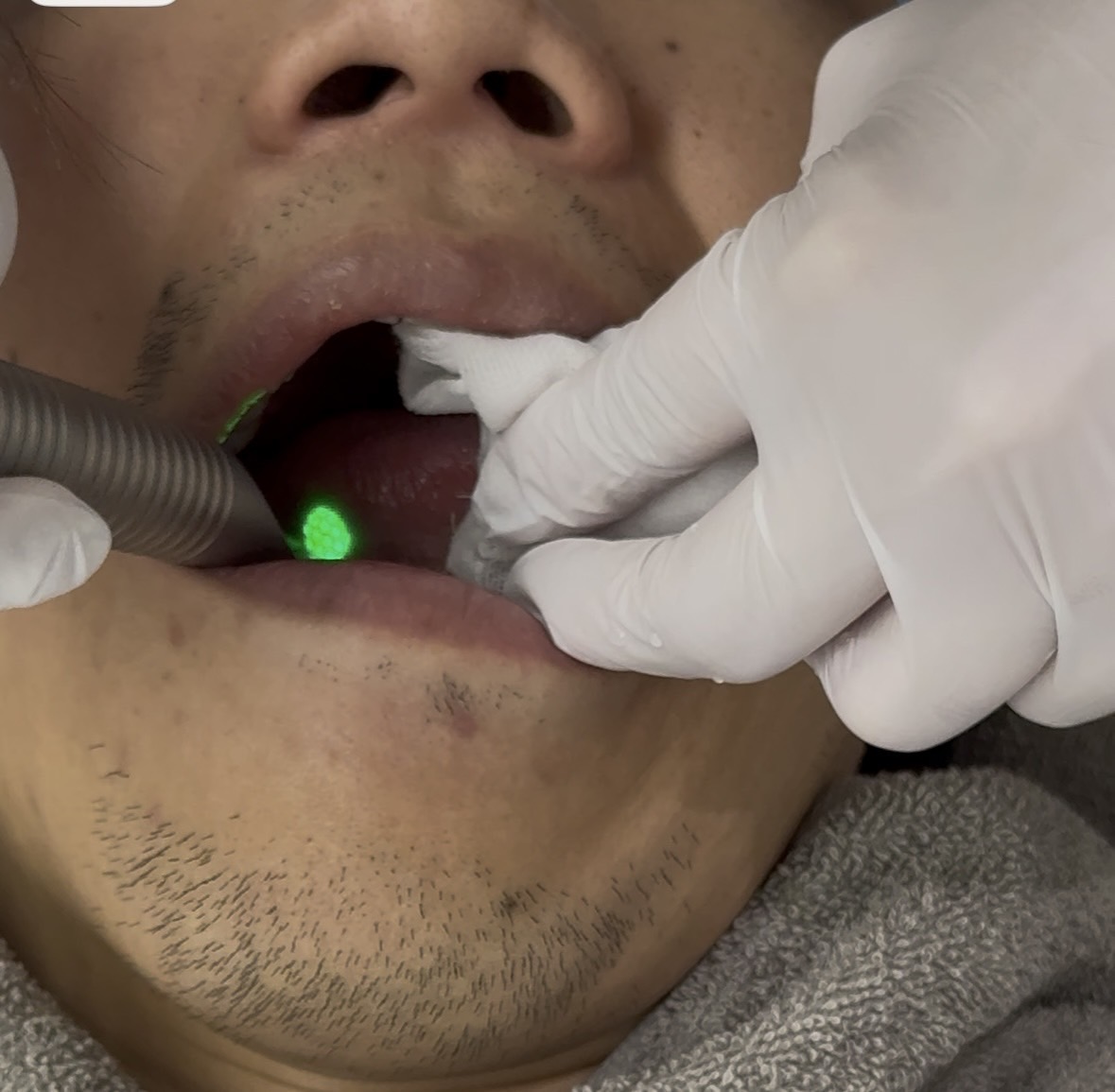
At Ueno Snoring Clinic, we also offer laser treatment aimed specifically at the tongue as part of our approach to snoring prevention. By adjusting the laser’s frequency and wavelength for tongue tissue, the goal is to increase tongue muscle tone and stimulate collagen production — helping the tongue hold its position more firmly and making it less likely to collapse backward during sleep.
What We Check at Ueno Snoring Clinic
Ueno Snoring Clinic is a sleep medicine clinic specializing in snoring and sleep apnea syndrome. Because the tongue plays such a central role in both conditions, our Director personally examines the size, muscle tone, and position of the tongue at every visit, alongside the standard evaluation of the throat and airway.
If we notice anything on the tongue itself that looks like it may need attention beyond snoring — such as a persistent sore or lesion — we’ll recommend a referral to oral and maxillofacial surgery or otolaryngology, since diagnosing and treating those conditions is outside our specialty.
In Summary: Your Tongue’s Shape, Muscle, and Position Are All Worth a Closer Look
Tongue base collapse sits at the center of the mechanism behind snoring and sleep apnea, and it’s made more likely by an enlarged tongue, age-related muscle loss, and a small or receded jaw. A recent news report connecting narrow, modern dental arches to chronic tongue irritation and a rise in tongue cancer among younger people is a reminder that these same structural conditions — a crowded dental arch, a relatively large tongue, and jaw clenching — can affect both your airway at night and your oral health during the day.
If your symptoms continue, we’d recommend a sleep medicine evaluation for your snoring or apnea, and a visit to a dentist or oral and maxillofacial surgeon for any tongue lesion that doesn’t heal.
Concerned About Your Tongue, Snoring, or Sleep Apnea?
Our Director will examine the size, muscle tone, and position of your tongue as part of a thorough evaluation of your snoring and sleep apnea.
Frequently Asked Questions
Q. I have tooth marks on the sides of my tongue. Does that mean I have a large tongue?
A. Clear, well-defined tooth marks can suggest a relatively large tongue, a narrow dental arch, or jaw clenching — often some combination of the three. It’s worth having your tongue examined at your next sleep or dental checkup rather than judging from the mirror alone.
Q. Does having tooth marks or a large tongue mean I might have tongue cancer?
A. No — tooth marks alone are not a sign of cancer. What matters is whether a specific sore, lump, or patch on the tongue fails to heal within 2–3 weeks, has an unclear border, or feels different from an ordinary canker sore. If so, please have it evaluated by an oral and maxillofacial surgeon or ENT specialist rather than waiting.
Q. Can treating my tongue really improve my snoring?
A. The tongue is one of several factors behind snoring, alongside the throat, jaw, and body weight, so results vary by individual. That said, improving tongue muscle tone and position — through options such as tongue-targeted laser treatment — has been reported to help in appropriate cases.
Q. Is tongue-targeted laser treatment covered by insurance?
A. No, it’s a self-pay treatment. Insurance-covered options such as simplified sleep testing, PSG, and CPAP are also available, and we’ll help you choose the combination that fits your situation.
Please Start With an Initial Consultation
From testing to treatment for snoring and sleep apnea, we support you with a whole-body perspective. Fully appointment-based, with same-day appointments available.
*This article is a general explanation, written for a broad audience and based on the sources above together with our clinic’s own clinical experience. It is not a substitute for medical advice. The diagnosis and treatment of tongue lesions, including tongue cancer, should be handled by an oral and maxillofacial surgeon or otolaryngologist; please consult one promptly if you have a persistent sore, lump, or lesion.