Ueno Snoring Clinic sees people who were flagged for snoring or possible sleep apnea at a health checkup, from the first at-home simplified test through to home PSG when a closer look is needed.
Details of the tests and treatments offered at Ueno Snoring Clinic can be found here
Important: Snoring and Sleep Apnea Treatment Requires a Sleep Test
Some clinics that offer only self-pay care, and some cosmetic clinics, may not perform sleep testing. Before starting treatment, check whether the clinic performs a sleep test, or has a system for referring you to a medical institution where you can receive the necessary tests.
If sleep apnea is hidden behind your snoring and treatment begins without testing, it may be missed.
▶ Learn more about snoring and sleep apnea testing
You’ll Want to Know This! A Complete Comparison of 5 CPAP Types — What Doctors Really Look For
Our doctor compares five different CPAP machines side by side and explains what actually matters when choosing one.
Watch the video
A Complete Comparison of CPAP Masks
We tried on and reviewed five different types of CPAP masks. 90% of CPAP comfort comes down to the mask.
Watch the video
Do you have to use CPAP forever? A specialist explains how to use CPAP
A detailed explanation of how to use CPAP, with a real demonstration of what it feels like to wear the device.
Watch the video
Ueno Snoring Clinic was featured on Fuji TV’s “Live News It!” and on FNN Prime Online
Watch our clinic’s examination and explanation of sleep disorders, snoring, and sleep apnea.
Watch the video
Ueno Snoring Clinic was featured in an article on Nippon TV’s “news every.”
Please take a look as a starting point for thinking about getting evaluated for snoring, sleep apnea, or other sleep disorders.
Read the article
Reviewed by Our Director
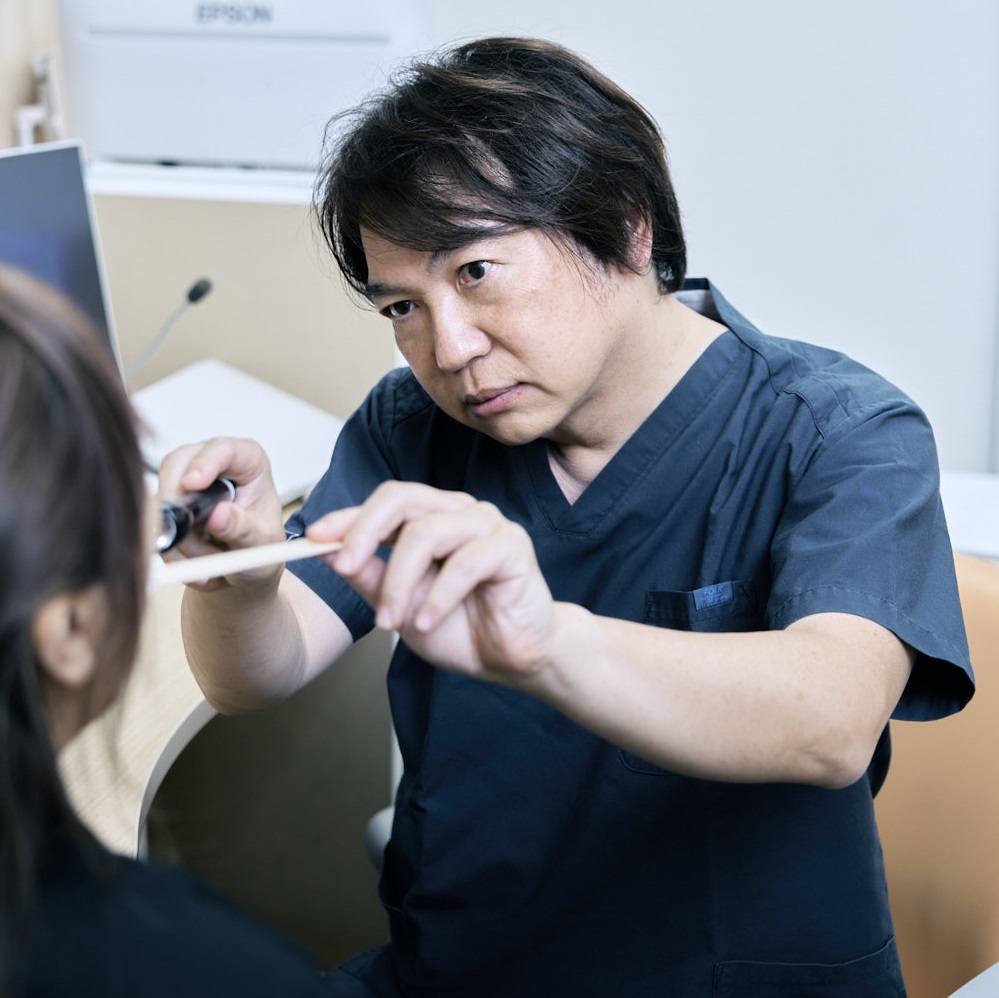
Kazuyuki Sugaya
Director, Ueno Snoring Clinic / Anesthesiologist
Our director, with over 20,000 general anesthesia cases, focuses primarily on the diagnosis and treatment of snoring and sleep apnea, offering care tailored to each patient. [Insurance-Covered] Ueno Snoring Clinic
In this article, our Director, Kazuyuki Sugaya, explains the simplified sleep test and home PSG for people told at a health checkup that their snoring needs further examination. Medically reviewed November 2026.
🩺Comprehensive Snoring Treatment at Ueno Snoring Clinic
For people flagged at a health checkup, Ueno Snoring Clinic covers the whole path in one place: the simplified test, home PSG when it is needed, and a treatment plan based on the results.
Insurance-Covered: Thorough Testing and Ongoing Treatment
- Simplified testing: Home screening for sleep apnea
- PSG testing: A detailed sleep study including brain waves, done at home
- CPAP treatment: The standard treatment for apnea that meets insurance criteria
Self-Pay: Address the Root Cause, Short-Term Focus
- Snoring laser treatment: For people whose testing confirms simple snoring
- Medically supervised weight loss: An option when weight gain is a contributing factor
*Whether a treatment is appropriate, and what it can achieve, differs from one person to the next, so an examination comes first.
Our Director’s book, “Curing Snoring with the Latest Treatments” (an Amazon Japan bestseller — #1 in General Medicine, #1 in Clinical Internal Medicine, #2 in Family Health & Wellness), also covers sleep testing in detail.
New Book by Our Director
“Curing Snoring with the Latest Treatments”
A guide to the latest snoring treatments, written by an anesthesiologist who has overseen the sleep of more than 10,000 patients.
View on Amazon
Quick Answer
If a health checkup flags snoring or possible sleep apnea, the usual first step is an at-home simplified sleep test: you wear small sensors for one night, it is covered by Japanese health insurance, and no hospital stay is needed. If that result is borderline, does not match your symptoms, or could not be read properly, the next step is PSG (polysomnography), which adds brain waves and can measure how long you actually slept. PSG can now often be done at home without admission, with the kit sent and returned by post. Since the June 2026 revision, CPAP can be covered by insurance at AHI 30 or more on a simplified test, or AHI 15 or more on PSG, together with symptoms such as daytime sleepiness. A checkup flag is not a diagnosis, but it is a good reason to get tested.
📋 What This Article Covers
- What does “further examination required” for snoring mean?
- What can a simplified sleep test tell you, and what can it miss?
- When is PSG recommended?
- Can PSG be done at home? How home PSG works
- Simplified test vs. home PSG: side-by-side comparison
- What results qualify for insurance-covered CPAP (June 2026 criteria)?
What Does “Further Examination Required” for Snoring Mean?
Short answer: It means your answers or findings suggest sleep apnea is possible and should be checked; it is not a diagnosis. Whether you actually stop breathing in your sleep is confirmed by a sleep test.
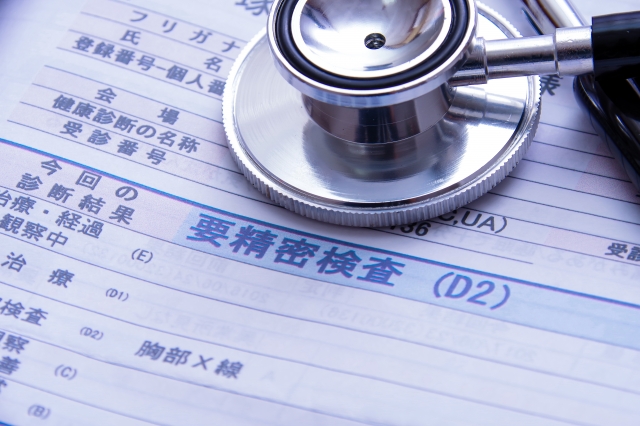
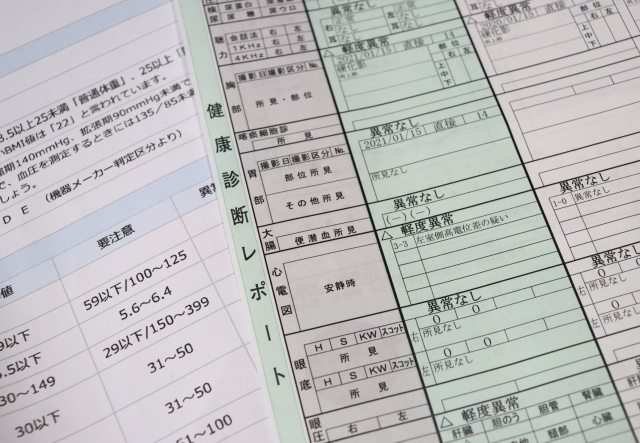
Some health checkups, including workplace checkups and comprehensive “ningen dock” programs, ask questions such as “Have you been told you snore?” or “Are you very sleepy during the day?”. Depending on the answers and other findings, the report may recommend further examination for possible sleep apnea syndrome.
At this stage, nothing has been confirmed. “Further examination” simply means the checkup cannot answer the question, and a sleep test is needed to see whether breathing actually stops or becomes shallow during sleep. Many people who are flagged turn out to have mild or no sleep apnea; others find a moderate or severe case they had no idea about.
Why it is worth acting on the flag
Untreated obstructive sleep apnea is associated with higher risks of high blood pressure, type 2 diabetes, and heart rhythm problems such as atrial fibrillation. Starting with an at-home simplified test is a small, low-burden first step.
What Can a Simplified Sleep Test Tell You, and What Can It Miss?
Short answer: A simplified test records breathing, blood oxygen, pulse, body position, and snoring at home for one night. It does not record brain waves, so it cannot tell when you were actually asleep, which can make the result look milder than it really is.
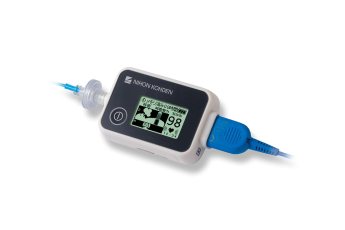
The simplified test (also called a home sleep apnea test, or out-of-center sleep test) is the standard first test in Japan. You attach a small sensor under the nose and a clip on a fingertip, then sleep as usual. It records:
- Airflow through the nose and mouth
- Blood oxygen saturation (SpO2)
- Pulse rate
- Body position (back, side, front)
- Snoring sound
It is covered by Japanese health insurance, and with standard 30% co-payment the test fee is generally a few thousand yen (consultation fees are separate). No hospital stay is involved.
The main limitation is that without brain-wave recording, the device cannot tell sleep from lying awake. The number of breathing events is divided by the whole recording time rather than actual sleep time, so if you spent a long time awake in bed, the AHI (apnea–hypopnea index) can come out lower than it truly is. This kind of underestimate is called a false negative.
The American Academy of Sleep Medicine (AASM) guideline by Kapur and colleagues (Journal of Clinical Sleep Medicine, 2017) recommends that if a home sleep apnea test is negative, inconclusive, or technically inadequate, PSG should be performed to diagnose obstructive sleep apnea. For more on the two tests, see Simplified Sleep Test vs. PSG.
When Is PSG Recommended?
Short answer: PSG is considered when the simplified test looks mild but symptoms are strong, when you have related conditions such as high blood pressure or diabetes, when the result and your symptoms clearly disagree, or when the simplified test could not be read properly.
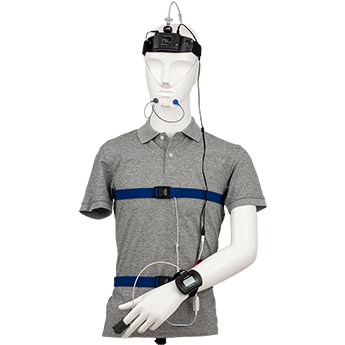
Your doctor may suggest PSG (polysomnography) in addition to the simplified test in situations like these:
- The simplified test shows mild to moderate sleep apnea, but daytime sleepiness or other symptoms are strong
- You also have high blood pressure, diabetes, or another lifestyle-related condition
- The result clearly does not match how you feel or what your partner has noticed
- A sensor came off or the recording was too short, so the result could not be judged accurately
PSG records far more than a simplified test: brain waves (EEG), eye movements, chin muscle activity, airflow, SpO2, body position, and snoring, all at the same time. From these, it can determine actual sleep time, sleep stages, and whether breathing events wake the brain (arousals), which allows a more precise assessment of severity.
Can PSG Be Done at Home? How Home PSG Works
Short answer: Yes. Home PSG uses the same kinds of sensors without a hospital stay: the kit is posted to you, you record one night in your own bed, and you post it back for analysis.
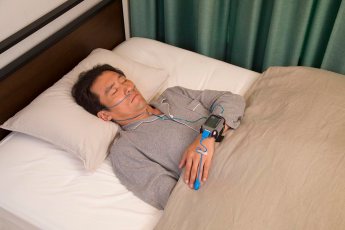
Many people picture PSG as a night in a hospital sleep lab, and traditionally that was the norm. Increasingly, though, PSG can be done at home without admission. At our clinic, the process looks like this:
| Step |
What happens |
| 1. Consultation |
A doctor reviews your symptoms and checkup result and decides whether home PSG is suitable |
| 2. Kit delivered |
The test kit is sent to your home |
| 3. One night of recording |
You attach the sensors following the instructions and go to bed as usual |
| 4. Return |
You send the kit back, for example with the enclosed cash-on-delivery label |
| 5. Results |
After analysis, you review the results and treatment options at a follow-up visit, in person or online |
Because you sleep in a familiar bed rather than an unfamiliar hospital room, home PSG may capture something closer to your usual night. On the other hand, no technician is present to reattach a sensor that slips off during the night, so a repeat recording is occasionally needed. Analysis also takes time; it is common to wait about a month for results.
Simplified Test vs. Home PSG: Side-by-Side Comparison
Short answer: The simplified test is a quick screening tool; home PSG adds brain waves to measure real sleep time and gives a more precise diagnosis and severity grade. Neither needs a hospital stay.
| Item |
Simplified test |
Home PSG |
| What is measured |
Airflow, SpO2, pulse, body position, snoring |
All of these plus brain waves, eye movements, and chin muscle activity |
| Actual sleep time |
Not measured (events divided by total recording time) |
Measured (sleep is identified from brain waves) |
| Hospital stay |
Not needed |
Not needed (when the kit is sent by post) |
| Main role |
First-line screening |
Confirming the diagnosis and grading severity more precisely |
Whichever test you have, the key numbers are the AHI and how low your oxygen level dropped. For how to read the AHI and what each severity level means, see AHI Explained: Severity Levels and CPAP.
What Results Qualify for Insurance-Covered CPAP (June 2026 Criteria)?
Short answer: From June 2026, CPAP can be covered by Japanese health insurance at AHI 30 or more on a simplified test, or AHI 15 or more on PSG, in both cases with symptoms such as daytime sleepiness. At AHI 15–29, PSG must also show findings such as fragmented sleep.
The June 2026 revision of Japan’s medical fee schedule lowered the thresholds for starting CPAP under insurance:
| Test |
Before June 2026 |
From June 2026 |
| Simplified test |
AHI 40 or more |
AHI 30 or more |
| PSG |
AHI 20 or more |
AHI 15 or more |
A number alone is not enough: symptoms such as daytime sleepiness are required at any AHI, and when the PSG result is in the 15–29 range, the study must also show findings such as sleep fragmentation. This change means more people with moderate sleep apnea can now start CPAP under insurance. For details, see Told You Stop Breathing in Your Sleep? A Sleep Test Guide.
What Ueno Snoring Clinic Can Do for You
Ueno Snoring Clinic in Ueno, Tokyo, is a sleep medicine clinic focused on snoring and obstructive sleep apnea. For people flagged at a health checkup, we offer the simplified test, home PSG when a closer look is needed, and a treatment plan based on the results, including insurance-covered CPAP when the criteria are met.
If your report says “further examination required” and you are not sure where to start, bring the report and talk to us.
Summary: Start With a Test, Not a Guess
A snoring or sleep apnea flag at a health checkup is not a diagnosis. The usual path is an at-home simplified test first, then PSG if needed, and PSG itself no longer has to mean a night in hospital.
Rather than leaving the flag on your report, use it as the prompt to find out what actually happens to your breathing at night.
Flagged at Your Checkup? Talk to Us
From the at-home simplified test to home PSG, we suggest the test plan that fits your symptoms and follow through to treatment if needed. Appointments only; same-day visits are often possible.
Frequently Asked Questions
Q. Is it OK to have snoring treatment at a self-pay-only clinic or a cosmetic clinic?
A. Some clinics that offer only self-pay care, and some cosmetic clinics, may not perform sleep testing. Before starting treatment, check whether the clinic performs a sleep test, or has a system for referring you to a medical institution where you can receive the necessary tests. If sleep apnea is hidden behind your snoring and treatment begins without testing, it may be missed. We recommend first checking your condition at a medical institution that offers sleep testing (simplified testing or PSG). For details, see
Simplified Sleep Test vs. PSG.
Q. My health checkup said my snoring needs further examination. Do I have to see a doctor?
A. It is not a diagnosis, but it is worth acting on. Untreated sleep apnea is linked to higher risks of high blood pressure and other conditions, so starting with an at-home simplified test is a sensible, low-burden first step.
Q. Can a simplified test alone diagnose sleep apnea?
A. Often it can, and a simplified test result of AHI 30 or more can qualify for insurance-covered CPAP. Because it does not record brain waves, though, it can underestimate severity; if the result does not match your symptoms, ask about PSG.
Q. Is home PSG as accurate as PSG in a hospital?
A. Home PSG records brain waves and the other main signals, so it is much more detailed than a simplified test. Without a technician present, a sensor that slips off cannot be fixed overnight and a repeat night is sometimes needed; your doctor can advise which setting suits you.
Q. Do I need to stay in hospital for a sleep test?
A. Usually not. The simplified test is always done at home, and PSG can often be done at home as well, with the kit sent and returned by post.
Q. How long does it take from testing to starting treatment?
A. Analysis generally takes about a month. After the results are ready, you discuss them at a follow-up visit and, if needed, start treatment such as CPAP.
Q. What should I bring to my first visit?
A. Bring your health checkup report, a list of any medicines you take, and, if possible, notes from your partner or family about your snoring or pauses in breathing.
*This article is a general explanation, written for a broad audience and based on the sources above together with our clinic’s own clinical experience. It is not a substitute for medical advice. Costs shown are rough guides and vary with the care provided and your insurance. If you are concerned about snoring or sleep apnea, please consult a medical institution for a proper evaluation.