Ueno Snoring Clinic checks for sleep apnea behind snoring with at-home simplified testing and insurance-covered PSG (a detailed sleep study), with no hospital stay needed. If your snoring comes with a blocked nose, start with a test and a consultation. We also offer insurance-covered sublingual immunotherapy for Japanese cedar pollen allergy and house dust mite allergy.
Details of the tests and treatments offered at Ueno Snoring Clinic can be found here
Important: Snoring and Sleep Apnea Treatment Requires a Sleep Test
Some clinics that offer only self-pay care, and some cosmetic clinics, may not perform sleep testing. Before starting treatment, check whether the clinic performs a sleep test, or has a system for referring you to a medical institution where you can receive the necessary tests.
If sleep apnea is hidden behind your snoring and treatment begins without testing, it may be missed.
▶ Learn more about snoring and sleep apnea testing
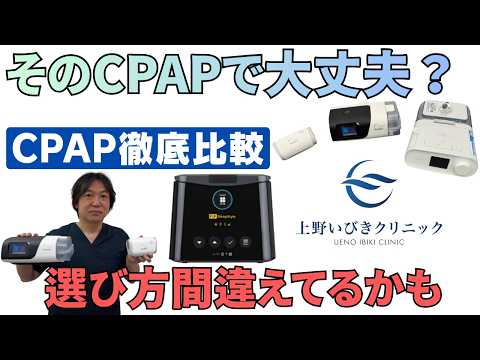
You’ll Want to Know This! A Complete Comparison of 5 CPAP Types — What Doctors Really Look For
Our doctor compares five different CPAP machines side by side and explains what actually matters when choosing one.
Watch the video
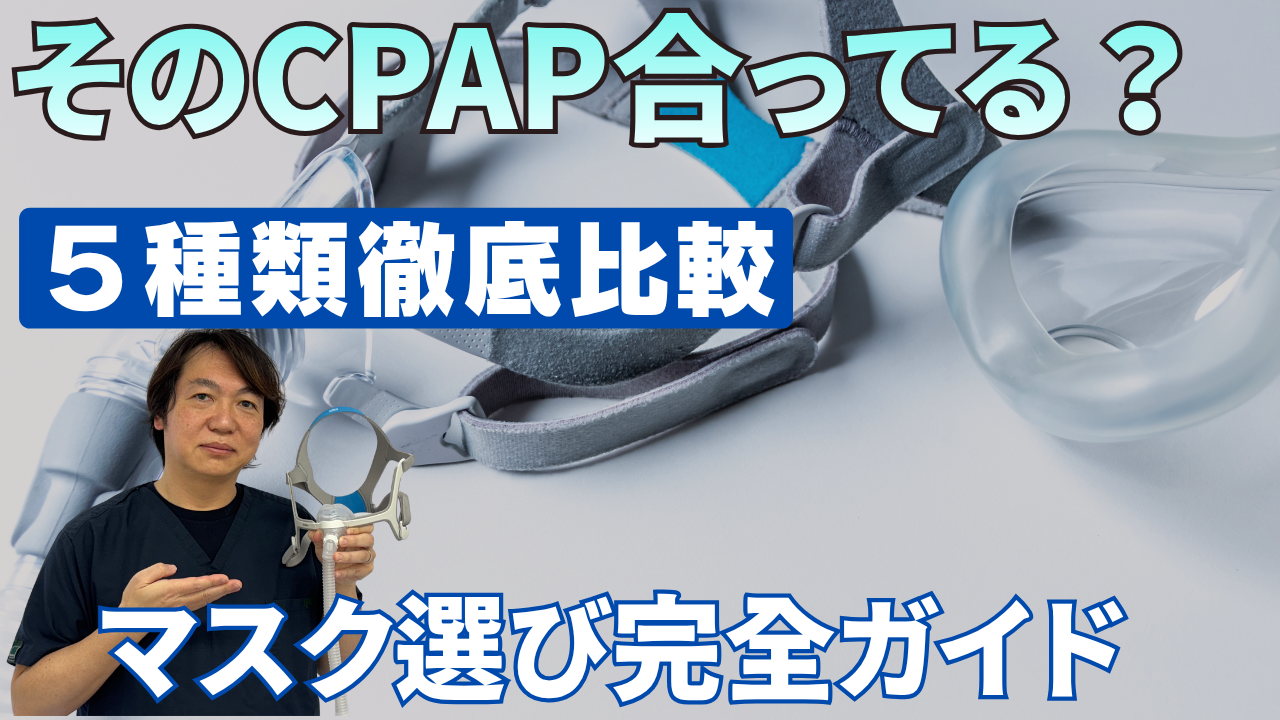
A Complete Comparison of CPAP Masks
We tried on and reviewed five different types of CPAP masks. 90% of CPAP comfort comes down to the mask.
Watch the video
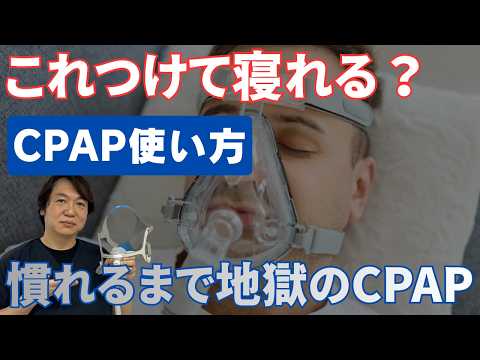
Do you have to use CPAP forever? A specialist explains how to use CPAP
A detailed explanation of how to use CPAP, with a real demonstration of what it feels like to wear the device.
Watch the video
Ueno Snoring Clinic was featured on Fuji TV’s “Live News It!” and on FNN Prime Online
Watch our clinic’s examination and explanation of sleep disorders, snoring, and sleep apnea.
Watch the video
Ueno Snoring Clinic was featured in an article on Nippon TV’s “news every.”
Please take a look as a starting point for thinking about getting evaluated for snoring, sleep apnea, or other sleep disorders.
Read the article
Reviewed by Our Director
Kazuyuki Sugaya
Director, Ueno Snoring Clinic / Anesthesiologist
Our director, with over 20,000 general anesthesia cases, focuses primarily on the diagnosis and treatment of snoring and sleep apnea, offering care tailored to each patient. [Insurance-Covered] Ueno Snoring Clinic
In this article, our Director, Kazuyuki Sugaya, explains the causes of snoring linked to nasal congestion, what research shows about nasal treatment, practical self-care, and why sleep testing matters. Medically reviewed November 2026.
🩺Comprehensive Snoring Treatment at Ueno Snoring Clinic
Even when snoring comes with a blocked nose, Ueno Snoring Clinic first checks for sleep apnea, then suggests a plan based on your results and symptoms, combining insurance-covered testing, CPAP, and sublingual immunotherapy with self-pay options where appropriate. If surgery on the nasal structure seems necessary, we work with clinics that specialize in nasal treatment.
Insurance-Covered: Thorough Testing and Ongoing Treatment
- Simplified testing: Home screening for sleep apnea
- PSG testing: A detailed sleep study including brain waves, done at home
- CPAP treatment: The standard treatment for apnea that meets insurance criteria
Self-Pay: Address the Root Cause, Short-Term Focus
- Snoring laser treatment: For people whose testing confirms simple snoring
- Medically supervised weight loss: An option when weight gain is a contributing factor
*Whether a treatment is appropriate, and what it can achieve, differs from one person to the next, so an examination comes first.
Our Director’s book, “Curing Snoring with the Latest Treatments” (an Amazon Japan bestseller — #1 in General Medicine, #1 in Clinical Internal Medicine, #2 in Family Health & Wellness), explains how the nose and throat work together during sleep.
New Book by Our Director
“Curing Snoring with the Latest Treatments”
A guide to the latest snoring treatments, written by an anesthesiologist who has overseen the sleep of more than 10,000 patients.
View on Amazon
Quick Answer
Nasal snoring is snoring made worse by a blocked nose, which pushes you into mouth breathing and disturbs airflow at the back of the throat. Common causes are allergic rhinitis, sinusitis, and a deviated septum, and treatment should match the cause. However, nasal treatment or nasal dilator strips do not reliably reduce sleep apnea itself: in a meta-analysis of 14 studies, nasal dilators did not change the apnea-hypopnea index (AHI 28.7 → 27.4 events per hour). On the other hand, treating the nose can ease congestion and make CPAP easier to use; after nasal surgery, CPAP pressure fell from 11.6 to 9.5 cmH₂O in a pooled analysis. Even with a blocked nose, the first step is a sleep test to check for apnea.
📋 What This Article Covers
- What is nasal snoring, and how does a blocked nose cause snoring?
- What are the main causes of nasal snoring?
- Does treating the nose cure snoring or sleep apnea? What research shows
- What can you do yourself, and what should you avoid?
- What medical treatments are available, by cause?
- Why get a sleep test first, even if your nose is blocked?
What Is Nasal Snoring, and How Does a Blocked Nose Cause Snoring?
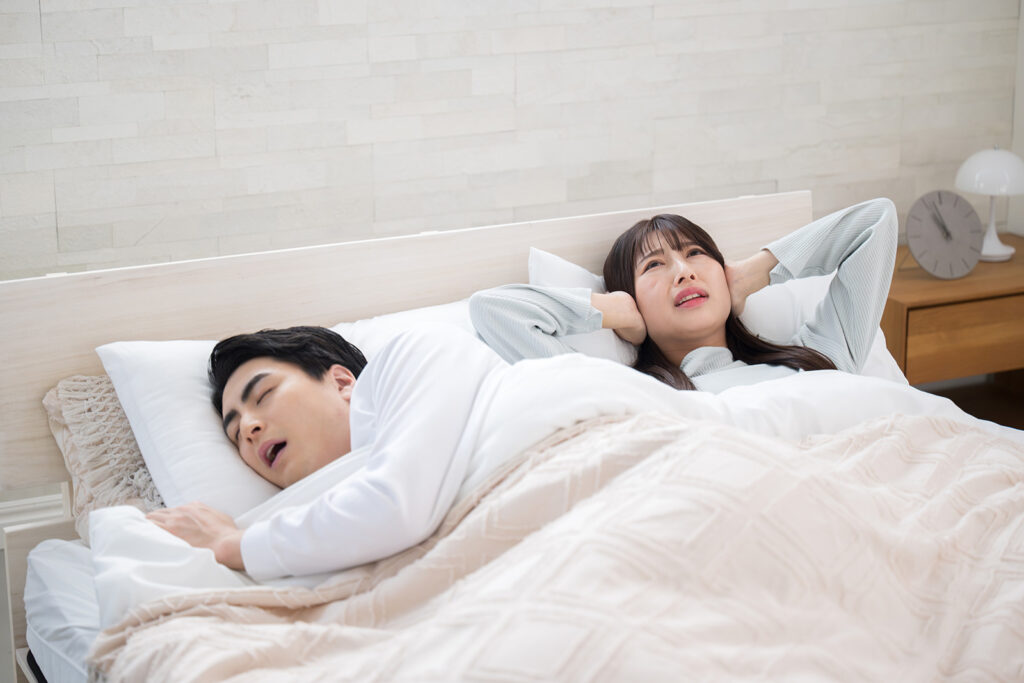
Short answer: Nasal snoring is snoring in which nasal congestion plays a part. The sound itself comes from the back of the throat, but a blocked nose makes the throat narrower and more likely to vibrate.

Snoring is the sound of relaxed tissue at the back of the throat (the soft palate and the base of the tongue) vibrating as air passes during sleep. So why does the nose matter?
| State of the nose |
Effect on the throat and breathing |
| Blocked |
You can’t breathe through your nose, so you tend to breathe through your mouth. With the mouth open, the tongue shifts backward and the throat narrows more easily |
| Partly obstructed |
Resistance to breathing in rises, and the back of the throat is pulled inward more strongly, which is thought to make vibration and collapse more likely |
| Clear |
Nasal breathing is easy, and there is relatively little strain on the throat |
In other words, even when the nose is the trigger, the sound is actually made in the throat. The nasal problem worsens narrowing in the throat. That is why snoring can persist after the nose is treated, because of throat structure, body weight, or other factors.
A blocked nose isn’t always the whole story
Some people with nasal congestion also have obstructive sleep apnea. If you snore and also feel very sleepy during the day, wake up at night, or have been told you stop breathing, you need a sleep test, not just nasal treatment.
What Are the Main Causes of Nasal Snoring?
Short answer: The most common causes are allergic rhinitis (including hay fever), chronic sinusitis and nasal polyps, a deviated nasal septum, swollen turbinates, and overuse of decongestant sprays. In children, enlarged adenoids and tonsils are common.
| Cause |
Features |
| Allergic rhinitis (hay fever, dust mites) |
Sneezing and a runny nose, plus swelling of the nasal lining that blocks the nose. It can be seasonal or year-round |
| Sinusitis and nasal polyps |
A runny or blocked nose and a reduced sense of smell that drag on. Polyps growing inside the nose can block the passage |
| Deviated nasal septum |
The wall dividing the left and right sides of the nose is bent, making one or both sides harder to breathe through. A mild bend is often not a problem |
| Enlarged inferior turbinates |
Folds of lining inside the nose swell and narrow the airway, often together with allergic rhinitis |
| Colds and decongestant overuse |
Colds cause temporary congestion. Using vasoconstrictor decongestant sprays too often can make congestion worse (“rebound” congestion, or rhinitis medicamentosa) |
| Children |
Enlarged adenoids (tissue at the back of the nose) or tonsils commonly cause snoring and mouth breathing |
The right approach also depends on whether congestion is temporary or long-lasting. If it lasts several weeks or more, or one side is much more blocked than the other, we recommend having the cause checked at a clinic that specializes in nasal conditions.
Does Treating the Nose Cure Snoring or Sleep Apnea? What Research Shows
Short answer: Treating the nose can improve nasal breathing, sleep quality, and CPAP comfort, but studies show it usually does not lower the number of apneas (AHI) by much.
| Measure or treatment |
What research shows |
| Nasal dilator strips and internal dilators (meta-analysis of 14 studies, Camacho et al., 2016) |
Nasal breathing felt easier, but the AHI did not change significantly (28.7 → 27.4 events per hour). The snoring index and daytime sleepiness did not change significantly either |
| Steroid nasal sprays for allergic rhinitis (18 randomized trials, 6,019 people; Tabata et al., 2025) |
Sleep quality improved significantly. But there was no clear effect on daytime sleepiness (Epworth score), and snoring and AHI were not measured |
| CPAP after nasal surgery on the septum or turbinates (meta-analysis of 18 studies, 279 people; Camacho et al., 2015) |
The CPAP pressure needed fell from 11.6 to 9.5 cmH₂O. Nightly CPAP use also rose in some reports: objective data from 33 people showed an increase from 3.0 to 5.5 hours per night, over a short period |
| Nasal surgery for people who could not tolerate CPAP (49 patients; Elwany et al., 2022) |
At 3–6 months after surgery, all patients used CPAP for at least 4 hours a night on 70% or more of nights. The nasal symptom score (NOSE) improved from 66 to 34 and daytime sleepiness (Epworth score) from about 10 to 5. The AHI did not improve significantly |
Overall, nasal measures and treatment may ease congestion, improve sleep quality, and make CPAP easier to continue, but their effect on the number of apneas (AHI) itself appears limited.
Apnea can remain even after the nose is treated
If sleep apnea is still present after congestion improves, apnea treatment such as CPAP is still needed. Conversely, when the nose is badly blocked, CPAP can be hard to use. The nose and sleep apnea aren’t an either/or question: both need attention.
What Can You Do Yourself, and What Should You Avoid?
Short answer: Nasal rinsing with safe water, keeping the bedroom humid, and sleeping on your side can help. Avoid using decongestant sprays for more than a few days in a row.
| Measure |
Tips and cautions |
| Nasal rinsing (saline irrigation) |
Washes pollen and dust out of the nose. Always use distilled water, sterile water, or tap water that has been boiled and cooled. Using untreated tap water can, rarely, cause a serious infection, as the US FDA warns |
| Humidifying the room |
Dry air irritates the lining of the nose and throat. Keep bedroom humidity at a comfortable level |
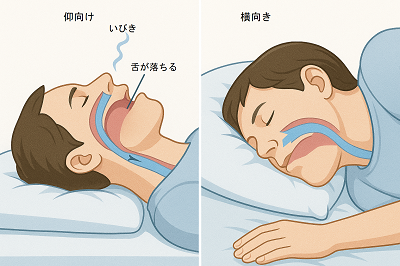
| Sleeping on your side |
On your back, the tongue and throat tissues fall back more easily. Some people snore less on their side (see Positional vs. Non-Positional Snoring) |
| Nasal dilator strips |
They can make nasal breathing easier, but as noted above, their effect on apnea and snoring itself is limited |
| Decongestant (vasoconstrictor) nasal sprays |
They relieve congestion temporarily, but using them continuously can make congestion worse. The UK medicines regulator (MHRA) advises using sprays containing xylometazoline or oxymetazoline for no more than 5 consecutive days. See a doctor if congestion persists |
If you use a decongestant spray every night
Using a vasoconstrictor spray every night before bed can lead to rebound congestion (rhinitis medicamentosa), making your nose even more blocked. When stopping, it is generally recommended to taper gradually with a doctor’s guidance rather than stopping abruptly.
What Medical Treatments Are Available, by Cause?
Short answer: Treatment depends on the cause: medicines or sublingual immunotherapy for allergic rhinitis, medicines or surgery for sinusitis and polyps, and surgery for a deviated septum or enlarged turbinates when symptoms are significant.

| Cause |
Main treatments |
| Allergic rhinitis |
Medicines such as steroid nasal sprays and antihistamines. For Japanese cedar pollen allergy and house dust mite allergy, sublingual immunotherapy, which aims to change the allergic response itself, is also an option and is covered by Japanese health insurance |
| Sinusitis |
Mainly treated with medicines. Surgery may be considered when symptoms are severe or polyps are present |
| Deviated septum, enlarged turbinates |
Surgery to widen the airway may be considered, depending on how severe the congestion is and how much it affects daily life |
| Rebound congestion from sprays |
The spray is stopped gradually under a doctor’s guidance and replaced with another treatment |
Ueno Snoring Clinic offers insurance-covered sublingual immunotherapy for Japanese cedar pollen allergy and house dust mite allergy. If surgery on the structure of the nose seems necessary, we may coordinate with a clinic that specializes in nasal treatment.
Note that snoring laser treatment (Dual Deep Thermia), which tightens the soft palate at the back of the throat, does not widen the nasal passages. When nasal congestion is the main cause of snoring, it may be better to treat the nose first. Before any laser treatment, a test should confirm that you have simple snoring (see Simple Snoring and Laser Treatment).
Why Get a Sleep Test First, Even If Your Nose Is Blocked?
Short answer: Because nasal congestion and sleep apnea often occur together, and treating only the nose can leave sleep apnea undiagnosed.
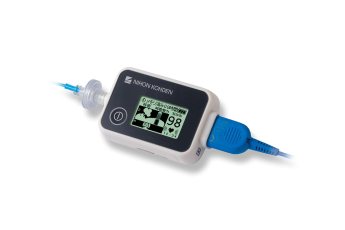
If you assume “I snore because my nose is blocked” and only treat your nose, sleep apnea may go unnoticed. Untreated apnea leads not only to daytime sleepiness but also to a higher risk of conditions such as high blood pressure.
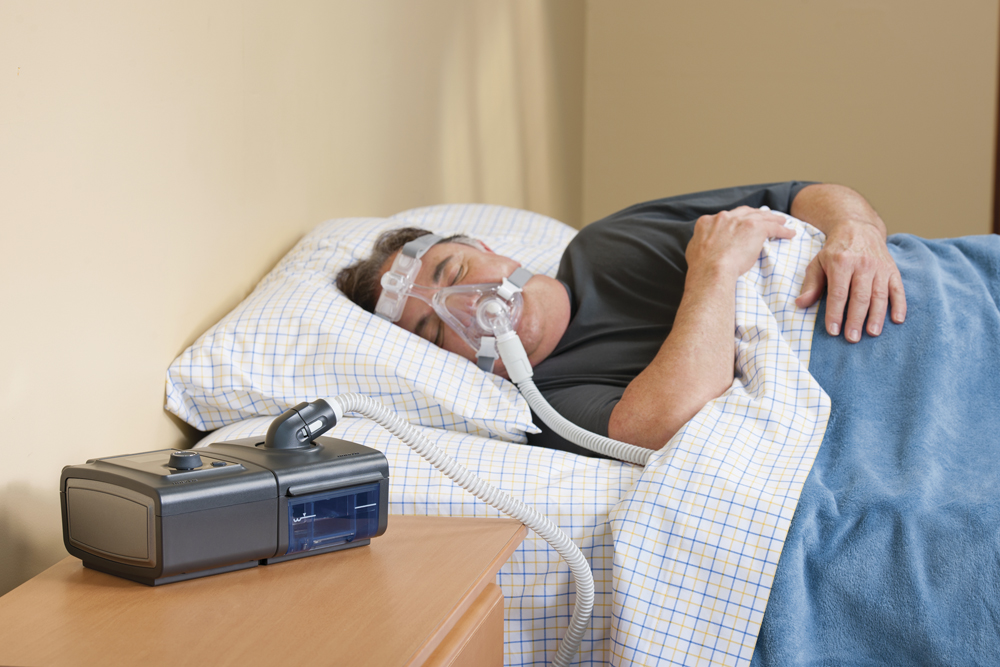
Ueno Snoring Clinic offers a simplified test you do at home and insurance-covered PSG, also done at home with no hospital stay. If apnea is found, we suggest insurance-covered CPAP; if simple snoring is confirmed, we suggest options that suit your situation. For details of the tests, see Simplified Sleep Test vs. PSG.
What Ueno Snoring Clinic Can Do for You
Ueno Snoring Clinic is a sleep medicine clinic in Ueno, Tokyo, specializing in snoring and obstructive sleep apnea. We use at-home simplified testing and insurance-covered PSG to check whether sleep apnea lies behind your snoring, and then suggest a plan that fits your condition, such as insurance-covered CPAP or insurance-covered sublingual immunotherapy for Japanese cedar pollen and house dust mite allergies.
If you snore badly with a blocked nose, or your nose gets blocked when you use CPAP, please feel free to contact us.
Summary: Look at the Nose, the Throat, and Your Sleep Together
Nasal snoring happens when a blocked nose leads to mouth breathing and disturbed airflow in the throat. Causes range from allergic rhinitis and sinusitis to a deviated septum, and treatment should match the cause. Nasal treatment may help congestion, sleep quality, and CPAP use, but it does not reliably reduce the apneas themselves.
That is why, even if your nose is blocked, you should first check for apnea with a sleep test. At our clinic, we use your test results to recommend the treatment that fits you.
Blocked Nose and Snoring? Let’s Find the Cause Together
Whether you snore with a stuffy nose or struggle with congestion while using CPAP, we can help with testing and an examination. Sleep apnea testing, CPAP, and sublingual immunotherapy are covered by insurance when the criteria are met. Appointments only; same-day visits are often available.
Frequently Asked Questions
Q. Is it OK to have snoring treatment at a self-pay-only clinic or a cosmetic clinic?
A. Some clinics that offer only self-pay care, and some cosmetic clinics, may not perform sleep testing. Before starting treatment, check whether the clinic performs a sleep test, or has a system for referring you to a medical institution where you can receive the necessary tests. If sleep apnea is hidden behind your snoring and treatment begins without testing, it may be missed. We recommend first checking your condition at a medical institution that offers sleep testing (simplified testing or PSG). For details, see
Simplified Sleep Test vs. PSG.
Q. What is nasal snoring?
A. Nasal snoring is snoring in which nasal congestion plays a part. A blocked nose leads to mouth breathing and disturbed airflow, so the throat vibrates more easily; the sound itself comes from the soft palate and other tissues at the back of the throat.
Q. Will treating my blocked nose stop my snoring?
A. It may help if congestion is the main cause, but snoring can persist because of throat structure, body weight, or sleep apnea. Studies show nasal treatment does not reliably lower the AHI, so a sleep test is important.
Q. Do nasal dilator strips work for snoring?
A. They can make nasal breathing easier, but a meta-analysis of 14 studies found no significant improvement in the AHI or snoring index. They are fine as a supplementary measure but are not a treatment for snoring or sleep apnea.
Q. Is it safe to rinse my nose?
A. Yes, if done correctly. Nasal rinsing helps wash out pollen and dust, but always use distilled water, sterile water, or boiled and cooled water; untreated tap water can, rarely, cause a serious infection.
Q. My nose gets blocked when I use CPAP. What should I do?
A. Adjusting the humidifier or changing the mask often helps, and treating an underlying nasal condition such as allergic rhinitis or a deviated septum can make CPAP easier to use. Don’t stop CPAP on your own; talk to your doctor.
Q. What treatments are there for snoring caused by allergic rhinitis?
A. Medicines such as steroid nasal sprays and antihistamines are the mainstay. For Japanese cedar pollen allergy and house dust mite allergy, insurance-covered sublingual immunotherapy is also an option, and Ueno Snoring Clinic offers it.
*This article is a general explanation, written for a broad audience and based on the sources above together with our clinic’s own clinical experience. It is not a substitute for medical advice. Costs shown are rough guides and vary with the care provided and your insurance. If you are concerned about snoring or sleep apnea, please consult a medical institution for a proper evaluation.