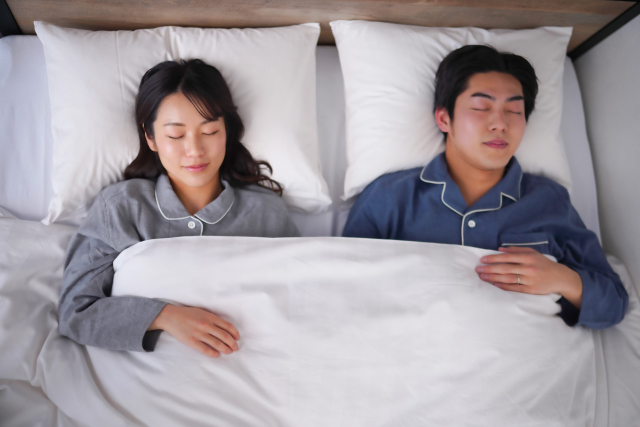

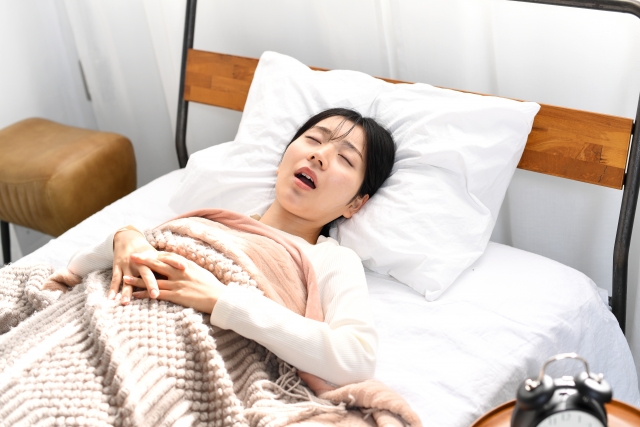
In other words, mouth breathing is an important sign related to both “cosmetic concerns” and “sleep problems.”
In this article, the director of Ueno Snoring Clinic clearly explains the relationship between mouth breathing, an aging-looking face, the orbicularis oris muscle, snoring, and sleep apnea syndrome.
“I’m told my mouth is open.”
“I breathe through my mouth while sleeping.”
“My mouth is dry when I wake up.”
“I’m concerned about sagging along my jawline.”
“I’ve been told I snore or stop breathing.”
If any of these apply to you, please read to the end.
At Ueno Snoring Clinic, we offer options tailored to your condition, including insurance-covered sleep testing and CPAP management, as well as self-pay snoring laser treatment. If you would like to find the treatment that suits you, please start with an initial consultation.
You can find details on the examinations and treatments at Ueno Snoring Clinic here

Supervised by the Director
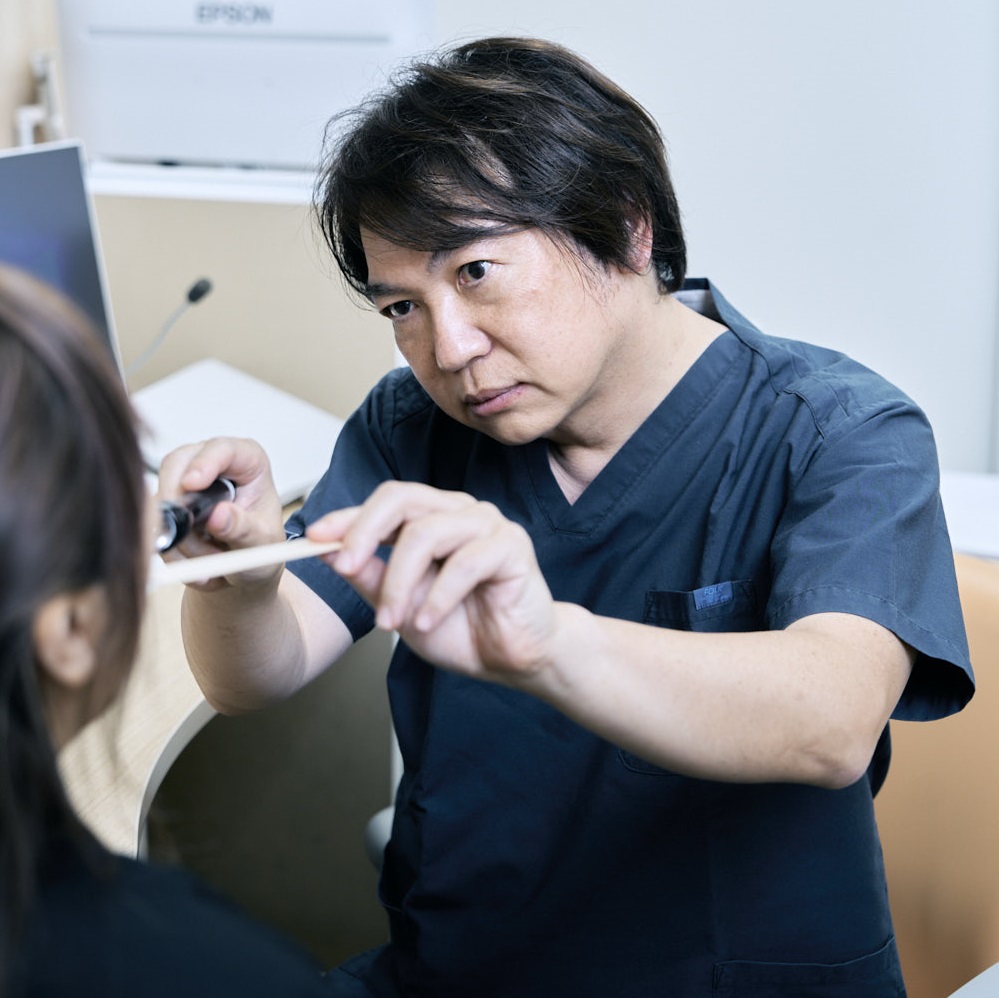
Kazuyuki Sugaya
Director, Ueno Snoring Clinic / Anesthesiologist
With experience in over 20,000 cases of general anesthesia, the director focuses primarily on the treatment of snoring and sleep apnea, providing care tailored to each individual patient. [Insurance Treatment] Ueno Snoring Clinic
This article has been supervised by Director Kazuyuki Sugaya to clearly explain accurate medical information regarding examinations and treatments for snoring, sleep apnea syndrome (SAS), and related conditions.
🩺Comprehensive Snoring Treatment at Ueno Snoring Clinic
Snoring has a wide range of causes—throat structure, tongue position, nasal congestion, obesity, alcohol, sleeping posture, and more. At Ueno Snoring Clinic, rather than relying on any single treatment method, we have established a system that can propose the most suitable plan for each patient from a wide range of evidence-based options.
Thorough testing and continued treatment under insurance
- Simple test / PSG test: Analyzing your breathing during sleep
- CPAP therapy: Standard treatment for moderate to severe apnea
Addressing snoring and lifestyle through self-pay treatment
- Latest snoring laser treatment: Non-surgical snoring treatment
- Medical weight loss: Securing the airway through weight reduction
*As a clinic specializing in snoring treatment, we are fully committed to solving concerns such as “snoring that won’t stop,” “feeling tired even after sleeping,” and “daytime sleepiness” through both insurance-covered and self-pay treatments.
The director’s book “Treating Snoring with the Latest Treatments” (Amazon Bestseller Ranking: #1 in General Medicine, #1 in Clinical Internal Medicine, #2 in Family Medicine & Health) also explains this in detail.
いびきを最新治療で治す-表紙-1.png)
New Book by the Director
“Treating Snoring with the Latest Treatment Methods”
The definitive guide to the latest snoring treatments, explained by an anesthesiologist who has overseen the sleep of more than 10,000 people.
Key Points of This Article
– Ongoing mouth breathing may be associated with reduced function of the orbicularis oris muscle and impaired lip closure
– A persistently open mouth can lower the tongue position and affect the impression of the lower jaw and jawline
– Mouth breathing during sleep tends to cause the tongue base to drop and the airway to narrow, which is linked to snoring
– Sleep apnea syndrome may be hidden behind snoring
– To prevent both an aging-looking face and snoring, it is important to check your nasal breathing, orbicularis oris muscle, and breathing during sleep
Why Mouth Breathing Can Make You Look Older
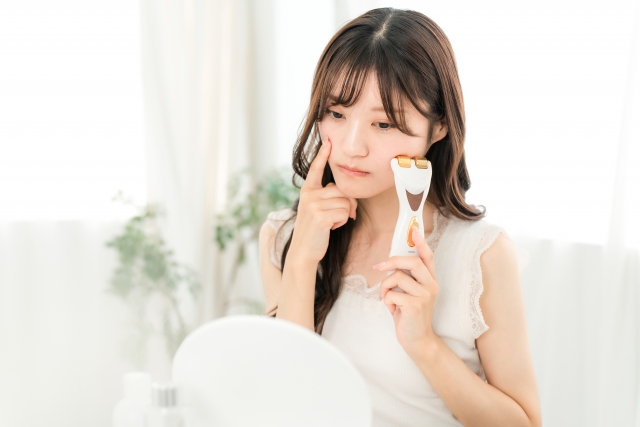
People who breathe through their mouth often have their mouth slightly open without realizing it.
When this state continues, the tension around the mouth decreases, and the entire face can take on a vague, indistinct impression.
The muscle most closely involved is the orbicularis oris muscle.
The orbicularis oris muscle is the muscle that surrounds the lips. It is involved in closing the mouth, pursing the lips, articulating speech, and keeping food from spilling.
When this muscle is not being used well, the mouth becomes harder to close and the area around the mouth looks slack.
As a result, this can lead to an “aging-looking” impression, such as:
- A mouth that appears half-open
- Downturned corners of the mouth
- More noticeable nasolabial folds
- A blurred jawline
- A lower jaw that appears to recede
- An elongated-looking face
That said, the important point here is that mouth breathing is not the only cause of an aging-looking face.
Facial impression is determined by multiple factors: skin, fat, bone structure, muscle, posture, dental alignment, weight changes, and aging.
Among these, it is helpful to think of mouth breathing as one important factor related to “slackness around the mouth,” “tongue position,” and “the airway during sleep.”
What Is the Orbicularis Oris Muscle? A Key Muscle That Shapes the Impression of Your Mouth
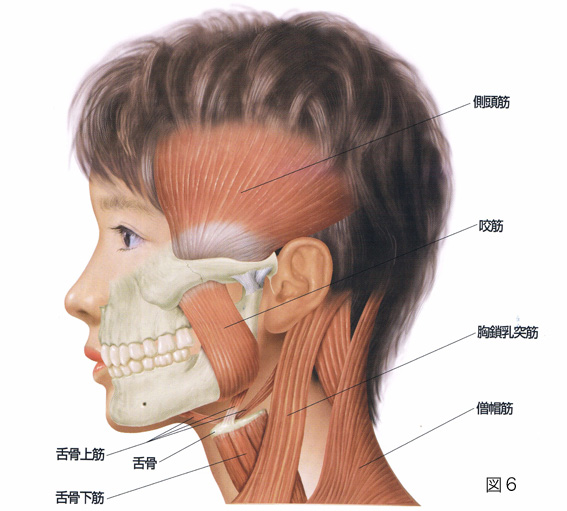
The orbicularis oris muscle is the muscle that encircles the lips.
In daily life, it is involved in movements such as:
- Closing the mouth
- Pursing the lips
- Articulating speech
- Keeping food and drink from spilling from the mouth
- Making facial expressions
- Maintaining nasal breathing
When the orbicularis oris muscle is working well, it becomes natural and easy to keep the mouth closed.
On the other hand, if the orbicularis oris muscle is weak, or if there is little habit of closing the mouth, the mouth tends to fall open.
When the mouth opens, the tongue tends to drop from its proper position against the upper palate.
This lowering of the tongue position is also related to snoring and apnea.
This is because people whose tongue rests in a low position are more likely to have the tongue drop backward during sleep, narrowing the air passage in the throat.
In other words, the orbicularis oris muscle is not merely a cosmetic muscle.
It is also important for closing the mouth, maintaining nasal breathing, supporting the tongue position, and protecting the airway during sleep.
The Relationship Between Mouth Breathing and Snoring
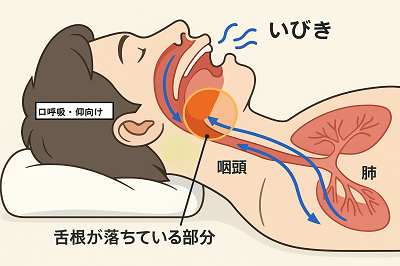
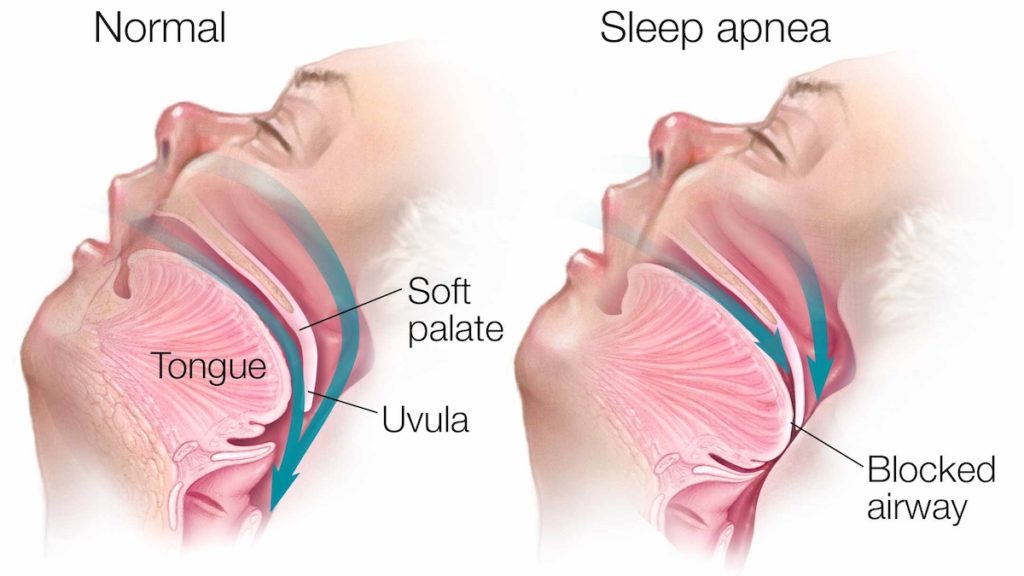
Snoring occurs when the air passage narrows during sleep, and as air passes through it, the soft palate, uvula, tongue base, and tissues around the pharynx vibrate.
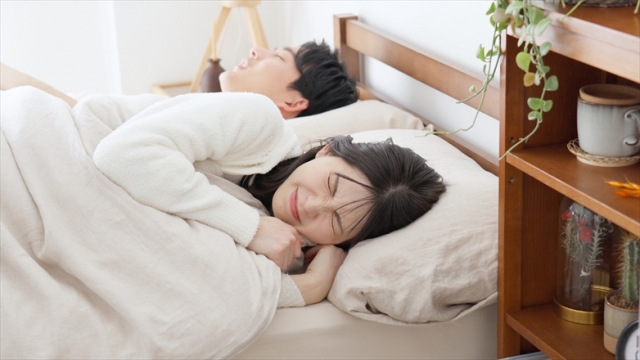
In people who breathe through their mouth, the mouth tends to fall open during sleep.
When the mouth opens, the lower jaw drops and the tongue tends to fall backward.
As a result, the air passage in the throat narrows and snoring becomes more likely.
People in the following situations in particular should be careful:
- You are told your mouth is open while sleeping
- Your mouth is dry when you wake up
- Your throat hurts when you wake up
- You have nasal congestion
- Your mouth falls open unless you use mouth tape
- Your snoring gets worse when you sleep on your back
- Your family says you “stop breathing”
Mouth breathing is not merely a habit; it may be caused by nasal congestion, allergic rhinitis, sinusitis, enlarged tonsils, jaw bone structure, tongue position, or obesity.
For this reason, to improve snoring caused by mouth breathing, it is important not only to “make an effort to close your mouth,” but also to check why you are breathing through your mouth in the first place.

The Relationship Between Mouth Breathing and Sleep Apnea Syndrome
Sleep apnea syndrome is a condition in which breathing repeatedly stops or becomes shallow during sleep.
Snoring is one of its signs.
Not all snoring means sleep apnea syndrome.
However, if you have loud snoring, pauses in breathing, daytime sleepiness, morning headaches, frequent nighttime urination, or high blood pressure, sleep apnea syndrome should be suspected.
In people who breathe through their mouth, the mouth opens during sleep, and the lower jaw and tongue tend to fall backward.
As a result, the airway narrows, and snoring and apnea can become more likely.
In addition, people with severe nasal congestion find it hard to breathe through the nose, so they naturally end up breathing through the mouth.
In this state, breathing during sleep tends to become unstable, leading to snoring and reduced sleep quality.
The important thing is not to leave mouth breathing untreated as merely a cosmetic issue.
“My mouth is open while sleeping.”
“My mouth is completely dry in the morning.”
“My snoring is loud.”
“I’ve been told I stop breathing.”
In such cases, it is important to check your breathing during sleep through testing.
The Mechanism Behind Why Mouth Breathing Makes You Look Older
There are mainly five reasons why mouth breathing can lead to an aging-looking impression.
1. The orbicularis oris muscle is used less
When you spend little time with your mouth closed, you have fewer opportunities to use the orbicularis oris muscle.
When the function of the orbicularis oris muscle weakens, the lips become harder to close and the mouth area looks slack.
When the mouth area becomes slack, you can look more tired than your actual age, your face can look vague, and the corners of your mouth can appear downturned.
2. The tongue position drops
Normally, the tongue resting lightly against the upper palate is considered a stable position.
However, with mouth breathing, the mouth tends to open and the tongue tends to drop.
When the tongue position drops, the firmness around the mouth deteriorates, and during sleep this can also lead to the tongue base dropping backward.
In other words, tongue position is related not only to appearance but also to snoring and apnea.
3. The lower jaw tends to drop
When the mouth is open, the lower jaw tends to drop.
When the lower jaw drops, the tongue also tends to shift backward.
In terms of appearance, this can make the area under the chin look blurred and the jawline look less defined.
During sleep, this retraction of the lower jaw can lead to airway narrowing.
4. Facial muscles are used unevenly
When you breathe through your nose with your mouth closed, the muscles around the mouth work naturally.
On the other hand, when mouth breathing becomes a habit, the way the muscles around the mouth are used tends to become uneven.
As a result, this can lead to impressions of a lack of expression, a slack-looking mouth, and a tired appearance.
5. Reduced sleep quality affects complexion and puffiness
When you have snoring or sleep apnea syndrome, your sleep quality declines.
When sleep becomes shallow, this can lead to fatigue, poor complexion, dark circles under the eyes, morning puffiness, and daytime sluggishness.
These changes can also be factors that make you look older.
In other words, the aging-looking impression caused by mouth breathing is related not only to the mouth area but also to sleep quality.

Preventing Snoring May Also Help Prevent an Aging Face
Snoring prevention and aging-face prevention may seem like separate topics.
In reality, however, they share common ground.
That common ground is nasal breathing, the orbicularis oris muscle, tongue position, and sleep quality.
To prevent snoring, it is important not to narrow the airway during sleep.
To that end, measures such as the following are important:
- Making it easier to breathe through the nose
- Keeping the mouth from staying open
- Creating a state in which the tongue is less likely to fall backward
- Reviewing your weight and alcohol intake
- Checking whether you have sleep apnea
At the same time, these measures are also related to cosmetics in the sense of using the muscles around the mouth, refining the impression of the jawline, and improving sleep quality.
In other words, preventing snoring is not just about “reducing the noise.”
Restoring nasal breathing, maintaining the muscles around the mouth, and protecting sleep quality are also important from the standpoint of preventing an aging face.
Characteristics of People Prone to Mouth Breathing
People with the following tendencies are more prone to mouth breathing:
- Having allergic rhinitis
- Having hay fever
- Repeated sinusitis
- A blocked nose due to a deviated nasal septum, etc.
- Feeling distressed when closing the mouth
- Problems with dental alignment or bite
- A small jaw or a receding lower jaw
- A low tongue position
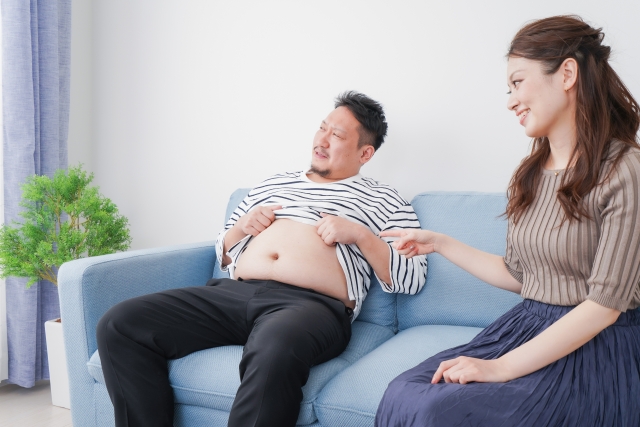
- Obesity or fat around the neck
- Worsening snoring after drinking alcohol
Behind mouth breathing, there may be hidden problems with the nose, oral function, bone structure, or the airway during sleep.
For this reason, simply saying “please close your mouth” may not be enough.
In particular, if snoring or apnea is also present, it is important to objectively confirm the situation with a sleep test.

Self-Care to Prevent Mouth Breathing, Snoring, and an Aging Face
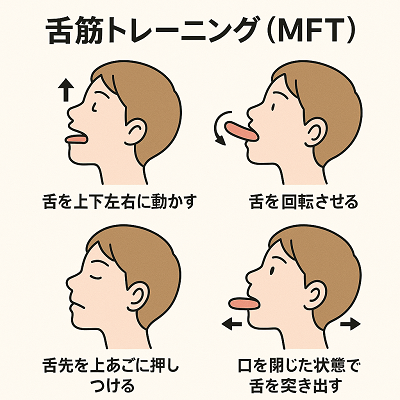
If you have mild mouth breathing or are concerned about slackness around your mouth, try being mindful of the following self-care in daily life.
However, if you have strong snoring, apnea, or daytime sleepiness, testing takes priority over self-care.
1. Be conscious of keeping your lips closed during the day
First, check the state of your mouth during the day.
If your mouth is open when you notice it, it is important to develop the habit of lightly closing your lips.
However, you do not need to force your mouth closed with effort.
What matters is whether you can naturally breathe through your nose.
If closing your mouth makes breathing difficult, there may be a hidden nasal congestion or structural nasal problem.
2. Place your tongue against the upper palate
The tongue resting lightly against the upper palate is considered a stable position.
If the tongue has dropped down, the mouth tends to open, and during sleep this can lead to the tongue base dropping backward.
From daytime onward, be mindful of keeping the tip of your tongue just behind your upper front teeth, with the whole tongue resting gently against the roof of your mouth.
3. Move the orbicularis oris muscle
Simple exercises that use the orbicularis oris muscle include pursing the lips, raising the corners of the mouth, and puffing out the cheeks.
For example:
- Push your lips forward as if saying “ooh”
- Spread the corners of your mouth sideways as if saying “eee”
- Puff out your cheeks and hold for a few seconds
- With your mouth closed, sweep your tongue in large circles
Exercises like these are a good way to become aware of the muscles around your mouth.
4. Don’t leave nasal congestion untreated
When you have nasal congestion, you tend to breathe through your mouth.
For people with allergic rhinitis, hay fever, or sinusitis, treating the nose is also important.
When considering snoring treatment, whether you can breathe through your nose is also an important point.
5. Avoid drinking alcohol before bed
Alcohol reduces the tension of the muscles around the throat.
For this reason, after drinking, the tongue and soft palate tend to relax, and snoring can become worse.
If you are someone who is “usually fine, but snores badly only after drinking,” simply reviewing how much you drink before bed may bring about a change.
6. If snoring is strong when lying on your back, try sleeping on your side
When you sleep on your back, the tongue tends to fall backward.
Sleeping on your side can ease the dropping of the tongue base and reduce snoring.
However, if snoring or apnea occurs even when sleeping on your side, sleep apnea syndrome is possible.
Caution Is Needed with Mouth Tape
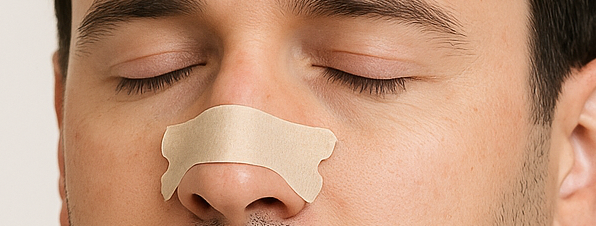
Some people use mouth tape as a measure against mouth breathing.
For people who can breathe sufficiently through the nose, mouth tape can serve as an aid to prevent the mouth from opening.
However, it is not necessarily safe for everyone.
In particular, people in the following situations should be careful:
- Strong nasal congestion
- Suspected sleep apnea syndrome
- Waking up at night due to difficulty breathing
- Severe snoring
- Being told by family that you stop breathing
- Children, the elderly, or those with reduced cognitive function
Covering the mouth while unable to breathe through the nose may actually make breathing more distressing.
Also, if you have sleep apnea syndrome, mouth tape alone will not fundamentally improve the condition.
Before using mouth tape, it is important to first check “why you are breathing through your mouth” and “whether you have apnea during sleep.”
Before Turning Only to Cosmetics for an Aging Face, Check Your Sleep
A sagging jawline, slackness around the mouth, dark circles under the eyes, morning puffiness, a tired impression.
When these become a concern, many people consider cosmetic procedures or skincare.
Of course, cosmetic care has value.
However, if sleep quality remains poor, the underlying fatigue and poor complexion can be difficult to improve.
In particular, for people with snoring or sleep apnea syndrome, oxygen levels drop during sleep and the brain may be repeatedly aroused.
Even though the person believes they are sleeping, their body may not be getting enough rest.
As a result, this can lead to states such as:
- Feeling tired from the morning
- A puffy face
- Noticeable dark circles under the eyes
- Daytime sleepiness
- Reduced concentration
- Becoming easily irritated
As a measure against an aging face as well, reviewing your sleep quality first is extremely important.
What Ueno Snoring Clinic Can Do for You
At Ueno Snoring Clinic, we provide care for snoring and sleep apnea syndrome from both insurance-covered and self-pay perspectives.
For those concerned about mouth breathing, slackness around the mouth, snoring, or apnea, it is important to first check your breathing during sleep.
1. Insurance-covered sleep testing
We check whether sleep apnea syndrome is hidden behind your snoring.
Using a simple test that can be done at home, or PSG testing as needed, we evaluate your breathing during sleep, oxygen desaturation, and the degree of apnea and hypopnea.
Even people who “thought they only snored” may find sleep apnea when they are tested.
2. CPAP therapy
For moderate to severe sleep apnea syndrome, CPAP therapy is a standard treatment option.
CPAP is a treatment that applies air pressure during sleep to open the airway and prevent apnea.
It prevents oxygen desaturation during sleep and can be expected to improve daytime sleepiness, morning headaches, and a lack of restful sleep.
3. Self-pay snoring laser treatment
For snoring thought to be mainly caused by vibration of the soft palate or uvula, self-pay snoring laser treatment may be considered.
At Ueno Snoring Clinic, we perform non-surgical laser treatment aimed at tightening the area around the soft palate.
For those for whom CPAP is not suitable, or those who want to improve the snoring sound itself, this can be an option depending on their condition.
4. Advice on lifestyle habits and mouth breathing
Mouth breathing and snoring are related to nasal congestion, alcohol, weight, sleeping posture, tongue position, and how the orbicularis oris muscle is used.
Based on test results and examination findings, we consider options suited to each patient while combining insurance-covered and self-pay treatments.
For Those Concerned About Snoring and Sleep Apnea
Mouth breathing is not merely a habit.
It can be related to a weakened orbicularis oris muscle, a lowered tongue position, nasal congestion, a receding lower jaw, and airway narrowing during sleep.
As a result, it can lead to an aging-looking impression—appearing tired, with a blurred jawline.
Furthermore, mouth breathing during sleep can be a sign of snoring or sleep apnea syndrome.
“I’m told my mouth is open.”
“My mouth is dry when I wake up.”
“My snoring is loud.”
“My family says I stop breathing.”
“I feel tired even after sleeping.”
“I’m sleepy during the day.”
If this sounds like you, the first step is to check your current condition.
At Ueno Snoring Clinic, we provide insurance-covered testing and CPAP management for sleep apnea, as well as self-pay snoring laser treatment.
First, let’s check your current sleep condition and consider the option that suits you together.
*The applicability of insurance vs. self-pay treatment differs depending on your symptoms and test results. The important first step is to check your current condition.
Frequently Asked Questions
Q. Does mouth breathing really make you look older?
A. Mouth breathing alone does not necessarily make you look older. However, when mouth breathing continues, the orbicularis oris muscle is used less, which can lead to an aging-looking impression—such as a slack mouth, a lowered tongue position, and a blurred jawline.
Q. Can training the orbicularis oris muscle improve snoring?
A. Training the orbicularis oris muscle, the tongue, and the muscles around the pharynx may help as a supportive measure for mild snoring. However, if you have sleep apnea syndrome, training alone cannot treat it. If you have loud snoring or apnea, testing is needed first.
Q. Is having a dry mouth in the morning a sign of mouth breathing?
A. Your mouth may be open during sleep. This can be related to mouth breathing, nasal congestion, snoring, and apnea syndrome. If your mouth is dry almost every morning, your throat hurts, or you are told you snore, caution is needed.
Q. Will mouth tape improve snoring?
A. For those who can breathe sufficiently through the nose, it can serve as an aid. However, for people with strong nasal congestion or suspected sleep apnea syndrome, covering the mouth may make breathing distressing. If you have been told you have apnea, we recommend getting tested rather than relying on mouth tape alone.
Q. Is snoring prevention related to cosmetics as well?
A. It may be related. Snoring prevention relies on nasal breathing, the orbicularis oris muscle, tongue position, and sleep quality. Since these are also related to the impression of your mouth area, complexion, puffiness, and tired appearance, snoring prevention can be thought of as part of preventing an aging face.
Summary | Reviewing Mouth Breathing Helps Prevent Both an Aging Face and Snoring
Mouth breathing is not merely a habit.
It can be related to a weakened orbicularis oris muscle, lip incompetence, a lowered tongue position, a receding lower jaw, nasal congestion, and airway narrowing during sleep.
As a result, it can lead to an aging-looking impression—a slack mouth, a blurred jawline, and a tired appearance.
Furthermore, mouth breathing during sleep can be a sign of snoring or sleep apnea syndrome. Considering cosmetic care is fine, but what matters even more is whether you are breathing properly during sleep.
If you have symptoms such as loud snoring, apnea, a dry mouth in the morning, daytime sleepiness, or feeling tired even after sleeping, do not leave mouth breathing untreated—have your condition checked once with a sleep test.
Snoring prevention is not only about reducing noise; it also helps protect nasal breathing, the muscles around the mouth, and sleep quality.
For the sake of preventing an aging face, and for your health, the first step is to review “how you breathe while sleeping.”
References
- Nasal pathologies in patients with obstructive sleep apnoea.
- Effect of treating severe nasal obstruction on the severity of obstructive sleep apnoea.
- Myofunctional therapy (oropharyngeal exercises) for obstructive sleep apnoea.
- Study of training for improving lip incompetence.