Ueno Snoring Clinic offers a range of options depending on your condition, including insurance-covered sleep testing and CPAP management, and self-pay snoring laser treatment. If you’d like to find out which treatment suits you, please start with an initial consultation.
Details of the tests and treatments offered at Ueno Snoring Clinic can be found here
Important: Snoring and Sleep Apnea Treatment Requires a Sleep Test
Some clinics that offer only self-pay care, and some cosmetic clinics, may not perform sleep testing. Before starting treatment, check whether the clinic performs a sleep test, or has a system for referring you to a medical institution where you can receive the necessary tests.
If sleep apnea is hidden behind your snoring and treatment begins without testing, it may be missed.
▶ Learn more about snoring and sleep apnea testing
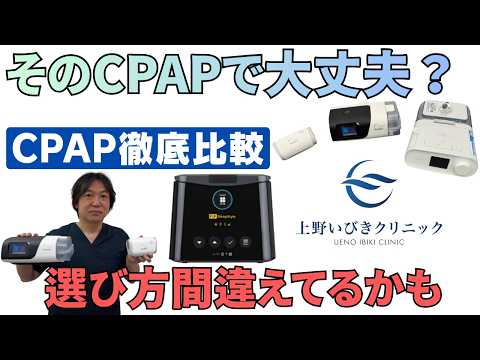
You’ll Want to Know This! A Complete Comparison of 5 CPAP Types — What Doctors Really Look For
Our doctor compares five different CPAP machines side by side and explains what actually matters when choosing one.
Watch the video
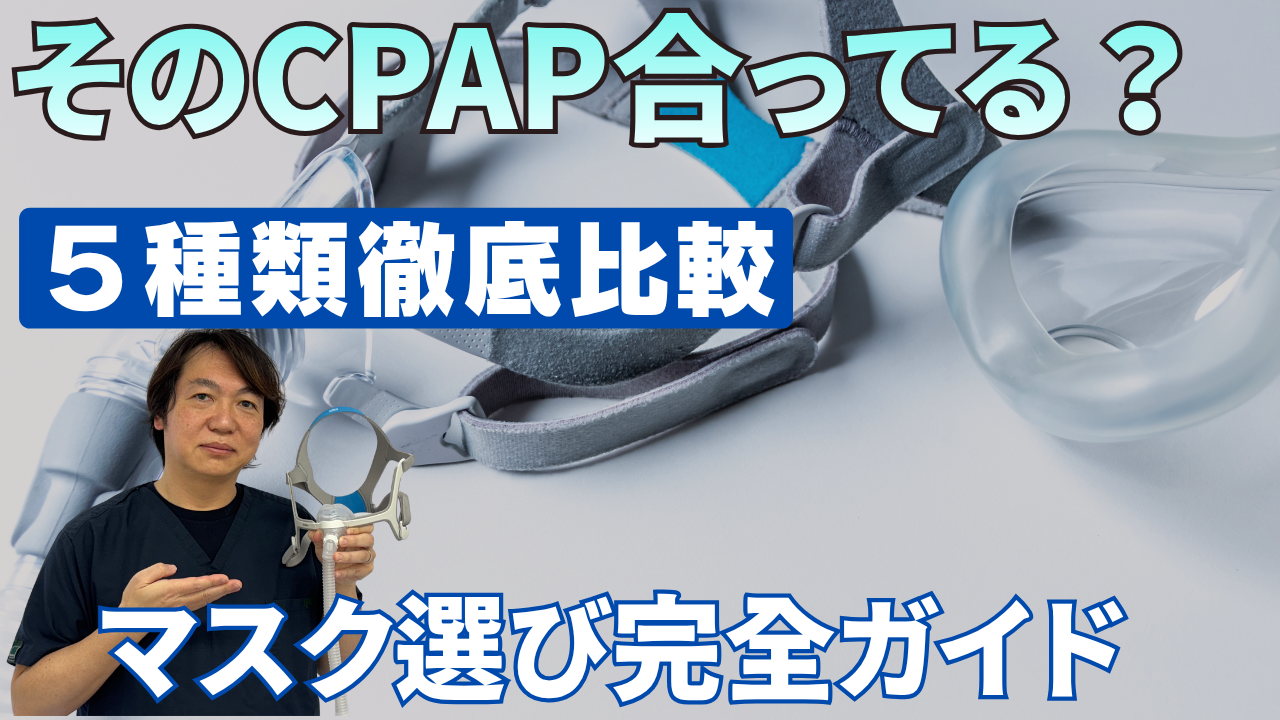
A Complete Comparison of CPAP Masks
We tried on and reviewed five different types of CPAP masks. 90% of CPAP comfort comes down to the mask.
Watch the video
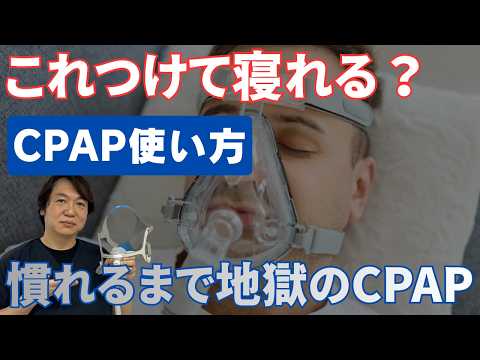
Do you have to use CPAP forever? A specialist explains how to use CPAP
A detailed explanation of how to use CPAP, with a real demonstration of what it feels like to wear the device.
Watch the video
Ueno Snoring Clinic was featured on Fuji TV’s “Live News It!” and on FNN Prime Online
Watch our clinic’s examination and explanation of sleep disorders, snoring, and sleep apnea.
Watch the video
Ueno Snoring Clinic was featured in an article on Nippon TV’s “news every.”
Please take a look as a starting point for thinking about getting evaluated for snoring, sleep apnea, or other sleep disorders.
Read the article
Reviewed by Our Director
Kazuyuki Sugaya
Director, Ueno Snoring Clinic / Anesthesiologist
Our director, with over 20,000 general anesthesia cases, focuses primarily on the diagnosis and treatment of snoring and sleep apnea, offering care tailored to each patient. [Insurance-Covered] Ueno Snoring Clinic
In this article, our Director, Kazuyuki Sugaya, explains the link between singing, the throat muscles, and snoring, why throat exercises can’t replace testing, and what to do when snoring persists.
🩺Comprehensive Snoring Treatment at Ueno Snoring Clinic
Snoring can stem from throat structure, tongue position, a blocked nose, excess weight, alcohol, sleeping position, and more. At Ueno Snoring Clinic, rather than favoring a single treatment, we propose the plan that suits each patient from a broad range of evidence-based options.
Insurance-Covered: Thorough Testing and Ongoing Treatment
- Simplified testing and PSG: Analysis of your breathing during sleep
- CPAP treatment: The standard treatment for moderate to severe apnea
Self-Pay: Approaches for Snoring and Lifestyle
- Latest snoring laser treatment: Non-surgical snoring treatment
- Medically supervised weight loss: Weight loss to help keep the airway open
*As a clinic specializing in snoring, we work through both insurance-covered and self-pay care to resolve problems such as snoring that won’t stop, sleep that doesn’t refresh, and daytime sleepiness.
Our Director’s book, “Curing Snoring with the Latest Treatments” (an Amazon Japan bestseller — #1 in General Medicine, #1 in Clinical Internal Medicine, #2 in Family Health & Wellness), also explains the causes of snoring in detail.
New Book by Our Director
“Curing Snoring with the Latest Treatments”
A guide to the latest snoring treatments, written by an anesthesiologist who has overseen the sleep of more than 10,000 patients.
View on Amazon
Quick Answer
Good singers may snore less because they tend to use the tongue, soft palate, and pharyngeal muscles well, and those same structures are where snoring comes from: snoring happens when the soft palate, uvula, and back of the tongue vibrate during sleep. Research on throat and tongue exercises, including one trial of singing exercises, has reported less snoring in some people. But singing well doesn’t make you immune: weight gain, alcohol, a blocked nose, jaw structure, aging, and sleep apnea can all cause snoring regardless. And exercises are an add-on, not a substitute for CPAP in sleep apnea. If you snore loudly or have been told you stop breathing, get tested first.
📋 What This Article Covers
- Why good singers are said to snore less
- Snoring is a vibration in the throat
- Where the soft palate is, and what singers do with it
- The upper-airway muscles shared by singing and snoring, and what research shows
- Singing alone won’t cure sleep apnea
- Why some good singers still snore
- Training your vocal cords isn’t the same as reducing snoring
- Throat and tongue self-care at home
- Signs to check when snoring persists
Why Good Singers Are Said to Snore Less

Good singers aren’t simply people with loud voices. Without thinking about it, they finely adjust how they use their breath, how their voice resonates, where their tongue sits, how they open their mouth, how they raise the soft palate, and how they open the throat.
The key is control of the soft palate and tongue. The soft palate is the soft part at the back of the roof of the mouth. When you sing, raising it produces a clear, ringing tone that doesn’t leak too much through the nose. In snoring, by contrast, the soft palate and uvula relax during sleep and can vibrate in the airflow.
So because good singers are used to working the soft palate and pharyngeal muscles every day, the muscles around the upper airway may stay in better shape.
That doesn’t mean “sing well and you won’t snore.” Many factors play a part in snoring: weight, fat around the neck, a small jaw, a blocked nose, alcohol, aging, sleeping position, enlarged tonsils, and sleep apnea.
Snoring Is a Vibration in the Throat
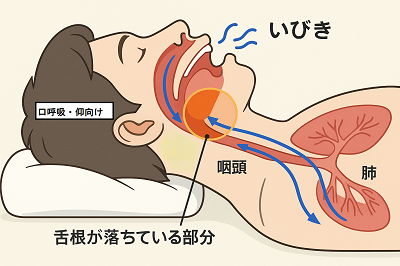
Snoring happens when the airway narrows during sleep and the surrounding tissues vibrate as air squeezes through. The parts most often involved are:
- The soft palate
- The uvula
- The back of the tongue
- The area around the tonsils
- The side walls of the pharynx
- The nasal passages and upper pharynx
While you’re awake, the throat muscles keep some tension, so the airway stays open. Once you fall asleep, that tension drops. Lying on your back in particular lets the tongue sink backward, narrowing the airway further. Breathing through that narrowed passage forces air past the soft palate and uvula and makes them vibrate. That is the sound of snoring.
If the airway narrows even more, and breathing repeatedly stops or becomes shallow, sleep apnea is suspected.
Where Is the Soft Palate?
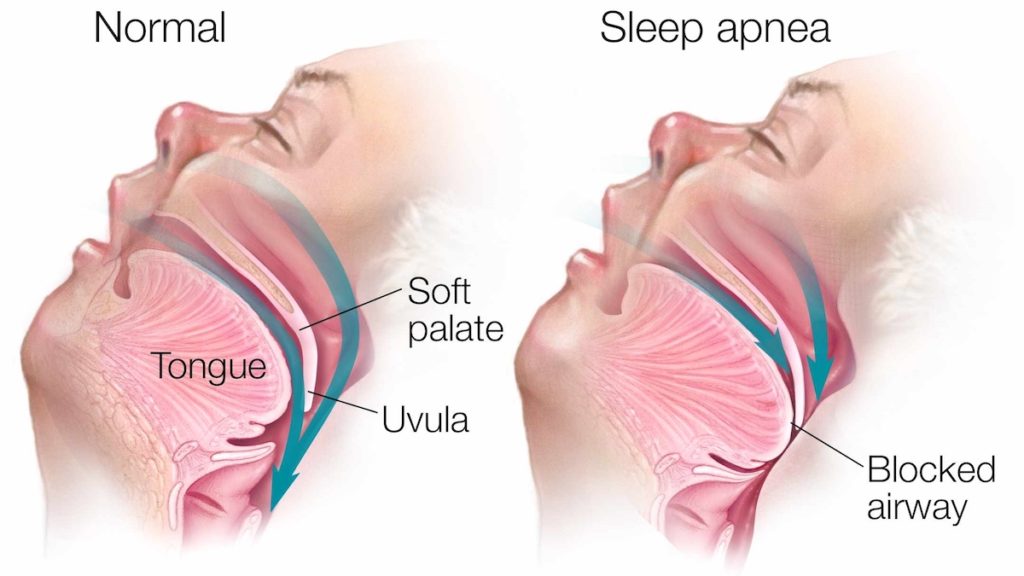
The soft palate is the soft part at the back of the roof of the mouth. The hard front section is called the hard palate, and the soft rear section the soft palate. The small piece of tissue hanging from the middle of the soft palate is the uvula.
The soft palate plays an important role in swallowing, in speaking and singing, and in controlling how much air passes through the nose. When it rises well during vocalization, the voice resonates without becoming too nasal. When it moves weakly, the voice can sound muffled or nasal, and articulation may suffer.
For snoring, the issue is that the soft palate relaxes during sleep and vibrates easily in the airflow. The soft palate, in other words, shapes both the ring of a singing voice and the sound of a snore. For more, see The Soft Palate and Snoring.
Good Singers Make Good Use of the Soft Palate
Good singers often use the soft palate well when they sing. Choir and voice coaches use phrases such as “open your throat,” “make space at the back of your mouth,” “send the sound upward,” and “sing as if you’re yawning.” Medically, these relate to raising the soft palate, widening the pharyngeal space, and adjusting the tongue’s position.
Rather than squeezing the throat to force out sound, good singers use the airflow and adjust the resonance of the mouth, pharynx, and nasal cavity. People who do this regularly are likely in the habit of making fine use of the tongue, soft palate, and pharyngeal muscles. That muscle function may be part of why good singers are said to snore less.
The important point, however, is that singing isn’t a treatment in itself. Even a good singer will snore if the muscles relax in sleep and the airway narrows. And if sleep apnea is present, trying to cure it with singing or voice exercises alone is risky.
The Upper-Airway Muscles Shared by Singing and Snoring
Several structures are involved in both singing and snoring:
- The tongue
- The soft palate
- The muscles around the pharynx
- The muscle around the lips (orbicularis oris)
- The cheek muscles
- The breathing muscles
When you sing, these muscles control airflow, pitch, resonance, and articulation. During sleep, their tension falls. When the tongue and soft palate in particular drop backward, the airway narrows and snoring or apnea becomes more likely. Seen this way, snoring isn’t only about “a bad nose” or “being overweight”; it can also be viewed as a problem of the muscles around the upper airway.
In recent years, exercises that train the tongue and the muscles around the mouth and throat (oropharyngeal or myofunctional exercises) have drawn attention as a supporting approach for snoring and milder sleep apnea. Some of the main studies:
| Study |
Participants and design |
Findings |
Caveats |
| Singing exercises (Hilton et al., 2013, UK) |
Randomized trial in 120 people (60 snorers, 60 with mild to moderate sleep apnea); singing exercises for 3 months vs. no intervention |
The singing group improved on ratings of snoring and sleep quality |
Outcomes were largely questionnaire-based |
| Guimarães et al. (2009, Brazil) |
Randomized trial in 31 people with moderate OSA; 3 months of daily oropharyngeal exercises vs. sham therapy |
In the exercise group, the AHI fell from 22.4 to 13.7, and snoring and daytime sleepiness also improved |
Small sample; moderate OSA only |
| Ye et al. (2018, China) |
Randomized trial in 50 people with moderate OSA after a stroke |
In the exercise group, the AHI fell from 20.8 to 14.3 and the snoring index also improved |
Limited to stroke patients |
| Camacho et al. (2015), meta-analysis |
9 adult studies (120 patients) on myofunctional therapy |
The AHI fell by about 50% on average (from 24.5 to 12.3), and snoring decreased |
The included studies were small; the authors suggest it as an add-on to other treatments |
These results are encouraging, but exercise remains a supporting approach. For severe sleep apnea, it is not a replacement for CPAP.
Singing Alone Won’t Cure Sleep Apnea
This point is critical. Singing, voice practice, and oropharyngeal exercises may help as supporting measures for snoring. But if you have sleep apnea, relying on singing alone is risky.
In sleep apnea, breathing stops or becomes shallow again and again during sleep. Oxygen levels drop, straining the brain, heart, and blood vessels. Left untreated, it can lead to strong daytime sleepiness, poor concentration, a higher risk of traffic accidents, high blood pressure, irregular heart rhythms, heart attack, and stroke.
If you have any of the following, we recommend a sleep test rather than waiting and relying on singing or self-care:
- Family members say you stop breathing in your sleep
- Your snoring is so loud you’ve been asked to sleep in another room
- You wake up still tired
- You’re very sleepy during the day
- You get drowsy in meetings or while driving
- You have morning headaches
- You get up to urinate at night
- You’ve been told you have high blood pressure
Why Some Good Singers Still Snore
Even good singers become more likely to snore under these conditions:
1. Weight Gain and Fat Around the Neck
As weight rises, fat tends to build up around the neck and the tongue too. The airway narrows, and snoring and apnea become more likely during sleep. However well you sing, if the airway itself is physically narrowed, snoring follows.
2. Alcohol
Alcohol relaxes the throat muscles. Even people who don’t usually snore can snore loudly after drinking, and the same goes for professional voice users: when the soft palate and base of the tongue slacken after alcohol, snoring can get worse.
3. A Blocked Nose and Mouth Breathing
A blocked nose pushes you toward mouth breathing in your sleep. With the mouth open, the lower jaw and tongue sink back more easily and the airway narrows, so the soft palate and uvula vibrate and snoring is more likely. See Mouth Breathing and Snoring.
4. A Small or Set-Back Jaw
If your jaw is small or your lower jaw sits further back, there’s less room for the tongue, and it tends to fall back during sleep. In that case, structural narrowing of the airway can occur during sleep however good your vocal technique.
5. Loss of Muscle Tone With Age
With age, the throat muscles tend to weaken just like the rest of the body’s muscles. It’s common for people who didn’t snore when young to be told they snore from their 40s onward. Even good singers can start to snore when age-related loss of muscle tone combines with weight changes.
Training Your Vocal Cords Isn’t the Same as Reducing Snoring
A common misconception is “good singer = strong vocal cords = resistant to snoring.” But snoring isn’t about the vocal cords themselves. It mainly arises above them, at the soft palate, uvula, base of the tongue, and pharyngeal walls. So training the vocal cords alone won’t necessarily improve snoring.
What matters is the state of the whole upper airway, including the tongue, soft palate, pharynx, and nasal breathing. If good singers really do snore less, it’s more natural to attribute it to how they use the whole throat, where they hold the tongue, and how they control the soft palate, than to strong vocal cords.
Throat and Tongue Self-Care at Home
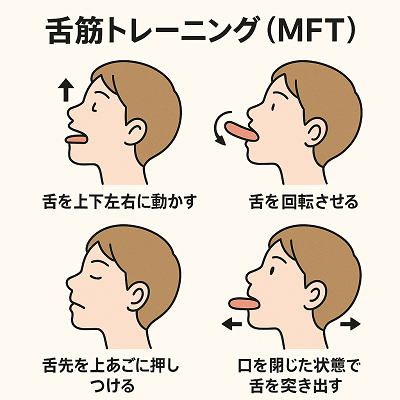
If your snoring is mild, or you’re concerned that your throat muscles have weakened, getting into the habit of moving your tongue and soft palate each day is one option. If loud snoring or apnea is suspected, though, testing comes before self-care.
| Exercise |
How to do it |
| 1. Press your tongue to the roof of your mouth |
Press the whole tongue up against the roof of your mouth and hold for a few seconds. Being aware of tongue position trains the tongue muscles |
| 2. Say “ah,” “ee,” “oo” clearly |
Open your mouth wide and voice each vowel, consciously moving the lips, tongue, soft palate, and pharynx |
| 3. Open the throat as if yawning |
Widening the back of the mouth like a yawn helps lift the soft palate; it’s the same feeling used in vocal warm-ups |
| 4. Practice nasal breathing |
During the day, keep your mouth closed with the tongue resting on the roof of the mouth. If nasal breathing is hard, rhinitis, sinusitis, or hay fever may be behind it |
| 5. Review alcohol, sleeping position, and weight |
Throat exercises aren’t enough on their own. If snoring gets worse after drinking, simply avoiding alcohol before bed can make a difference |
If a blocked nose is behind your mouth breathing, see Hay Fever & Snoring.
Signs to Check When Snoring Persists
Short-lived snoring may be down to fatigue, alcohol, a blocked nose, or sleeping position. But sleep apnea may be hiding behind it if:
- You snore loudly almost every night
- Family members say you stop breathing
- You wake with a headache
- You’re very sleepy during the day
- You can’t stay focused
- Your blood pressure is high
- You get up to urinate at night
- You don’t feel rested after sleep
- Your partner has started sleeping in another room
If these apply, don’t assume “singing will fix it” or “training my throat is enough.” The important first step is an objective test of your breathing during sleep. For the types of test, see Simplified Sleep Test vs. PSG.
What We Offer at Ueno Snoring Clinic
Ueno Snoring Clinic treats snoring and sleep apnea through both insurance-covered and self-pay care.
1. Insurance-Covered Sleep Testing
The first priority is to find out whether sleep apnea lies behind your snoring. A simplified test you can do at home, and where needed a detailed study (also possible at home), assess your breathing during sleep, drops in oxygen, and the extent of apneas and hypopneas. Even people who thought they “just snored” sometimes turn out to have sleep apnea.
2. CPAP Treatment
For moderate to severe sleep apnea, CPAP is the standard treatment option. It uses air pressure during sleep to hold the airway open and prevent apneas. Some people find that daytime sleepiness, morning headaches, and unrefreshing sleep improve.
3. Self-Pay Snoring Laser Treatment
When vibration of the soft palate and uvula is thought to be the main cause of snoring, self-pay snoring laser treatment may be considered. At Ueno Snoring Clinic, we use non-surgical laser treatment that aims to firm the tissue around the soft palate (see Dual Deep Thermia® Laser Snoring Treatment in Tokyo). Depending on your condition, it can be an option if you’ve been told you don’t qualify for CPAP, if CPAP just doesn’t suit you, or if you want to reduce the snoring sound itself.
Summary: Good Singers May Snore Less, but Don’t Rely on It
Good singers often make skillful use of the tongue, soft palate, and pharyngeal muscles, and their throat muscle function may be well preserved. So the idea that “good singers snore less” has some medical basis.
But snoring isn’t determined by muscles alone. Excess weight, alcohol, a blocked nose, jaw structure, the tongue falling back, aging, sleeping position, and sleep apnea all play a part.
Singing and voice practice may help as supporting self-care, but if you snore loudly or have apnea, the first step is to test your breathing during sleep. Don’t assume “I’m a good singer, so I’m fine”; if snoring persists, talk to a specialist clinic.
Great Voice, Terrible Snoring? Let’s Check Your Sleep
We’ll start by checking your current sleep and then work out the right options with you. Insurance-covered and self-pay care depend on your symptoms and test results. By appointment only; same-day appointments are often available.
Frequently Asked Questions
Q. Is it OK to have snoring treatment at a self-pay-only clinic or a cosmetic clinic?
A. Some clinics that offer only self-pay care, and some cosmetic clinics, may not perform sleep testing. Before starting treatment, check whether the clinic performs a sleep test, or has a system for referring you to a medical institution where you can receive the necessary tests. If sleep apnea is hidden behind your snoring and treatment begins without testing, it may be missed. We recommend first checking your condition at a medical institution that offers sleep testing (simplified testing or PSG). For details, see
Simplified Sleep Test vs. PSG.
Q. Do good singers really snore less?
A. Good singers tend to use the tongue, soft palate, and pharyngeal muscles well, so the muscles around the upper airway may be in good shape, and they may be somewhat less prone to snoring. But singing well is no guarantee that you won’t snore.
Q. Will singing karaoke cure my snoring?
A. Singing may help a little as a habit that works the throat and tongue. But if you have sleep apnea, singing can’t treat it. If you snore loudly or have been told you stop breathing, get tested first.
Q. Are the vocal cords what cause snoring?
A. No. Snoring mainly arises above the vocal cords, at the soft palate, uvula, base of the tongue, and pharyngeal walls. Training the vocal cords alone won’t necessarily improve snoring.
Q. If I train my throat, can I stop using CPAP?
A. If you have sleep apnea that needs CPAP, stopping it on your own is risky. Throat and tongue exercises are a supporting measure and may not replace CPAP. Treatment decisions should be based on your test results and your doctor’s judgment.
Q. Why do I snore badly even though I’m a good singer?
A. Many factors cause snoring: excess weight, alcohol, a blocked nose, jaw structure, the tongue falling back, aging, sleeping position, and sleep apnea. However well you sing, if your airway narrows during sleep, you will snore.
*This article is a general explanation, written for a broad audience and based on the sources above together with our clinic’s own clinical experience. It is not a substitute for medical advice. If you are concerned about snoring or sleep apnea, please consult a medical institution for a proper evaluation.