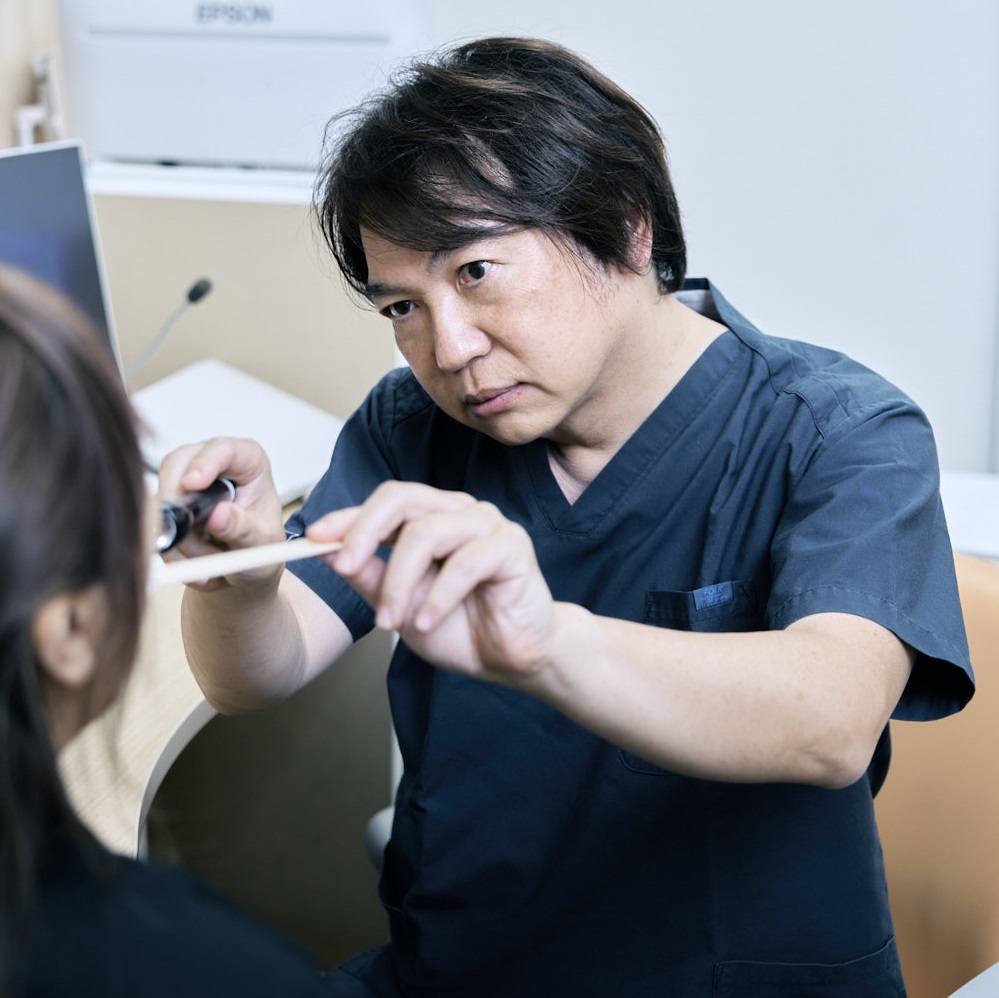
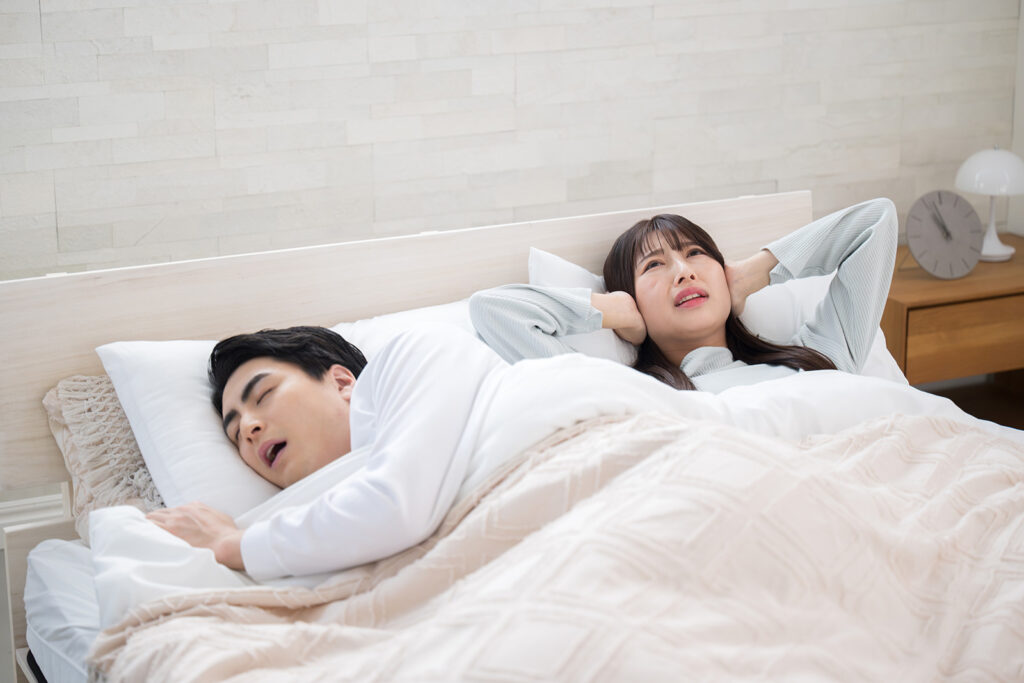
Ueno Snoring Clinic checks for sleep apnea behind snoring or daytime sleepiness with at-home simplified testing and insurance-covered PSG (a detailed sleep study), with no hospital stay needed. We also provide insurance-covered CPAP, treatment for allergic rhinitis due to hay fever, and self-pay snoring laser treatment.
Details of the tests and treatments offered at Ueno Snoring Clinic can be found here
Important: Snoring and Sleep Apnea Treatment Requires a Sleep Test
Some clinics that offer only self-pay care, and some cosmetic clinics, may not perform sleep testing. Before starting treatment, check whether the clinic performs a sleep test, or has a system for referring you to a medical institution where you can receive the necessary tests.
If sleep apnea is hidden behind your snoring and treatment begins without testing, it may be missed.
▶ Learn more about snoring and sleep apnea testing
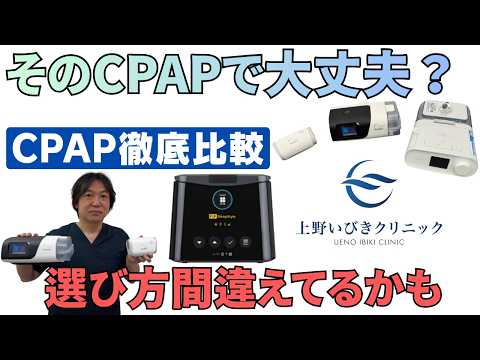
You’ll Want to Know This! A Complete Comparison of 5 CPAP Types — What Doctors Really Look For
Our doctor compares five different CPAP machines side by side and explains what actually matters when choosing one.
Watch the video
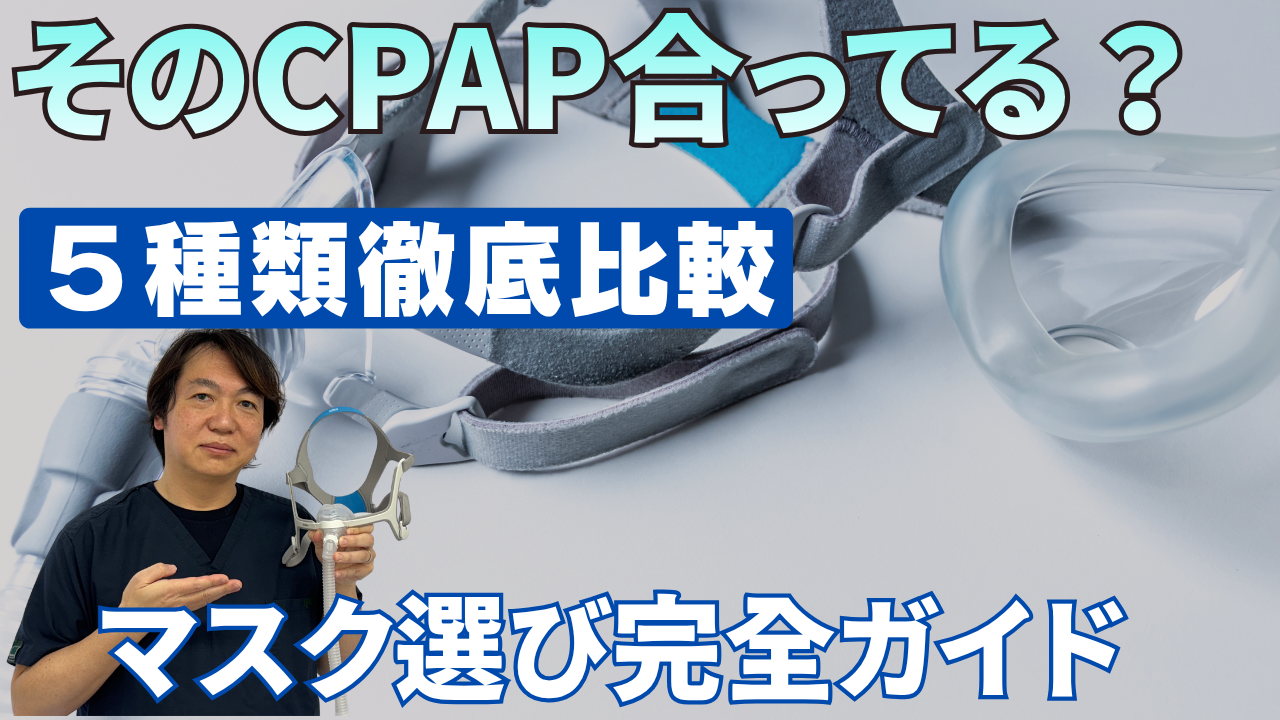
A Complete Comparison of CPAP Masks
We tried on and reviewed five different types of CPAP masks. 90% of CPAP comfort comes down to the mask.
Watch the video
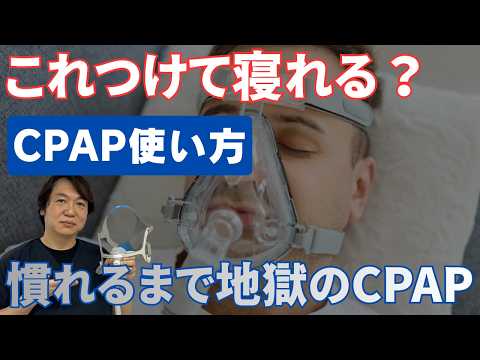
Do you have to use CPAP forever? A specialist explains how to use CPAP
A detailed explanation of how to use CPAP, with a real demonstration of what it feels like to wear the device.
Watch the video
Ueno Snoring Clinic was featured on Fuji TV’s “Live News It!” and on FNN Prime Online
Watch our clinic’s examination and explanation of sleep disorders, snoring, and sleep apnea.
Watch the video
Ueno Snoring Clinic was featured in an article on Nippon TV’s “news every.”
Please take a look as a starting point for thinking about getting evaluated for snoring, sleep apnea, or other sleep disorders.
Read the article
Reviewed by Our Director
Kazuyuki Sugaya
Director, Ueno Snoring Clinic / Anesthesiologist
Our director, with over 20,000 general anesthesia cases, focuses primarily on the diagnosis and treatment of snoring and sleep apnea, offering care tailored to each patient. [Insurance-Covered] Ueno Snoring Clinic
In this article, our Director, Kazuyuki Sugaya, explains why nosebleeds can occur during CPAP treatment, how to stop one safely, and how dryness, mask fit, and rhinitis can be managed so that treatment can continue.
🩺Comprehensive Snoring Treatment at Ueno Snoring Clinic
At Ueno Snoring Clinic, we look after the whole of your CPAP treatment, including nasal dryness, air leaks, and hay fever, using your usage data and an examination of your nose to adjust the mask, humidifier, and settings.
Insurance-Covered: Thorough Testing and Ongoing Treatment
- Simplified testing: Home screening for sleep apnea
- PSG testing: A detailed sleep study including brain waves, done at home
- CPAP treatment: The standard treatment for apnea that meets insurance criteria
Self-Pay: Address the Root Cause, Short-Term Focus
- Snoring laser treatment: For people whose testing confirms simple snoring
- Medically supervised weight loss: An option when weight gain is a contributing factor
*Whether a treatment is appropriate, and what it can achieve, differs from one person to the next, so an examination comes first.
Our Director’s book, “Curing Snoring with the Latest Treatments” (an Amazon Japan bestseller — #1 in General Medicine, #1 in Clinical Internal Medicine, #2 in Family Health & Wellness), includes practical advice on living comfortably with CPAP.
New Book by Our Director
“Curing Snoring with the Latest Treatments”
A guide to the latest snoring treatments, written by an anesthesiologist who has overseen the sleep of more than 10,000 patients.
View on Amazon
Quick Answer
The three main causes of nosebleeds with CPAP are (1) dryness of the nasal lining from the airflow, (2) a poorly fitting mask that leaks air, lets air escape through the mouth, or rubs, and (3) a lining made fragile by hay fever, allergic rhinitis, or congestion. High blood pressure, blood-thinning medicines, nasal anatomy, nasal sprays, and how you blow your nose can also play a part. Nasal problems are common with CPAP: congestion, dryness, sneezing, and nosebleeds have been reported in roughly 30–70% of users. The basics are a heated humidifier, a better mask fit, and treating rhinitis. If a nosebleed starts, take off the mask, sit and lean forward, and pinch the soft part of your nose firmly for 10–15 minutes. However, stopping CPAP on your own leaves your sleep apnea untreated. If bleeding is hard to stop, keeps coming back, or you take blood thinners, talk to a doctor promptly.
📋 What This Article Covers
- Why does CPAP cause nosebleeds? The short answer and how common it is
- Cause 1: dryness from CPAP air and the seasons
- Cause 2: a poorly fitting mask and air or mouth leaks
- Cause 3: hay fever, allergic rhinitis, and congestion
- Cause 4: other factors such as blood pressure, medicines, and nasal structure
- What to do when a nosebleed starts, and what not to do
- Prevention and self-care: humidity, mask, moisture, and cleaning
- When to see a doctor, and how to keep going with CPAP
Why Does CPAP Cause Nosebleeds? The Short Answer and How Common It Is

Nosebleeds during CPAP use are usually small bleeds from the lining just inside the nostrils. Many fine blood vessels gather near the entrance of the nose, and they are easily damaged by dryness or irritation. Because CPAP air flows through the nose for hours every night, this area takes a lot of strain.
| Item |
Details |
| How common nasal problems are |
Many CPAP users report nasal side effects such as congestion, a dry nose or throat, sneezing, nosebleeds, and discomfort from cold, dry air: around 30–70% in published reports. We could not find a clear figure for nosebleeds alone |
| Where the bleeding comes from |
Usually the front part of the nasal septum (the wall between the nostrils), just inside the nose. This area has many blood vessels and is sensitive to dryness and irritation |
| How much bleeding |
Often mild: some blood when you blow your nose in the morning, or a small spot on the pillow |
| When it tends to happen |
More often in dry winter weather and during hay fever season. Many people find their symptoms change with the seasons |
| When to be more careful |
If bleeding won’t stop, is heavy, keeps recurring, or you take blood-thinning medicine, seek advice early |
Nosebleeds may also come from a pre-existing nasal condition, high blood pressure, or medication rather than CPAP itself. Rather than assuming “it’s the CPAP,” it helps to sort out the possible causes before deciding what to do.
Cause 1: Dryness From CPAP Air and the Seasons

CPAP draws in room air, pressurizes it, and delivers it to you, so without any measures, dry air keeps blowing over the lining of your nose. A dried-out lining cracks and crusts easily, and these spots can bleed when you blow your nose.
| What we know |
Details |
| Heated humidifiers |
Several studies show that heated humidification helps prevent nasal and throat dryness and reduces CPAP side effects, and some reports find the benefit greatest in winter. Results on whether it improves how consistently people use CPAP vary between studies |
| Heated tubing |
Prevents condensation inside the tube and is often suggested for people with nose or throat symptoms. It is used together with a humidifier |
| The effect of air escaping through the mouth |
A small experiment in 8 healthy adults (Thorax, 1995) found that using nasal CPAP with the mouth open and air leaking increased blood flow in the nasal lining by about 65%; with the mouth closed, or with humidified air, there was no such change. With so few people and a short test, it may not apply directly to everyday use |
| Seasonal effects |
Nasal symptoms tend to increase in cold, dry winters. Humidifying the bedroom and adjusting the humidifier setting for the season often helps |
If you don’t use a humidifier, the water tank runs dry, or the setting is low, dryness may be the cause. On the other hand, too much humidity can cause water to collect in the tube (condensation), congestion, or the mask slipping, so adjust the setting a little at a time.
Cause 2: A Poorly Fitting Mask and Air or Mouth Leaks
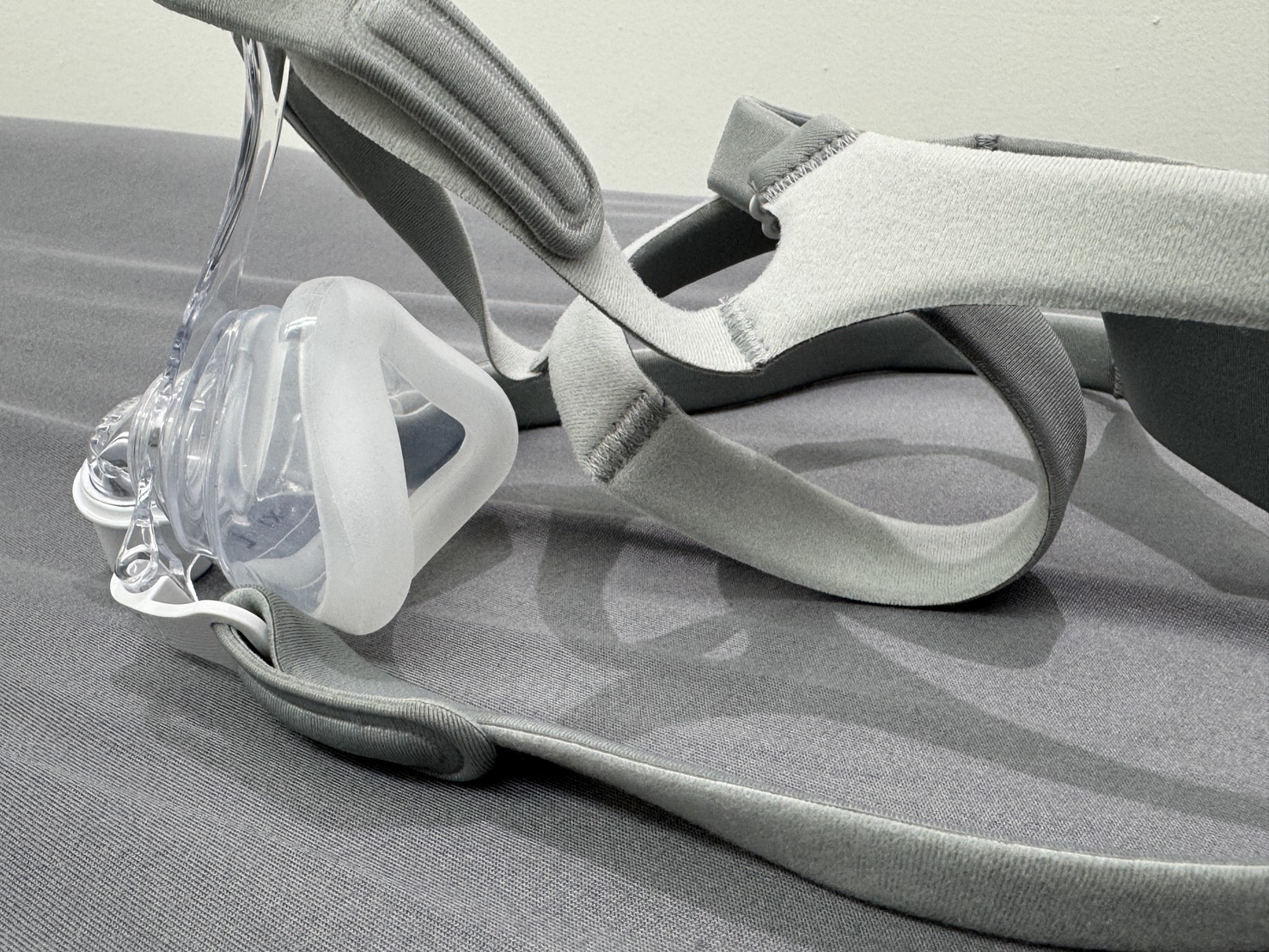
If the mask doesn’t fit well, air may leak onto your nose or eyes, your mouth may fall open and let air escape, or the mask may rub at the nostrils or the bridge of the nose, all of which can lead to nosebleeds.
| Situation |
What happens |
What to do |
| Mask leaks |
Leaking air dries the skin around the nose and eyes. People often tighten the straps too much to stop leaks |
Review the mask’s size, type, and position rather than over-tightening. Your CPAP data also shows the leak level |
| Mouth opening (mouth leak) |
With a nasal mask, air escapes through an open mouth, drying the nose and throat. One study found blood flow in the nasal lining increased |
Discuss a chin strap, a full-face mask covering nose and mouth, or more humidity with your doctor |
| Masks that sit in the nostrils (nasal pillows) |
The cushions touch the nostril openings directly, and rubbing or pressure can damage the lining or skin |
Try a different mask type or size |
| Worn or dirty masks |
A hardened or cracked cushion, or skin oil and dirt, makes the seal worse |
Clean regularly and replace parts. A fit check about once a year is recommended |
If leaks or discomfort continue despite adjustments, changes in your weight or nose may be involved. Choosing a mask again based on your usage data and nasal condition can help.
Cause 3: Hay Fever, Allergic Rhinitis, and Congestion
With hay fever or other allergic rhinitis, the nasal lining is swollen and inflamed, causing congestion, sneezing, frequent nose-blowing, and itching. These not only lead to nosebleeds but can make it hard to keep using CPAP at all.
| Link |
Details |
| Congestion and mouth breathing |
A blocked nose pushes you to breathe through your mouth, increasing mouth leaks and drying the nose and throat. Snoring and sleep apnea also tend to worsen |
| A more fragile lining |
An inflamed, swollen lining is vulnerable to dryness and irritation. Blowing, rubbing, or touching the nose often can trigger bleeding |
| Nasal sprays |
Depending on how they are used, some rhinitis sprays can dry the lining or make it bleed more easily. Check how to use them with your prescriber or pharmacist |
| CPAP and rhinitis |
A retrospective study from China (Ther Clin Risk Manag, 2018; 416 patients) found allergic rhinitis was more common in the CPAP group (15.8% vs. 7.0%), and some people developed it or got worse after starting CPAP. House dust mite allergens in the device filter were proposed as a possible factor, but as a retrospective study it cannot establish cause and effect |
| Treating congestion and CPAP |
Some reports suggest that relieving nasal blockage, including by surgery in selected cases, may help people use CPAP more consistently. The effect of any one approach depends on the individual nose |
If you have hay fever, CPAP may feel harder to use, and nosebleeds may increase, when symptoms are at their worst, so it’s important to treat the rhinitis and adjust CPAP at the same time. To avoid blowing pollen and dust into your airway, also clean or replace the machine’s filter and keep your bedroom ventilated and clean.
We also treat allergic rhinitis due to hay fever
A blocked nose and mouth breathing are closely linked to snoring and sleep apnea. Alongside snoring and sleep apnea care, Ueno Snoring Clinic treats allergic rhinitis caused by hay fever. If congestion, nosebleeds, or sneezing are making CPAP difficult, please ask us about treating your rhinitis too.
Cause 4: Other Factors Such as Blood Pressure, Medicines, and Nasal Structure
Even when CPAP plays a part, other factors often add to nosebleeds:
| Factor |
Details |
| High blood pressure |
Nosebleeds may happen more easily and be harder to stop when blood pressure is high. Sleep apnea itself also raises blood pressure |
| Blood-thinning medicines |
Anticoagulants (such as warfarin) and antiplatelet drugs (such as aspirin) can make bleeding more likely and slower to stop. Tell your prescriber that you use CPAP, and never stop these medicines on your own |
| Nasal structure |
A deviated (bent) septum or prominent blood vessels can make bleeding more likely |
| How you care for your nose |
Blowing hard, picking, or rubbing inside the nose damages the lining |
| Nasal sprays and rinses |
Depending on the type, frequency, and method, they can dry or irritate the lining |
| Colds and sinusitis |
Inflammation or infection makes the lining more fragile. If cold symptoms are severe, ask your doctor whether to keep using CPAP |
| Other causes |
Frequent bleeding can occasionally point to another nasal or general medical condition |
If you take blood thinners, are being treated for high blood pressure, or keep having nosebleeds, don’t simply blame CPAP: talk to your doctor as well.
What to Do When a Nosebleed Starts, and What Not to Do
If a nosebleed starts during CPAP use or when you wake up, stay calm and follow these steps:
| Step |
What to do |
| 1. Take off the CPAP mask |
Pause CPAP while you are bleeding |
| 2. Sit up and lean slightly forward |
Don’t tip your head back: blood runs into your throat and you may choke or swallow it. Don’t lie down; sit and lean forward a little |
| 3. Pinch the soft part of your nose |
Pinch the soft part just above the nostrils (not the hard bridge) firmly with your thumb and index finger, and hold for 10–15 minutes without letting go to check |
| 4. Breathe through your mouth and spit out blood |
Don’t swallow blood that runs into your throat; spit it into a tissue, as swallowing it can make you feel sick |
| 5. Once it stops, leave your nose alone |
For about a day afterward, avoid blowing or picking your nose, hot drinks, alcohol, heavy lifting, and lying flat |
Seek medical care promptly if:
□ Bleeding hasn’t stopped after 10–15 minutes of firm pressure □ The bleeding is heavy, or a lot of blood runs down your throat □ The nosebleed started after a blow to the head or face □ You take blood-thinning medicine □ It happens several times a week □ You also have bleeding gums or bruise easily □ You feel dizzy, faint, or look pale. If bleeding won’t stop, or you feel faint or have trouble breathing, consider emergency care, and don’t drive yourself.
Once the bleeding stops, you may wonder whether to use CPAP the next night. If the bleed was small and stopped, and dryness or mask contact seems to be the cause, it’s usual to carry on after adjusting the humidity or mask. If bleeding continues or keeps recurring, talk to your doctor before restarting.
Prevention and Self-Care: Humidity, Mask, Moisture, and Cleaning
To prevent nosebleeds, it helps to build up small measures in four areas: humidity, the mask, moisture, and cleaning.
| Measure |
How |
| Humidity |
Use a heated humidifier and raise the setting gradually. Change the water daily and follow the manufacturer’s instructions. Keep the bedroom humid too. Too much humidity can cause condensation or mask slippage, so adjust as you go |
| Tubing |
Heated tubing makes condensation less likely. Keep the tube from being chilled under bedding |
| Mask fit |
Don’t over-tighten; position the mask where it leaks least. If you have mouth leaks, ask about a chin strap or full-face mask. Clean it regularly and replace worn parts |
| Moisturizing the nose |
A saline nasal spray at bedtime may help keep the nose moist. Check with your doctor or pharmacist whether and how to use it |
| Ointments and petroleum jelly |
A thick layer of oily ointment inside the nose or where the mask sits can make the mask slip and leak. If you use one, apply thinly and ask a healthcare professional first |
| What to avoid |
Long-term use of over-the-counter decongestant sprays, blowing hard, picking your nose, and harsh nasal rinses |
| Treating rhinitis |
Treating hay fever or allergic rhinitis eases congestion and reduces mouth breathing and dryness. Seek help early, especially in high-symptom seasons |
| Cleaning |
Clean the mask, tubing, and humidifier water tank regularly. Clean or replace the filter so you don’t breathe in dust and pollen |
For cleaning and replacing CPAP parts, see CPAP Mask and Hose Cleaning and Replacement, and for the basics of CPAP, see CPAP Treatment in Japan.
When to See a Doctor, and How to Keep Going With CPAP
Talk to the clinic that prescribes your CPAP, or a clinic that can examine the nose and throat, if:
- Nosebleeds are frequent or hard to stop
- Nasal dryness or pain continues even after adjusting humidity and the mask
- Congestion, sneezing, or a runny nose means you’re skipping CPAP more nights
- Sores or raw skin develop where the mask touches
- You’ve started a blood thinner or your dose has changed
- Using CPAP has become a struggle and you want to stop
If you feel like giving up CPAP, please talk to us first. Stopping leaves your sleep apnea untreated again, so it’s important to work out the cause and find a solution. Reasons people want to stop and the alternatives are covered in Can You Stop CPAP Treatment?.
If you want to know whether you need CPAP in the first place, a sleep test comes first. We usually start with a simplified test at home and move to a more detailed PSG if needed; at Ueno Snoring Clinic, PSG can also be done at home, with no hospital stay. The tests are explained in Simplified Sleep Test vs. PSG.
With Japan’s June 2026 medical fee revision, the insurance thresholds for CPAP became an AHI of 30 or more on a simplified test or 15 or more on PSG (formerly 40 and 20). Symptoms such as daytime sleepiness are needed at any AHI, and an AHI of 15–29 also requires PSG findings such as sleep fragmentation. As criteria can change, check the latest details with your medical institution; see Told You Stop Breathing in Your Sleep? for more.
What Ueno Snoring Clinic Can Do for You
Ueno Snoring Clinic is a sleep medicine clinic for snoring and obstructive sleep apnea. Our Director brings his experience of airway and breathing management from more than 20,000 general anesthetics to every diagnosis and treatment plan.
- Sleep testing (insurance-covered): Both the simplified test and PSG are done at home to record breathing and oxygen overnight.
- CPAP treatment and management (insurance-covered): For sleep apnea that meets the criteria, with the mask and settings adjusted from your usage data. We’re happy to help with nasal dryness, nosebleeds, and air leaks.
- Treatment for allergic rhinitis due to hay fever: Because congestion and mouth breathing are closely tied to snoring and sleep apnea, we can treat your rhinitis as well.
- Snoring laser treatment (self-pay): An option for people whose main concern is snoring and who don’t qualify for CPAP, or who find CPAP hard. Laser alone is not a treatment for severe sleep apnea.
- Checking nasal breathing: When a blocked nose is behind mouth breathing and snoring, we check the state of the nose as well.
If nosebleeds are hard to stop or keep recurring, we also recommend an examination at a clinic that specializes in the nose and throat.
Summary: CPAP Nosebleeds Can Be Managed Once You Know the Cause
The main causes of nosebleeds with CPAP are dryness from the airflow, a poorly fitting mask with air or mouth leaks, and rhinitis or congestion from hay fever and similar conditions. High blood pressure, blood thinners, and nasal anatomy can also contribute.
The basics are a heated humidifier, a better mask fit, keeping the nose moist, and treating rhinitis. If a nosebleed starts, take off the mask, sit and lean forward, and pinch the soft part of your nose for 10–15 minutes. If bleeding won’t stop, keeps coming back, or you take blood thinners, seek advice early.
Even if nosebleeds worry you, please don’t stop CPAP on your own: there are many ways to adjust treatment so you can keep going. If congestion or hay fever symptoms are severe, ask us about treating your rhinitis too. Please feel free to contact Ueno Snoring Clinic.
Nose Trouble With CPAP? Don’t Just Put Up With It
Nosebleeds, a dry nose or throat, congestion, a hard time during hay fever season: tell us whatever is making CPAP difficult. We manage insurance-covered CPAP, treat allergic rhinitis, and offer sleep apnea testing at home. Visits are by appointment, and we can often fit you in the same day.
Frequently Asked Questions
Q. Is it OK to have snoring treatment at a self-pay-only clinic or a cosmetic clinic?
A. Some clinics that offer only self-pay care, and some cosmetic clinics, may not perform sleep testing. Before starting treatment, check whether the clinic performs a sleep test, or has a system for referring you to a medical institution where you can receive the necessary tests. If sleep apnea is hidden behind your snoring and treatment begins without testing, it may be missed. We recommend first checking your condition at a medical institution that offers sleep testing (simplified testing or PSG). For details, see
Simplified Sleep Test vs. PSG.
Q. Are nosebleeds common with CPAP?
A. Nasal side effects such as dryness, congestion, and nosebleeds are common among CPAP users, reported in roughly 30–70% depending on the study. We couldn’t find a clear figure for nosebleeds alone, but most are minor, and they often improve once the cause is addressed.
Q. Should I stop CPAP if I get a nosebleed?
A. Take the mask off while you’re bleeding. Once it has stopped, if dryness or mask contact seems to be the cause, it’s usual to keep going after adjusting the humidity or mask. Stopping on your own leaves sleep apnea untreated, so if bleeding continues or recurs, talk to your doctor.
Q. Why do I get nosebleeds even though I use a humidifier?
A. Possible reasons include too little humidity, an empty water tank, dryness from mask or mouth leaks, a lining made fragile by rhinitis, or the effects of blood pressure or medication. Raise the setting gradually, review the mask, and deal with mouth leaks according to the cause.
Q. Does CPAP get harder, or do nosebleeds increase, during hay fever season?
A. A blocked nose pushes you toward mouth breathing, increasing mouth leaks and dryness, and frequent nose-blowing can damage the lining. Treating the rhinitis while adjusting CPAP makes it easier to keep going. Hay fever-related allergic rhinitis can also be treated at our clinic.
Q. Can I put petroleum jelly or ointment in my nose?
A. A thick layer of an oily product can make the mask slip and leak more. If you use one, apply it thinly and check with a doctor or pharmacist first. A saline nasal spray may help keep the nose moist.
Q. How do I stop a nosebleed?
A. Take off the CPAP mask, sit and lean slightly forward, and pinch the soft part of your nose with your thumb and index finger for 10–15 minutes. Don’t tip your head back, and spit out any blood that runs into your throat. If it hasn’t stopped after 10–15 minutes or the bleeding is heavy, seek medical care.
Q. I take blood-thinning medicine. Can I use CPAP?
A. Yes, but bleeding may be more likely and harder to stop, so tell your prescriber that you use CPAP and how your nosebleeds are going. Never stop the medicine on your own.
Q. Are the tests and CPAP covered by health insurance?
A. Sleep apnea testing (simplified test or PSG) is covered by Japanese health insurance when a doctor considers it necessary, and CPAP is covered when your AHI and symptoms meet the criteria. Since the criteria are revised periodically, please confirm when you visit.
*This article is a general explanation, written for a broad audience and based on the sources above together with our clinic’s own clinical experience. It is not a substitute for medical advice. Costs shown are rough guides and vary with the care provided and your insurance. If you are concerned about snoring or sleep apnea, please consult a medical institution for a proper evaluation.