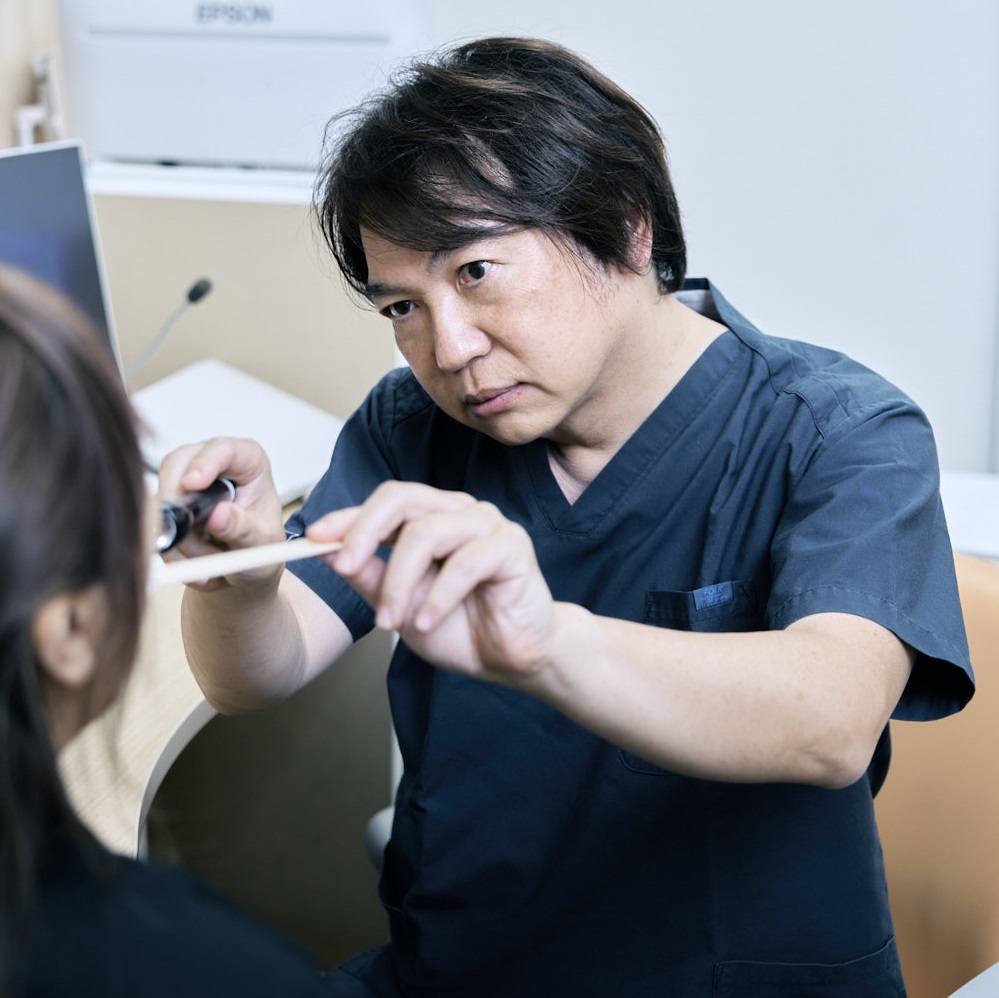
Whatever your build, Ueno Snoring Clinic checks whether sleep apnea lies behind your snoring or daytime sleepiness, using a simplified test at home or an insurance-covered PSG (a detailed sleep study), with no hospital stay needed. We also offer insurance-covered CPAP and self-pay snoring laser treatment.
Details of the tests and treatments offered at Ueno Snoring Clinic can be found here
Important: Snoring and Sleep Apnea Treatment Requires a Sleep Test
Some clinics that offer only self-pay care, and some cosmetic clinics, may not perform sleep testing. Before starting treatment, check whether the clinic performs a sleep test, or has a system for referring you to a medical institution where you can receive the necessary tests.
If sleep apnea is hidden behind your snoring and treatment begins without testing, it may be missed.
▶ Learn more about snoring and sleep apnea testing
You’ll Want to Know This! A Complete Comparison of 5 CPAP Types — What Doctors Really Look For
Our doctor compares five different CPAP machines side by side and explains what actually matters when choosing one.
Watch the video
A Complete Comparison of CPAP Masks
We tried on and reviewed five different types of CPAP masks. 90% of CPAP comfort comes down to the mask.
Watch the video
Do you have to use CPAP forever? A specialist explains how to use CPAP
A detailed explanation of how to use CPAP, with a real demonstration of what it feels like to wear the device.
Watch the video
Ueno Snoring Clinic was featured on Fuji TV’s “Live News It!” and on FNN Prime Online
Watch our clinic’s examination and explanation of sleep disorders, snoring, and sleep apnea.
Watch the video
Ueno Snoring Clinic was featured in an article on Nippon TV’s “news every.”
Please take a look as a starting point for thinking about getting evaluated for snoring, sleep apnea, or other sleep disorders.
Read the article
Reviewed by Our Director
Kazuyuki Sugaya
Director, Ueno Snoring Clinic / Anesthesiologist
Our director, with over 20,000 general anesthesia cases, focuses primarily on the diagnosis and treatment of snoring and sleep apnea, offering care tailored to each patient. [Insurance-Covered] Ueno Snoring Clinic
In this article, our Director, Kazuyuki Sugaya, reviews research on snoring and sleep apnea in slim people and on how snoring vibration may affect the carotid arteries, separating established findings from those that remain unproven.
🩺Comprehensive Snoring Treatment at Ueno Snoring Clinic
Whether you are slim or not, Ueno Snoring Clinic assesses the cause of your snoring, including jaw and airway structure, and explains the insurance-covered and self-pay options that fit your sleep test results.
Insurance-Covered: Thorough Testing and Ongoing Treatment
- Simplified testing: Home screening for sleep apnea
- PSG testing: A detailed sleep study including brain waves, done at home
- CPAP treatment: The standard treatment for apnea that meets insurance criteria
Self-Pay: Address the Root Cause, Short-Term Focus
- Snoring laser treatment: For people whose testing confirms simple snoring
- Medically supervised weight loss: An option when weight gain is a contributing factor
*Whether a treatment is appropriate, and what it can achieve, differs from one person to the next, so an examination comes first.
Our Director’s book, “Curing Snoring with the Latest Treatments” (an Amazon Japan bestseller — #1 in General Medicine, #1 in Clinical Internal Medicine, #2 in Family Health & Wellness), explains how jaw shape and airway structure contribute to snoring.
New Book by Our Director
“Curing Snoring with the Latest Treatments”
A guide to the latest snoring treatments, written by an anesthesiologist who has overseen the sleep of more than 10,000 patients.
View on Amazon
Quick Answer
Obstructive sleep apnea can occur without obesity. In a 2012 study of Japanese men with sleep apnea, about 45% had a BMI below 25 (a single-center study). The background is thought to lie in bone and airway structure, such as a set-back or small lower jaw, a tendency toward a long face, and a tongue and soft palate that are large relative to the jaw. The problem for slim people is that they often assume “I’m not overweight, so I’m fine,” and delay seeing a doctor or getting tested. Separately, a rabbit experiment found that snoring-like vibration impaired the function of the carotid artery lining (endothelium), and a human study linked heavy snoring with carotid atherosclerosis. However, a long-term follow-up study found no link between snoring and death, cardiovascular events, or stroke, so it cannot be said that snoring vibration causes atherosclerosis. Whatever your build, if loud snoring continues or you feel sleepy during the day, check with a sleep test.
📋 What This Article Covers
- Sleep apnea happens even if you aren’t overweight
- Why slim people snore: bone structure and the airway
- The risk of thinking “I’m slim, so I’m fine”
- Does snoring vibration affect the carotid arteries?
- Warning signs to watch for at any body weight
- What slim people can do, and how testing and treatment work
Sleep Apnea Happens Even If You Aren’t Overweight
| Question |
Current answer |
| Can slim people get sleep apnea? |
Yes. Even without obesity, jaw and airway shape and other factors can cause it |
| How many Japanese patients are not obese? |
In a 2012 study of Japanese men with sleep apnea, about 45% had a BMI below 25. But this was a single-center study, and the share varies with the population and methods |
| Will losing weight help? |
For people with obesity, weight loss is important. For slim people, weight changes alone may not bring enough improvement |
| Is snoring vibration bad for the carotid arteries? |
A rabbit experiment found vibration impaired the carotid artery lining. In people, some studies show a link and others don’t, so it isn’t established |
| What should I do? |
Whatever your build, get a sleep test if you snore loudly, feel sleepy by day, or have been told you stop breathing |
For how sleep tests work, see Simplified Sleep Test vs. PSG. For the everyday causes of snoring in slim people, see Why Thin People Snore. This article focuses on the research on non-obese sleep apnea and on snoring vibration.
Why Slim People Snore: Bone Structure and the Airway
Sleep apnea is often pictured as a condition of people who are overweight. But the airway can narrow during sleep because of the jaw and facial skeleton, the size of the tongue and soft palate, and the state of the nose, not just body weight.
| Factor |
Effect on the airway (current thinking) |
| Set-back or small lower jaw |
The tongue tends to fall back during sleep, narrowing the airway. The Japanese Respiratory Society’s patient information also lists this as a cause of sleep apnea |
| A tendency toward a long face |
In the discussion of a 2012 study of Japanese men, the authors note that Asian faces tend to develop vertically (“long face”), which may make the airway easier to collapse |
| A tongue and soft palate large relative to the jaw |
In the same study, a higher ratio of tongue plus soft palate area to jaw area was linked with severe sleep apnea: at a ratio of 78% or more, the odds of severe apnea were about 3 times higher after adjusting for age and BMI |
| Enlarged tonsils, nasal problems, and others |
Even without obesity, a narrowed passage in the throat or nose can cause sleep apnea |
Note that this study included only Japanese men and used head X-rays (cephalometry) taken while awake. It may not fully reflect the airway during sleep, and it may not apply directly to women.
Compared with the type more common in Western populations, where fat around the neck narrows the airway, Asian populations are thought to have a relatively higher share of cases driven by bone and airway shape. Because the narrowness of the airway itself may not change much with weight loss, people whose main factor is skeletal may not improve enough through weight changes alone.
The Risk of Thinking “I’m Slim, So I’m Fine”
For slim people, the biggest risk may not be their body shape itself but assuming “I’m not overweight, so I can’t have sleep apnea,” and delaying a visit or a test. Because the image of sleep apnea as an “overweight person’s condition” persists among patients, families, and sometimes even healthcare providers, snoring and daytime sleepiness in slim people may be more easily overlooked.
Sleep apnea is known to raise the risk of high blood pressure, irregular heart rhythms, and stroke, regardless of body shape. The longer diagnosis and treatment are delayed, the longer someone may be exposed to these risks, so being slim is no reason to relax. For the link with blood pressure, see High Blood Pressure, Snoring, and Sleep Apnea.
Does Snoring Vibration Affect the Carotid Arteries?
So far we have looked at body shape and bone structure. Another topic attracting attention, quite separate from weight, is whether the sound and vibration of snoring itself affects blood vessels.
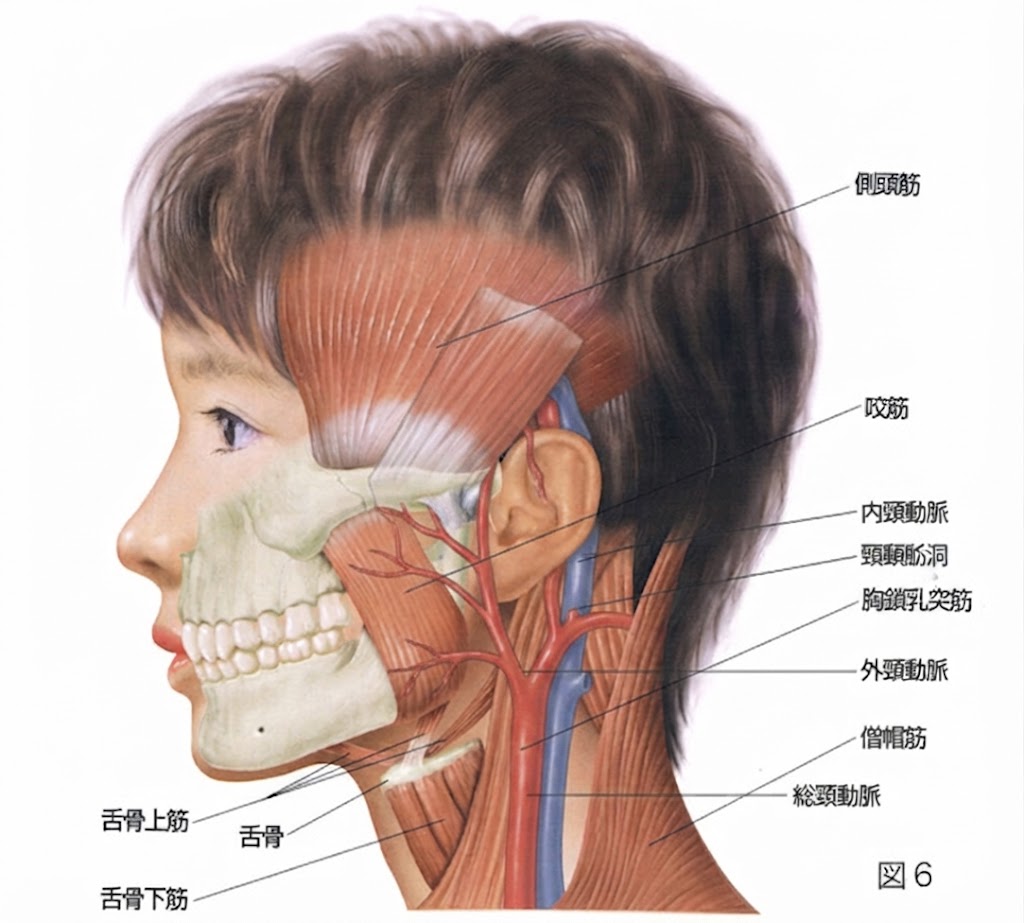
| Study |
Design |
What it shows, and its limits |
| Rabbit experiment (Cho et al., Sleep, 2011) |
27 rabbits under anesthesia: in 17, 60 Hz vibration matching the energy measured during snoring was applied around the right carotid artery for 6 hours; 10 served as controls. In the vibrated arteries, the vessel-relaxing response to acetylcholine and a related marker (cGMP) were reduced |
Suggests vibration may impair the function of the carotid artery lining. But atherosclerosis (wall thickening or plaque) was not examined, and vibration was applied continuously from outside under anesthesia, so it may not apply directly to people |
| Human study (Lee et al., Sleep, 2008) |
110 adults aged 45–80 studied in a sleep laboratory were grouped by the share of sleep time spent snoring. Carotid atherosclerosis was found in 20% with mild snoring, 32% with moderate snoring, and 64% with heavy snoring (more than 50% of the night). The link held after adjusting for age, sex, smoking, and high blood pressure |
Shows an association between heavy snoring and carotid atherosclerosis. But it looked at a single point in time, so it can’t show that snoring is the cause. We could not check the original paper for details such as adjustment for AHI |
| Long-term follow-up (Marshall et al., Sleep, 2012) |
380 residents of Busselton, Western Australia, whose snoring was measured objectively at home, were followed for 17 years. The share of the night spent snoring was not significantly linked with death from any cause, cardiovascular disease, or stroke |
Snoring alone did not show a link with long-term cardiovascular risk. But the sample and number of events were small, and snoring was measured on a single night, so the study may have lacked statistical power |
| What we know |
What we don’t know yet |
| In an animal experiment, snoring-level vibration impaired the function of the carotid artery lining |
Whether snoring vibration speeds up atherosclerosis in people over the long term |
| One human study found a link between heavy snoring and carotid atherosclerosis |
How far the effects of snoring can be separated from low oxygen due to apnea, or from obesity and high blood pressure |
| Another long-term study found no link between snoring and death, cardiovascular events, or stroke |
Whether reducing snoring improves damage to the carotid arteries |
Can “simple snoring” affect blood vessels?
Whether loud snoring without apnea strains the carotid arteries is still debated in research. At present, we cannot say that snoring vibration causes atherosclerosis. On the other hand, sleep apnea is sometimes hidden behind loud snoring, and in that case it is known to affect blood pressure and blood vessels through low oxygen and other effects. Rather than deciding either “it’s only snoring, so it’s fine” or “the noise is damaging my arteries,” first check with a test whether you have apnea.
If you’re concerned about your carotid arteries, also check general risk factors for atherosclerosis, such as blood pressure, blood sugar, cholesterol, and smoking, at regular health check-ups.
Warning Signs to Watch for at Any Body Weight
Whatever your build, consider a sleep test if you notice any of the following:
- You snore loudly almost every night
- Family members have said your breathing stops
- You’re slim but very sleepy during the day
- You wake up with a headache or feel sluggish in the morning
- You’ve been told your jaw is small or set back
According to the Japanese Respiratory Society’s guideline, snoring alone is not enough for a diagnosis; choking sensations or gasping during sleep are also clues. In other words, you can’t tell whether you have apnea, or how severe it is, from the loudness of your snoring or your body shape. It’s hard to judge the size of your own jaw, so please ask during a consultation if you’re concerned.
What Slim People Can Do, and How Testing and Treatment Work
The approach to snoring and sleep apnea in slim people differs somewhat from that for people with obesity.
| Area |
Details |
| Test first |
A simplified test or PSG shows whether you have apnea and how severe it is (AHI): mild (5 to under 15), moderate (15 to under 30), or severe (30 or more). See AHI Explained |
| Self-care |
Sleeping on your side, cutting back on alcohol, and treating nasal congestion can help. But when the narrowness of the airway itself is the cause, self-care alone may not be enough |
| CPAP |
In the Japanese Respiratory Society’s guideline, CPAP is the first choice for people with marked symptoms such as daytime sleepiness and for those with moderate to severe sleep apnea |
| Oral appliance (made by a dentist; not offered at our clinic) |
Suggested for mild to moderate apnea that doesn’t qualify for CPAP, or for people who can’t use CPAP. It is custom-made to fit the jaw |
| Snoring laser (self-pay) |
Mainly aims to reduce the sound of snoring and is not a recommended treatment for sleep apnea. It is considered only after confirming that apnea is absent or mild |
| Weight management |
Important when obesity is present. For slim people, discuss with your doctor whether weight loss is needed at all |
For a comparison of treatments, see Snoring Treatment Options in Japan, and for choosing a clinic, see How to Choose a Snoring Clinic in Japan. Don’t assume “I’m slim, so it doesn’t apply to me”: if you have snoring or sleepiness, start by checking your condition with a test.
What Ueno Snoring Clinic Can Do for You
Ueno Snoring Clinic is a sleep clinic dedicated to snoring and obstructive sleep apnea. With a background of more than 20,000 general anesthesia cases, our Director knows first-hand how the airway behaves when muscles relax, and applies that to every diagnosis. Regardless of weight or build, we assess the cause, including skeletal factors.
- Sleep testing (insurance-covered): A simplified test and PSG, both done at home, check your breathing and oxygen overnight. No hospital stay is needed.
- CPAP treatment and management (insurance-covered): For sleep apnea that meets the criteria, with the mask and settings adjusted using your usage data.
- Treatment for allergic rhinitis due to hay fever: Nasal congestion is closely tied to snoring and sleep apnea, so we can help with this as well.
- Snoring laser treatment (self-pay): Offered after confirming suitability, for people whose main concern is snoring and who don’t qualify for CPAP. Laser alone is not a treatment for severe sleep apnea.
If you’d always assumed “I’m not overweight, so I’m fine,” we’re still happy to see you about loud snoring. Following Japan’s June 2026 medical fee revision, insurance-covered CPAP requires an AHI of 30 or more on a simplified test or 15 or more on PSG (previously 40 and 20). Symptoms such as daytime sleepiness are required at every AHI level, and for an AHI of 15–29, PSG must also show findings such as sleep fragmentation. As the criteria may change, see Told You Stop Breathing in Your Sleep? for details.
Summary: Judge by Snoring and Symptoms, Not Body Shape
Obstructive sleep apnea can occur without obesity. In some people it is driven by the jaw and facial skeleton or by the size of the tongue and soft palate, and feeling reassured by your body shape can delay a visit and diagnosis.
The possibility that snoring vibration strains the carotid arteries has been shown in an animal experiment and in one human study, but a long-term follow-up study found no link, so it is not an established finding. Because sleep apnea is sometimes hidden behind loud snoring, we recommend checking your condition with a test if loud snoring or daytime sleepiness continues, whatever your build. Please feel free to contact Ueno Snoring Clinic.
Don’t Stop at “I’m Not Overweight”
We use sleep testing to find the cause of your snoring, including skeletal factors, and you can start with a simplified test at home. Sleep apnea testing and CPAP are insurance-covered when the criteria are met, and laser treatment for snoring is available on a self-pay basis. We see patients by appointment, and same-day visits are often possible.
Frequently Asked Questions
Q. Is it OK to have snoring treatment at a self-pay-only clinic or a cosmetic clinic?
A. Some clinics that offer only self-pay care, and some cosmetic clinics, may not perform sleep testing. Before starting treatment, check whether the clinic performs a sleep test, or has a system for referring you to a medical institution where you can receive the necessary tests. If sleep apnea is hidden behind your snoring and treatment begins without testing, it may be missed. We recommend first checking your condition at a medical institution that offers sleep testing (simplified testing or PSG). For details, see
Simplified Sleep Test vs. PSG.
Q. Can slim people get sleep apnea?
A. Yes. Even without obesity, it can develop because of jaw structure, airway shape, or the size of the tongue and soft palate. In a study of Japanese men with sleep apnea, about 45% had a BMI below 25. Don’t judge by body shape alone; if you have symptoms, a test is recommended.
Q. Is sleep apnea in slim people more dangerous than in people with obesity?
A. There isn’t yet clear data comparing outcomes by body type. The main risk for slim people is that they are assumed to be “fine,” so seeing a doctor and getting a diagnosis may be delayed.
Q. Can snoring vibration alone affect the carotid arteries?
A. In a rabbit experiment, snoring-like vibration impaired the function of the carotid artery lining. In people, one study linked heavy snoring with carotid atherosclerosis, while a long-term follow-up study found no link between snoring and death or cardiovascular events. It is not an established finding.
Q. Can I tell whether my jaw is small?
A. It’s usually hard to judge for yourself. If you’re concerned, ask during a consultation. Beyond jaw size, the tongue, soft palate, and nose also play a part.
Q. Will losing weight improve sleep apnea in slim people?
A. When obesity is present, weight loss can help. When skeletal factors are the main cause, weight changes alone may not bring enough improvement. Your doctor will decide on treatment according to the cause and your test results.
Q. Can snoring laser treatment cure sleep apnea?
A. Snoring laser treatment mainly aims to reduce the sound of snoring and isn’t a recommended treatment for sleep apnea. CPAP is the first choice for moderate or worse sleep apnea. It’s important to check for apnea and its severity with a sleep test before treatment.
Q. What tests should I have if I’m worried about my carotid arteries?
A. Carotid ultrasound and similar tests are available from cardiology or general internal medicine. Alongside snoring, general risk factors such as blood pressure, blood sugar, cholesterol, and smoking are checked. If you snore or feel sleepy, consider a sleep test too.
Q. Are the tests and CPAP covered by health insurance?
A. Sleep apnea testing (simplified test or PSG) is covered by Japanese health insurance when a doctor judges it necessary, and CPAP is covered when your AHI and symptoms meet the criteria. The criteria are revised from time to time, so please check when you visit. Snoring laser treatment is self-pay.
*This article is a general explanation, written for a broad audience and based on the sources above together with our clinic’s own clinical experience. It is not a substitute for medical advice. Costs shown are rough guides and vary with the care provided and your insurance. If you are concerned about snoring or sleep apnea, please consult a medical institution for a proper evaluation.